Grus Facts For Kids
Grus is a southern constellation representing a crane, notable for its bright stars and cultural significance.
Select reading age

Grus Facts For Kids
Videos & Quizzesincluded
About this topic
Grus is a special constellation 🌌 located in the southern sky. Its name means "the Crane" in Latin, and it looks like a graceful bird. You can find Grus near other constellations like Phoenix and Tucana. The brightest star in Grus is called Alpha Gruis, also known as Alnair. It shines brightly and helps us find the constellation! Grus is best seen during the months of August to November, making it a fun target for star-gazing nights. So grab your telescope 🔭, lay back, and look up to find this amazing bird-shaped constellation!
Explore with ChatDinoKey Points
Grus plays an important role in navigation, especially for sailors in the southern hemisphere 🌊.
Grus contains some interesting astrophysical features!
Grus is neighbors with several other fascinating constellations!
Grus has appeared in various forms of media, including books and movies!
Grus was officially recognized as a constellation in the 16th century 🌟 by a Dutch astronomer named Petrus Plancius.
In astrology, Grus is linked to creativity and inspiration.
To see Grus, you need to be in the southern hemisphere 🌎.
Today, scientists continue to study Grus to learn more about our universe!
Grus is made up of several stars, with Alnair (Alpha Gruis) being the brightest!
In mythology, Grus represents a crane, a bird that sometimes symbolizes wisdom in various cultures 🦩.
Photos of Grus

The constellations Grus and Piscis Austrinus, which once formed a single constellation, as depicted in Atlas Coelestis by Johann Doppelmayr, ca. 1742

The "southern birds", as depicted in Johann Bayer's Uranometria

The constellation Grus as it can be seen by the naked eye
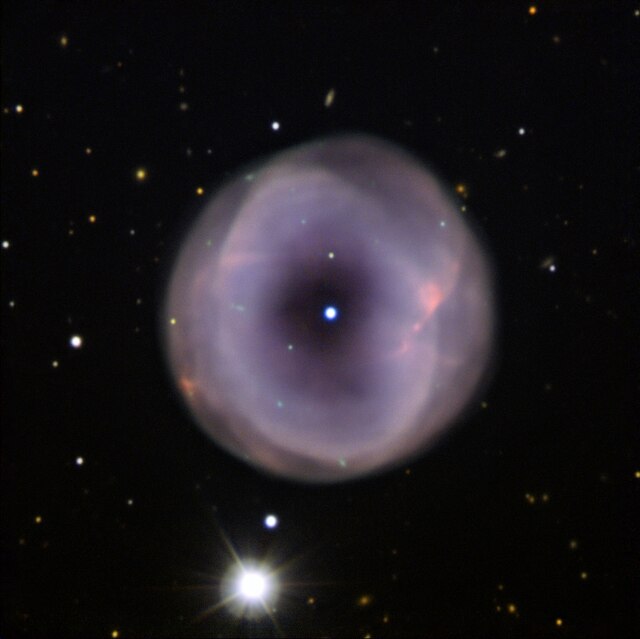
IC 5148, the spare-tyre nebula as imaged by the ESO Faint Object Spectrograph and Camera (EFOSC2) on the New Technology Telescope at La Silla
🌊 Impact On Navigation
Grus plays an important role in navigation, especially for sailors in the southern hemisphere 🌊. The constellation's bright stars, such as Alnair, provide guidance for finding directions. Ancient navigators relied on Grus and its neighbors to safely travel across oceans. Even today, some modern maps and navigation tools refer to stars from Grus. Knowing where Grus is located can help you explore the night sky and improve your sense of direction, whether you're traveling by sea or remembering where you parked your car!
Go deeper🌠 Astrophysical Features
Grus contains some interesting astrophysical features! One of the most exciting is the Grus Nebula 🌠, a region in space where new stars are forming. This colorful area is located in the same part of the sky as Grus. It’s also home to many galaxies, like the supernova remnant called RCW 49. These celestial wonders give scientists clues about how our universe works. Studying these features helps us learn more about the life cycle of stars and the amazing things in outer space!
Go deeper📚 Related Constellations
Grus is neighbors with several other fascinating constellations! To the north, you'll find Phoenix, which represents a mythical bird that rises from its ashes. On the other side, towards the southeast, you have Tucana, the Toucan, a lively bird full of color! 📚Together, they create a beautiful patch in the southern sky. If you learn to recognize these constellations, it will make the night sky even more exciting! You can have fun seeing how they connect with each other across the cosmos.
Go deeper📖 Grus In Popular Culture
Grus has appeared in various forms of media, including books and movies! 📖Some stories feature the crane as a symbol of adventure and exploration. The constellation serves as a backdrop for adventurous tales set in the southern sky. Artists and writers draw inspiration from Grus, showcasing it in imaginative ways—like in stories of flying through space or dancing among stars. By knowing about Grus, you'll be able to share fun facts about this constellation with your friends and spark their imagination too! 🌈
Go deeper🌟 Historical Observations
Grus was officially recognized as a constellation in the 16th century 🌟 by a Dutch astronomer named Petrus Plancius. The history of observing Grus dates back to ancient times when people looked at the stars for fun and stories. Sailors used stars for navigation, and Grus helped them understand directions. Even today, historians study these observations to learn about cultures and their beliefs in the night sky. Isn't it cool that you can look up and see the same stars that people saw hundreds of years ago? 🕰️
Go deeper⚖️ Astrological Associations
In astrology, Grus is linked to creativity and inspiration. If you have your birthday between certain dates that align with Grus, some believers say that you may carry qualities of a crane—elegant, resourceful, and adaptable! ⚖️ Astrologers often connect Grus to artistic talents, making it a source of motivation for artists and dreamers. Though many people enjoy astrology as entertainment, remember that stars do not control our fate. Instead, they inspire us to reach for the stars and believe in ourselves! 🌠
Go deeper🌎 Observation And Visibility
To see Grus, you need to be in the southern hemisphere 🌎. It appears in the night sky from August to November. If you're standing in countries like Australia or South Africa, you will have a great view! Just look south and find the crane-shaped constellation. Remember, stargazing is best on clear nights. You can also use apps on a smart device to help locate Grus in the sky! Don't forget to take a blanket or a comfortable chair with you to enjoy the beautiful night sky! 🌙
Go deeper💫 Modern Astronomy And Research
Today, scientists continue to study Grus to learn more about our universe! 💫Telescopes like the Hubble Space Telescope can see far-away stars and galaxies within Grus. Researchers focus on the Grus Nebula and other star-forming areas. They also look for exoplanets—planets outside our solar system—that might be located in the same part of space. With new discoveries constantly being made, Grus remains an exciting area for astronomers! Each new find helps us understand the mysteries of the night sky!
Go deeper🌍 Star Composition And Notable Stars
Grus is made up of several stars, with Alnair (Alpha Gruis) being the brightest! That's because it's about 101 light-years away from Earth 🌍. Other significant stars in Grus include Beta Gruis, which is fainter than Alnair but still important. Altogether, Grus has about 20 stars bright enough to see without a telescope! These stars form the shape of a crane, making it easy to recognize. Can you spot them? Look for Alnair, and it will guide you to the rest of the constellation!
Go deeper🦩 Mythology And Cultural Significance
In mythology, Grus represents a crane, a bird that sometimes symbolizes wisdom in various cultures 🦩. Different stories from ancient civilizations associate Grus with migration and the changing of seasons. For example, ancient Egyptians admired cranes and included them in their art, seeing them as symbols of grace. In Australia, Aboriginal people told stories about in the night sky, using the stars for navigation. Understanding these stories helps us see how constellations like Grus have inspired human creativity throughout the ages! ✨
Go deeper