Group 13 Facts For Kids
Group 13, also known as the Boron Group, contains six elements: boron, aluminum, gallium, indium, thallium, and nihonium, each with unique characteristics that are important in various applications.
Select reading age
Group 13 Facts For Kids
Videos & Quizzesincluded
About this topic
Group 13 of the periodic table is also known as the Boron Group! 🧪This group includes six elements: boron (B), aluminum (Al), gallium (Ga), indium (In), thallium (Tl), and nihonium (Nh). Each of these elements has special features! 🤩Boron is a non-metal, while aluminum, gallium, indium, and thallium are metals. Nihonium is a super rare element that was discovered in Japan in 2004! 🇯🇵 These elements play important roles in our daily lives, from making airplanes lighter to forming tiny computer chips!
Explore with ChatDinoKey Points
The discovery of Group 13 elements spans a long time!
Each element in Group 13 has unique chemical properties!
The elements in Group 13 have interesting physical properties!
The members of Group 13 also play roles in biology!
Group 13 elements are super useful in many industries!
Group 13 elements react differently with other elements!
Boron is the first element, and it’s known for being hard and brittle.
Group 13 elements have isotopes, which are versions of the same element with different numbers of neutrons.
In Group 13, the elements show certain trends as you move down the list!
Photos of Group 13

Chunk of aluminium, 2.6 grams, 1 x 2 cm.

Group 13 — photo 2

Group 13 — photo 3


A powdered sample of boron trioxide (B2O3), one of the oxides of boron

The 5 stable elements of the boron group

The mineral zinc blende, more commonly known as sphalerite, in which indium can occur.

A small bundle of fiberglass

Gallium is one of the chief components of blue LEDs
🔎 Historical Context
The discovery of Group 13 elements spans a long time! 🔎Boron was discovered in 1808 by Sir Humphry Davy, a British chemist. 🏴☠️ Aluminum was isolated in 1825, and gallium was discovered in 1875 by French chemist Paul Émile Lecoq de Boisbaudran. Indium was discovered shortly after in 1863! 📅Thallium was found in 1861 by Sir William Crookes. Nihonium is the youngest, discovered in 2004 by a team of Japanese scientists. 🇯🇵 Their journey shows how science has evolved throughout history and continues to grow! 🛠️
Go deeper🔬 Chemical Properties
Each element in Group 13 has unique chemical properties! 🔬Boron can react with oxygen and is involved in making boric acid, used in some insecticides. 🐞Aluminum is famous for its ability to resist rusting, which keeps it looking new! 🔧Gallium can react with acids, while indium is known for being non-toxic and safe to use. Thallium also reacts with both air and water, making it a bit dangerous! ⚠️ Nihonium's chemical reactions are still being studied since it is so new, and we’re learning more about its properties every day!
Go deeper💧 Physical Properties
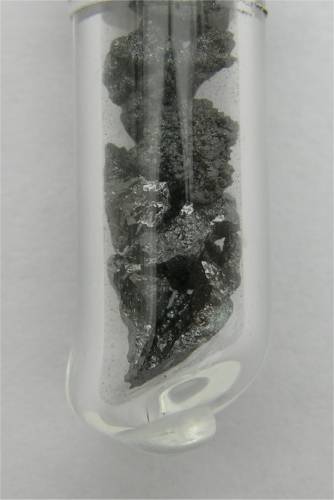
The elements in Group 13 have interesting physical properties! 💧For example, boron is a black solid that looks like a rock. Aluminum is shiny and silver-colored, making it very popular for products! 🎁Gallium, when melted, looks like silvery liquid metal and can even be used in thermometers! 🌡️ Indium is also shiny, while thallium is soft and can be cut with a knife. 🗡️ Nihonium is a synthetic element, which means it was made in a lab, and we know very little about its physical properties because it's so rare!
Go deeper🌿 Biological Importance
The members of Group 13 also play roles in biology! 🌿Boron helps plants grow by aiding in the production of important hormones. 🌱Aluminum isn’t needed by living things but can be found in some foods like tea. 🥤Gallium is being researched as a potential treatment for certain diseases and can even kill harmful bacteria! 🦠Indium isn’t essential for life, but studies are looking at its use in medicine. ⚕️ Thallium, however, can be toxic, so it’s not good for living organisms! 🙅♂️ Nihonium hasn’t been found in nature, so we don’t know much about its biological importance yet!
Go deeper🏭 Applications In Industry
Group 13 elements are super useful in many industries! 🏭Aluminum is widely used in cars, planes, and even soda cans! 🚗Boron is essential in making glasses and ceramics, making them stronger! 🏺Gallium is important in electronics, as it helps make LED lights shine bright! 💡Indium is often used in touch screens for smartphones. 📱Meanwhile, thallium finds its place in special types of glass and optics! 🔭Nihonium, being new, hasn’t been used much yet, but scientists are studying its properties for future applications! 🤔
Go deeper🌈 Reactivity And Compounds
Group 13 elements react differently with other elements! 🌈Boron doesn’t react with water but is great at forming compounds with oxygen. Aluminum, on the other hand, reacts easily with acids and bases. 🔥Gallium can melt other metals and forms many compounds like gallium oxide. Indium makes things like indium tin oxide, which makes screens work! 🖥️ Thallium can be tricky because it is toxic and can create compounds that are dangerous for people. 🤒Nihonium’s compounds are still a mystery, and scientists are excited to learn about how it reacts!
Go deeper🌟 Elemental Characteristics
Boron is the first element, and it’s known for being hard and brittle. 🌟It’s often found in borax, a cleaning product. Aluminum, which is shiny and lightweight, is super useful for making cans and foil! ⚪Gallium is unique because it melts at just above room temperature – it can even turn from solid to liquid in your hand! 👐Indium is used in electronics, and thallium is not safe to touch! ⚠️ Lastly, nihonium is so new that we’re still learning about it! All these elements have amazing characteristics that scientists study every day!
Go deeper🌟 Isotopes And Radioactivity
Group 13 elements have isotopes, which are versions of the same element with different numbers of neutrons. 🌟For example, aluminum has a stable isotope called Aluminum-27. Thallium also has isotopes, but one of them, Thallium-201, is used in medical imaging! 🏥Nihonium is radioactive, meaning it decays quickly and changes into other elements. ⚡This makes it exciting for scientists who study radioactivity. Each isotope behaves slightly differently, and understanding them helps scientists in many areas like medicine and chemistry! 🤓
Go deeper📊 Trends In The Periodic Table
In Group 13, the elements show certain trends as you move down the list! 📊For instance, as you go from boron to nihonium, the size of the atoms gets larger. This is because they have more protons and neutrons! 🔍Also, their metals become softer and denser as you go down the group. 💪With boron being a non-metal and nihonium being a radioactive metal, it shows how diverse this group is! Understanding these trends helps scientists predict how elements will behave. Isn’t that cool? 🌈
Go deeper