Glenn T. Seaborg Facts For Kids
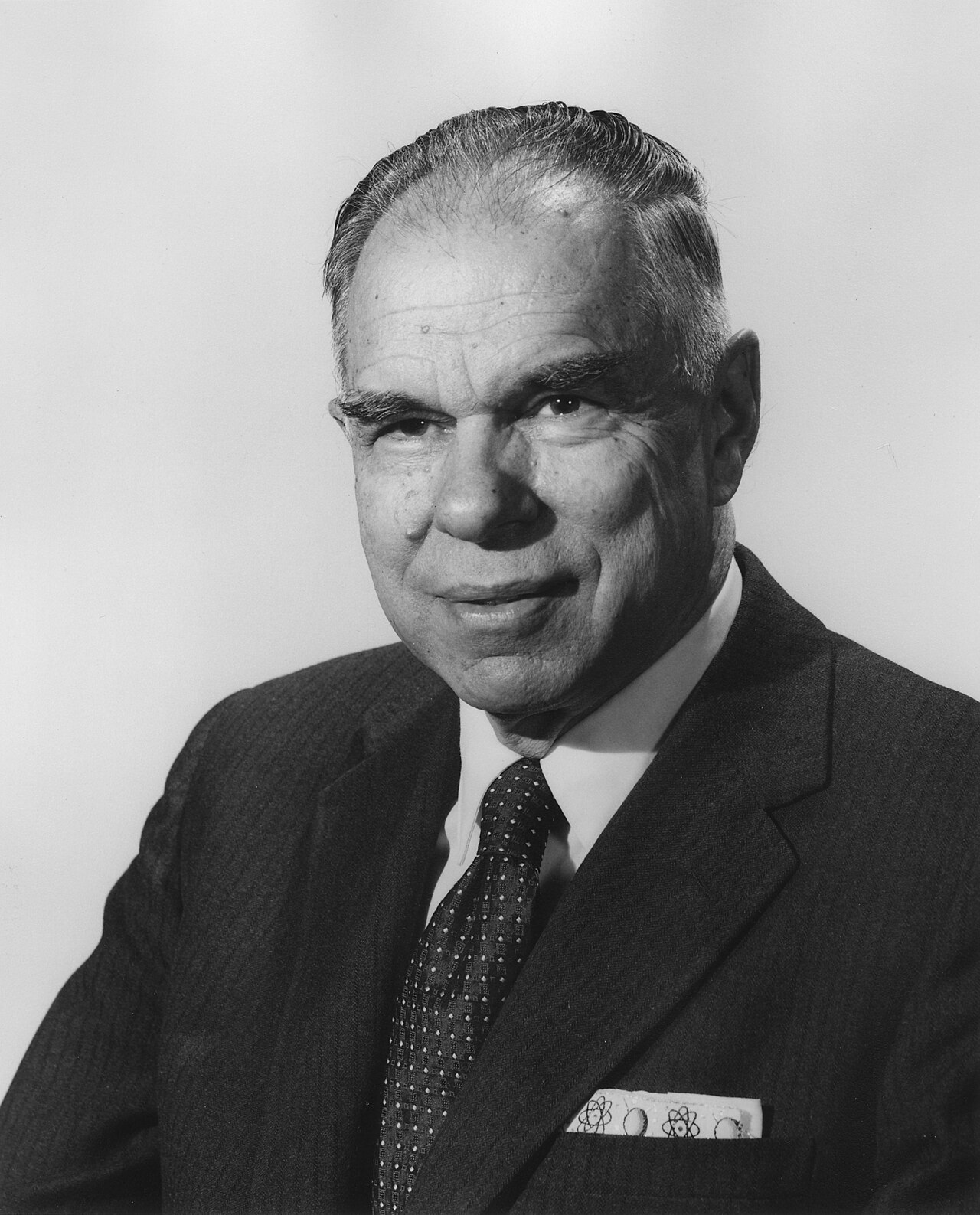
Glenn T. Seaborg was an American chemist celebrated for his discoveries of transuranium elements and his significant contributions to nuclear chemistry, earning a Nobel Prize in 1951.
Select reading age
Glenn T. Seaborg Facts For Kids
Videos & Quizzesincluded
About this topic
Glenn T. Seaborg was a famous American chemist born on April 19, 1912, in Ishpeming, Michigan. He is really cool because he helped discover ten new elements on the periodic table! 🧪Seaborg’s work changed how scientists understand chemistry, which is the study of substances. He had a long career and made many important contributions to science, and he wasn't afraid to explore new ideas. Seaborg even created some brand-new elements, which are special types of matter. He passed away on February 25, 1999, but his work continues to inspire scientists and students today! 🌟
Explore with ChatDinoKey Points
Throughout his life, Glenn Seaborg received many awards for his contributions to science.
Glenn Seaborg left a huge legacy that continues to inspire future scientists!
As a child, Glenn loved learning and was curious about the world around him.
In 1951, Glenn Seaborg received the Nobel Prize in Chemistry!
Glenn Seaborg made many great contributions to chemistry.
Seaborg was a great writer, and he published many important papers!
Glenn Seaborg played a very important role in nuclear chemistry, which is the study of the properties and reactions of radioactive materials.
Beyond his amazing achievements in science, Glenn Seaborg had a life filled with hobbies!
Glenn Seaborg changed how we look at the periodic table, which is a chart of all chemical elements.
Seaborg is known as the "father" of several transuranium elements!
Photos of Glenn T. Seaborg

Seaborg in 1950, with the ion exchanger elution column of actinide elements

Seaborg (second from left) during Operation Plumbbob

From left to right: Chairman Seaborg, President Kennedy, Secretary McNamara on March 23, 1962. By this point, McNamara and Seaborg had been discussing the AEC's studies on the ecological effects of nuclear war and "clean" weapon alternatives. (Courtesy: National Security Archive, Original: National Archives)

Seaborg (right) with marine biologist Dixy Lee Ray on September 17, 1968

Helen and Glenn Seaborg in Stockholm in 1951
🥇 Awards And Honors
Throughout his life, Glenn Seaborg received many awards for his contributions to science. 🥇He was not only a Nobel Prize recipient but also received the National Medal of Science and the Priestley Medal, among many others. He was honored because his discoveries changed science and helped make the world a better place. He was also named a member of prestigious organizations like the American Academy of Arts and Sciences. His numerous accolades show how much scientists and the world value his incredible work! 🎉
Go deeper🌈 Legacy And Influence
Glenn Seaborg left a huge legacy that continues to inspire future scientists! 🌈He showed that perseverance and curiosity can lead to incredible discoveries. Many schools and institutions remember his contributions by naming elements after him, like seaborgium (Sg). 🌌His impact on nuclear chemistry and the periodic table helps shape how we understand elements today, making science more exciting and accessible to everyone! Glenn’s story also helps children believe that they too can make important contributions to the world!
Go deeper📚 Early Life And Education
As a child, Glenn loved learning and was curious about the world around him. 📚He graduated from high school in 1929 in Los Angeles, California. Later, he attended the University of California, Berkeley, where he earned his chemistry degree. While studying, he worked hard and often talked with famous scientists. Glenn was inspired by his teachers and decided to do even bigger things in chemistry. He earned his Ph.D. in chemistry in 1937, which means he learned a lot about atoms and molecules. It was the start of his exciting journey into science! 🎓
Go deeper🏆 Nobel Prize In Chemistry
In 1951, Glenn Seaborg received the Nobel Prize in Chemistry! 🏆This prestigious award is given to scientists who make incredible discoveries. Seaborg earned the prize for his work on transuranium elements and showing how they can be used in different ways. As a Nobel laureate, Glenn traveled the world to share his discoveries and inspire other young scientists. His achievement taught students that hard work and curiosity could lead to amazing things in science! Science needs people like Glenn to keep exploring the mysteries of the universe! ✨
Go deeper🔍 Scientific Contributions
Glenn Seaborg made many great contributions to chemistry. 🔍His biggest achievement was discovering ten transuranium elements, which are elements heavier than uranium! 💥These include plutonium, americium, and curium. Seaborg also helped create the "actinide series," a special group of elements on the periodic table. He made it easier for scientists to understand where each element belongs! This work became very important for research in the nuclear industry and medicine, helping people and making our world safer and better! 🌍
Go deeper📄 Publications And Research
Seaborg was a great writer, and he published many important papers! 📄He wrote over 500 scientific articles and shared his research with other scientists around the world. His work focused on transuranium elements and their properties. Glenn also wrote books for kids and adults, explaining complex topics in chemistry in an easy way. He wanted everyone to understand the magic of science. His clear and exciting writing style has inspired many young minds to explore chemistry and its wonders! 🧬
Go deeper⚛️ Role In Nuclear Chemistry
Glenn Seaborg played a very important role in nuclear chemistry, which is the study of the properties and reactions of radioactive materials. ⚛️ He discovered how certain elements like uranium and plutonium can be used to create energy. His research helped explain how nuclear reactions work, and it was important during the development of nuclear power plants. He also worked with the government to ensure that nuclear technology was safe and used for good. Seaborg's influence helped shape how we use nuclear energy today! 💡
Go deeper🎨 Personal Life And Interests
Beyond his amazing achievements in science, Glenn Seaborg had a life filled with hobbies! 🎨He enjoyed gardening, reading, and playing music. He loved family and spent time with his wife, who he married in 1937. Glenn also loved photography and took pictures of landscapes and friends. 📷He believed learning could happen in many ways, not just in laboratories. Glenn often encouraged young students to explore science, nature, and their creative interests. This showed how he valued a balance between hard work and fun! 🌻
Go deeper🔗 Advancements In The Periodic Table
Glenn Seaborg changed how we look at the periodic table, which is a chart of all chemical elements. 🔗He created the "actinide series," placing elements like actinium and plutonium in a special row. This helps scientists understand the relationships between elements. Seaborg's work helped organize the table, making it clearer and more useful for everybody! 🗺️ His changes made it easier for future chemists to find and study chemical elements, helping them discover even more about our universe!
Go deeper😊 Discovery Of Transuranium Elements
Seaborg is known as the "father" of several transuranium elements! 😊He worked at the University of California, Berkeley, where he used a special particle accelerator to create new elements. In 1940, he discovered plutonium, which played a major role in World War II. After that, he continued finding elements like americium and curium. The discovery of these elements helped scientists learn how to use them for nuclear energy and medicine! 🏥Seaborg's discoveries changed chemistry forever by expanding our knowledge of the periodic table.
Go deeper