Gilbert N. Lewis Facts For Kids
Gilbert N. Lewis was an influential American physical chemist known for his work in chemical bonding and acid-base theory, serving as the dean at the University of California, Berkeley.
Select reading age
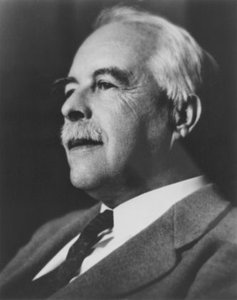
Gilbert N. Lewis Facts For Kids
Videos & Quizzesincluded
About this topic
Gilbert N. Lewis was a famous American chemist born on October 23, 1875, in Weymouth, Massachusetts. He is best known for his work in physical chemistry, which helps us understand how different substances interact. 🧪Lewis made many important discoveries that changed how we look at chemistry! He even became the dean of the College of Chemistry at the University of California, Berkeley. 🌟His ideas helped scientists explain how atoms and molecules work together and why they behave the way they do. Gilbert N. Lewis passed away on March 23, 1946, but his legacy lives on in science. 🌍
Explore with ChatDinoKey Points
Gilbert N.
Gilbert N.
Lewis contributed to coordination chemistry, studying how certain atoms (called ligands) bond with a central metal ion.
Gilbert N.
The Lewis Structure Theory helps us visualize molecules!
Gilbert grew up in a large family with seven siblings.
Gilbert N.
After finishing his Ph.D., Gilbert N.
Gilbert N.
Photos of Gilbert N. Lewis

Lewis' cubical atoms (as drawn in 1902)
🌶️ Acid-base Theory
Gilbert N. Lewis also helped develop the Acid-Base Theory. 🌶️ Traditionally, acids and bases were defined using taste—sour for acids and bitter for bases! But Lewis came up with a new idea in 1923. He said that acids are substances that can accept an electron, while bases can donate an electron. 💧This definition is important because it helps us understand how different substances react. For example, when vinegar (an acid) is mixed with baking soda (a base), they react together to create bubbles! 🧪This reaction is not only fun but also a great lesson in chemistry!
Go deeper🏅 Awards And Honors
Gilbert N. Lewis received many awards throughout his career! 🏅In 1937, he was elected to the National Academy of Sciences, honoring his contributions to science. 🌟He also received the prestigious Priestley Medal in 1946, which recognized his outstanding chemistry achievements! 🎖️ Lewis was highly respected among his peers and students, making him one of the most admired chemists of his time. His students looked up to him for his wisdom and passion for chemistry! 🌈Even today, people celebrate his contributions to the world of science by remembering his achievements! 🌍
Go deeper💍 Coordination Chemistry
Lewis contributed to coordination chemistry, studying how certain atoms (called ligands) bond with a central metal ion. 💍For example, when four ammonia (NH3) molecules attach to a copper ion (Cu²⁺), they form a special structure called a complex. Coordination compounds are vital in many areas, such as biology and materials science! 🌱This can be seen in hemoglobin, the molecule in our blood that carries oxygen! By understanding coordination chemistry, scientists can create new materials and medicines to help improve our lives. 🧬
Go deeper🎉 Legacy And Recognition
Gilbert N. Lewis's legacy continues to thrive in the field of chemistry! 🎉Many institutions, awards, and programs honor his influence, encouraging students to follow in his footsteps. 📖Schools and universities often remember him when teaching chemistry concepts, ensuring that his ideas live on! Lewis's work paved the way for future chemists, and through research and education, he cultivated a community of scientists eager to unlock the mysteries of matter! 🧪Every time someone learns about covalent bonds or Lewis Structures, they experience a piece of his incredible legacy. 🌍
Go deeper🎨 Lewis Structure Theory
The Lewis Structure Theory helps us visualize molecules! 🎨This theory shows how atoms bond by using dots and lines to represent electrons and chemical bonds. Each dot stands for an electron, while lines show pairs of shared electrons between atoms. 🔗For example, a simple water molecule (H2O) looks like this: O with 2 lines going to H atoms. This makes it easy to see how hydrogen and oxygen atoms combine! 🧊Chemists use Lewis Structures to predict how substances will react. This method has become essential for scientists learning about chemical reactions! 💧
Go deeper👶 Early Life And Education
Gilbert grew up in a large family with seven siblings. 👶He showed great interest in science from a young age! After finishing high school, he attended Harvard University. 📚There, he studied chemistry and learned from many famous professors. Lewis earned his bachelor's degree in 1896 and continued for his Ph.D. in 1900. After completing his education, he began working as a chemist and started thinking of exciting ideas about atoms. 🚀His studies helped him become a leading figure in the field of chemistry, and he inspired many students along the way! 🌈
Go deeper🔬 Scientific Contributions
Gilbert N. Lewis contributed to many areas of chemistry. 🔬One of his most important ideas is the concept of the "covalent bond." This is when two atoms share electrons to form a molecule. 🪐He also introduced the concept of "electron pairs" which helped scientists understand how atoms connect. Lewis published many papers, sharing his findings with the world! 📜He even created a diagram known as the Lewis Structure, a way to visualize how atoms bond in a molecule. His work laid the groundwork for much of modern chemistry. 🌌
Go deeper🏫 Career And Academic Positions
After finishing his Ph.D., Gilbert N. Lewis began teaching at the Massachusetts Institute of Technology (MIT). 🏫He then moved to the University of California, Berkeley, where he served as a professor and eventually became the dean of the College of Chemistry. 📚During his career, Lewis helped shape many young scientists' lives through his teaching and leadership! He worked at Berkeley from 1912 until his death in 1946. Throughout his time there, he mentored students and conducted important research, fostering a love for chemistry at the university. 🌻
Go deeper🌌 Influence On Modern Chemistry
Gilbert N. Lewis significantly influenced modern chemistry through his ideas and discoveries! 🌌His concepts, like covalent bonds and electron sharing, helped form the foundation of the chemical world as we know it today! ⭐Chemists still use Lewis Structures to understand how atoms combine, making it easier to create new substances! His acid-base theory also plays a critical role in many industries, including medicine and agriculture. 🌱Lewis sparked curiosity in future generations, inspiring many young chemists to explore the wonders of chemistry! 🔬
Go deeper