Galley Facts For Kids
A galley is a type of ship optimized for propulsion by oars, often used in ancient and medieval times for trade and warfare.

Do more with AI
Introduction
A galley is a special type of ship designed to be moved by oars, which are long sticks used for rowing. 🌊These ships would glide on water and be powered by people rowing. Galleys have been used for thousands of years and are usually long and narrow. They played an important role in trade, exploration, and even battles. 🚢Some famous galleys were built in the Mediterranean Sea, which is a large sea that connects Europe, Africa, and Asia. In this article, we'll learn all about galleys, from their history to their modern uses!
Images of Galley

United States ships at the Battle of Valcour Island depicting several "row galleys" similar in function but based on very different designs from Mediterranean galleys; watercolor by Charles Randle

Drawing of warships (pointed bows) and trade ships (rounded bows); based on a wall relief from the Southwest Palace at Nineveh, circa 700 BC.

3rd-century depiction of an actuaria from the Altiburus mosaic. A figure is beating the time for the rowers with a mallet.

The prow of a galley on a coin of the Roman Republic of the 3rd century BC
![Animated 3D model of the basic hull structure of a Venetian "galley of Flanders", a large trading vessel of the 15th century. The reconstruction by archaeologist Courtney Higgins is based on measurements given in contemporary ship treatises.[32]](https://upload.wikimedia.org/wikipedia/commons/thumb/0/0f/Galley_of_Flanders-model.gif/330px-Galley_of_Flanders-model.gif)
Animated 3D model of the basic hull structure of a Venetian "galley of Flanders", a large trading vessel of the 15th century. The reconstruction by archaeologist Courtney Higgins is based on measurements given in contemporary ship treatises.[32]

A Roman naval bireme in a relief from the Temple of Fortuna Primigenia in Praeneste, built c. 120 BC (Museo Pio-Clementino)

Two compact liburnians used by the Romans in the campaigns against the Dacians in the early 2nd century AD; relief from Trajan's Column, c. 113 AD

Battle between Dutch and Spanish Ships on the Haarlemmermeer in 1573, as painted in 1629 by Hendrick Cornelisz Vroom
![The first known depiction of a galley with a fixed, forward-facing centerline cannon;[78] woodcut by Erhard Reuwich from Peregrinatio in terram sanctam ("Pilgrimage to the Holy Land"), 1486.](https://upload.wikimedia.org/wikipedia/commons/thumb/a/a8/Peregrinatio_in_terram_sanctam_MET_MM4640_crop_1.jpg/960px-Peregrinatio_in_terram_sanctam_MET_MM4640_crop_1.jpg)
The first known depiction of a galley with a fixed, forward-facing centerline cannon;[78] woodcut by Erhard Reuwich from Peregrinatio in terram sanctam ("Pilgrimage to the Holy Land"), 1486.
Types Of Galleys
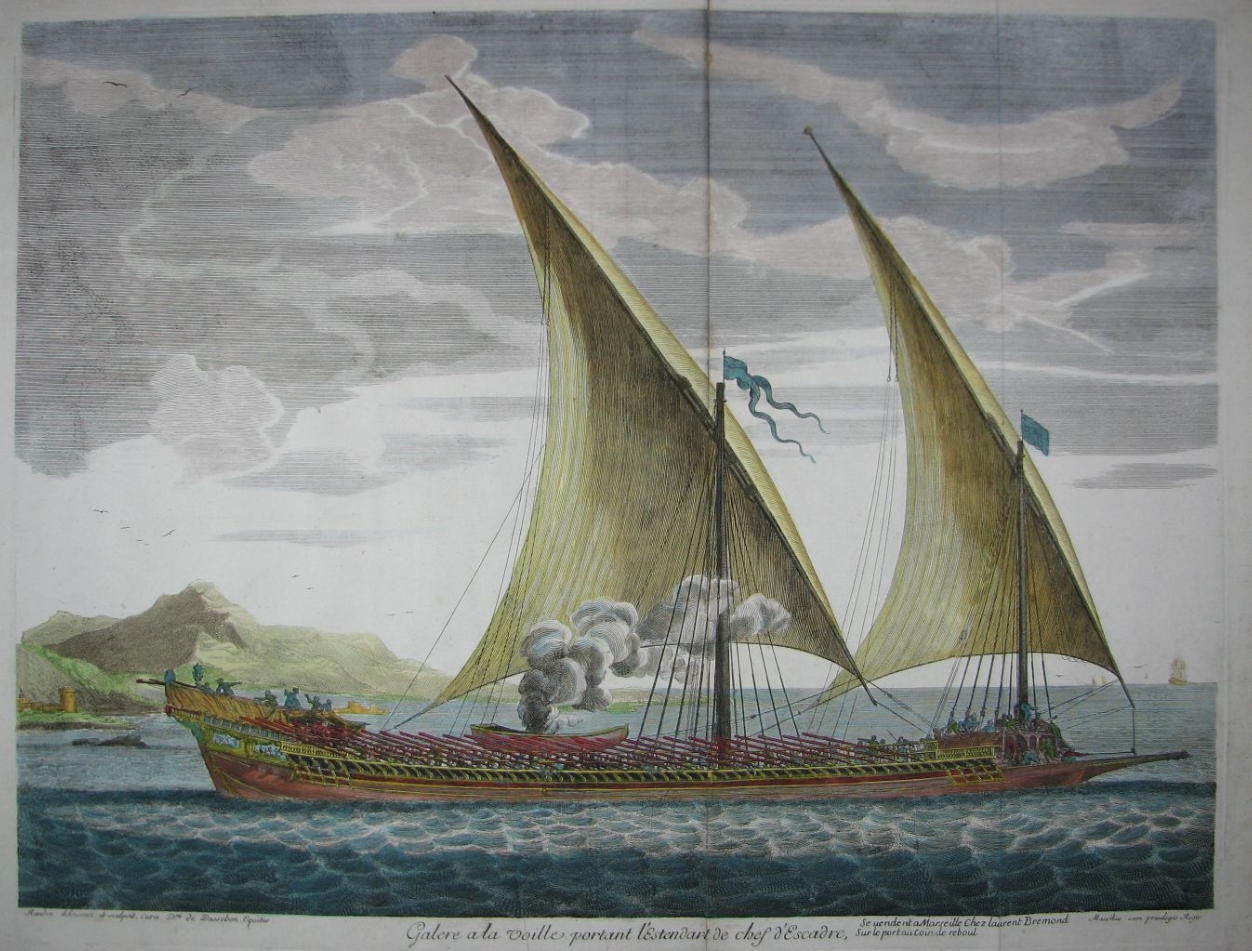
There are several types of galleys, each with different shapes and uses. The trireme is one of the most famous types; it has three rows of oars on each side! 🌟Galleys could also have one or two masts for sails, helping them catch the wind. Another type is the bireme, which has two rows of oars. Galleys were often decorated with eye-catching colors and designs to show off their power and beauty. 🎨We even see modern versions of these types in movies, like pirate films. Every type of galley had a special purpose!
History Of Galleys
Galleys date back to ancient times, around 3000 BC! The Egyptians used early versions of galleys made from papyrus. The Phoenicians, who lived in what is now Lebanon, created wooden galleys for exploring seas and trading goods. ⚓By the 5th century BC, the Greeks and Romans used galleys more for warfare. They raced each other in these fast ships during competitions! 🏆During the Middle Ages, the Mediterranean was full of galleys, each representing different countries. This journey through time shows how important galleys were for many civilizations!
Propulsion Methods
The primary way a galley moves is by rowing! 💪Rowers use oars, pushing them against the water to propel the ship forward. In calm conditions, sailors could use sails to catch the wind. ⛵Some galleys had 200 or more rowers, giving them amazing speed! Galleys would work together in fleets, with each ship helping the others paddle more efficiently. The rowers needed to be strong and coordinated, so they often trained together. This teamwork allowed galleys to travel long distances and carry many people and goods!
Cultural Significance
Galleys were very important in cultures around the Mediterranean! ⚓They often symbolized trade, adventure, and exploration. Many legends and stories featured galleys sailing to new lands, such as Odysseus's journey in Greek mythology. 📚Galleys also played a role in the arts! Poets and painters created works inspired by these beautiful ships. In some festivals, people even reenact famous sea battles with galleys to celebrate history. These ships hold a special place in the hearts of many countries, reminding them of brave sailors and their adventures on the sea!
Decline Of The Galley
As technology improved, the use of galleys began to decline. 🚢During the 18th century, steam-powered ships and sailing vessels took over the seas. These new ships were faster and didn’t require many rowers. With the invention of the steam engine in the 1800s, wooden galleys became less practical for warfare and trade. ⚓Many nations shifted to iron and steel vessels that could carry heavier cargo. By the late 19th century, galleys were rarely seen, marking the end of an era for these once-powerful ships that changed the course of history!
Role In Naval Warfare
Galleys played an important part in battles on the water! ⚔️ In ancient times, they were used to fight other ships and transport soldiers. Galleys were fast and could outmaneuver other ships. The Romans, for example, built powerful galleys equipped with special weapons like battering rams to sink enemy vessels! The "Battle of Lepanto" in 1571 was a famous naval battle where many galleys fought. Galleys could also carry archers and soldiers, making them useful for capturing ports and cities. This blending of speed and strategy made galleys essential in naval warfare.
Construction And Design
Building a galley is an exciting process! 🌲They are made primarily from wood, such as oak, which makes them strong. A typical galley can be anywhere from 20 to 50 meters long (about 65 to 165 feet!). 🛠️ The design includes a sharp bow (front) for cutting through water and a broad stern (back) for stability. The hull is the bottom part that floats on water, and it’s shaped to go fast! Galleys also have benches where rowers sit, and they often wore special clothes to stay comfortable when working hard.
Famous Historical Galleys
Many galleys gained fame throughout history! One notable galley was the "Olympias," a reconstructed ancient Greek trireme that still sails today! 🏺Another famous galley was the "Santa Maria," which was used by Christopher Columbus on his first journey to the Americas in 1492! 🌎The "Mikado" was a Japanese galley that ruled the seas in the 17th century. Each of these galleys has its own amazing stories and adventures! They remind us of the bravery and skills of sailors who sailed the high seas and made history on their journeys.
Modern Adaptations Of Galleys
Even though traditional galleys have mostly disappeared, their influence can still be seen today! 🌅Some modern ships use rowing techniques inspired by galleys, especially in sports like rowing and kayaking. In many countries, teams practice rowing together in specially designed vessels. 🎉Historical reenactments often use replicas of galleys in festivals and events. They remind us of the importance of teamwork and adventure! Modern museums also showcase the history of galleys, allowing everyone to appreciate their fascinating legacy and contributions to maritime history.
Galleys In Trade And Exploration
Galleys were essential for trading goods and exploring new territories! 💰People would load galleys with valuable items like spices, textiles, and precious metals. During the Age of Exploration in the 15th and 16th centuries, galleys helped sailors find new lands. Genoese and Venetian traders used galleys to connect Europe with Asia and Africa! 🌍They sailed famous trade routes across the Mediterranean Sea, bringing different cultures together. Galleys allowed for exchanging ideas, languages, and delicious foods—making them key players in the story of human connection across oceans!
Galley Quiz
Learn more about Galley
