Fiordland Penguin Facts For Kids
The Fiordland penguin is a medium-sized penguin species native to New Zealand, known for its striking yellow head markings and somewhat elusive nature.
Select reading age

Fiordland Penguin Facts For Kids
Videos & Quizzesincluded
About this topic
The Fiordland penguin, also known as the Tawaki, is a fascinating bird from New Zealand! 🐧These cute penguins live mainly in the spectacular Fiordland region, famous for its deep fiords and lush rainforests. They are one of the rarest penguin species, with only about 5,000 pairs left. The Fiordland penguin is known for its unique yellow crests above its eyes, making it easy to recognize! They are very skilled swimmers, diving underwater to find food. These penguins are a sight to behold and are part of the special wildlife that calls New Zealand home. 🌏
Explore with ChatDinoKey Points
Fiordland penguins are listed as "Endangered" on the IUCN Red List.
Fiordland penguins face several threats that affect their survival.
Fiordland penguins are excellent hunters!
Fiordland penguins thrive in the stunning coastal areas of the southwestern South Island of New Zealand.
Fiordland penguins have a striking appearance!
Fiordland penguins are monogamous, meaning they mate for life with one partner!
Fiordland penguins are very social and often live in small groups called colonies.
Fiordland penguins hold a special place in Māori culture, the indigenous people of New Zealand.
Photos of Fiordland Penguin
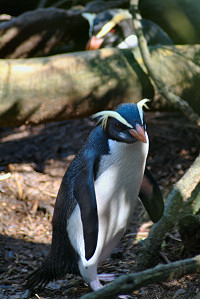
The Fiordland penquin has a prominent yellow crest on its head
🤔 Conservation Status
Fiordland penguins are listed as "Endangered" on the IUCN Red List. 🤔This means they face potential extinction if threats are not managed. Their populations have been decreasing due to habitat loss, human disturbances, and introduced predators like rats and stoats. Conservation efforts are underway to protect these special birds and their habitats. Organizations are working to monitor populations and provide safe nesting areas. The New Zealand government and wildlife groups are dedicated to keeping Fiordland penguins from vanishing, ensuring future generations can enjoy these incredible creatures! 🌱
Go deeper🦇 Threats To Survival
Fiordland penguins face several threats that affect their survival. 🦇Invasive predators are a big problem; animals like cats, dogs, and rats can attack nests and eat eggs or chicks. Pollution and habitat destruction from human activities also put pressure on their populations. Oil spills from ships can be harmful to these penguins and their food sources. Climate change impacts sea temperatures and fish availability, which can make it difficult for them to find enough food. Awareness and action are crucial in helping to protect these lovely penguins and their splendid home! 🌍
Go deeper🐠 Diet And Feeding Habits
Fiordland penguins are excellent hunters! 🐠They mainly eat small fish, squid, and crustaceans, catching their meals while swimming under the water. Their favorite snacks include krill and goby fish! These penguins can dive as deep as 100 meters (about 328 feet) to capture their food, holding their breath for up to 3 minutes! 🌊They use their sharp beaks to catch slippery fish and their strong flippers to swim quickly. They often hunt during the day but can also go out at night to find food. Fast and agile, they make the perfect marine predators!
Go deeper🏞️ Habitat And Distribution
Fiordland penguins thrive in the stunning coastal areas of the southwestern South Island of New Zealand. 🏞️ They prefer rocky shorelines and dense forests, where they build nests in natural hollows like caves and under shrubs. These penguins love rainforests because they provide cover from predators! They are often found in places like Milford Sound and the Hollyford Valley, which are both parts of Fiordland National Park. This park is a UNESCO World Heritage site, meaning it is specially protected due to its unique beauty and natural wonders. 🌿
Go deeper🦙 Physical Characteristics
Fiordland penguins have a striking appearance! They are medium-sized, standing around 60 centimeters (about 2 feet) tall and weighing 3 to 5 kilograms (6.6 to 11 pounds). 🦙Their bodies are covered in waterproof feathers that keep them warm and dry while swimming. The most recognizable feature is their bright yellow crest that curves above their eyes! 🥚Their backs are black, and their bellies are white, perfect for camouflage in the water. Fiordland penguins also have strong flippers to help them glide through the ocean, making them expert divers!
Go deeper💕 Reproduction And Life Cycle
Fiordland penguins are monogamous, meaning they mate for life with one partner! 💕During the breeding season, a female lays 1 to 2 eggs in a cozy nest. The eggs usually hatch after about 33 to 39 days. Both parents share the responsibility of keeping the eggs warm, and once the chicks hatch, they feed them regurgitated food. The chicks are covered in soft gray down and remain in the nest for about 3 weeks before heading out to swim with their parents! 🏊After several months, the young penguins grow their adult feathers and become independent, ready to explore the world.
Go deeper🐦 Behavior And Social Structure
Fiordland penguins are very social and often live in small groups called colonies. 🐦They can be quite noisy, communicating with various sounds, including trumpeting calls! In the breeding season, which runs from June to November, they pair up and are very dedicated to their partners. Male Fiordland penguins build nests and take turns incubating their eggs. They are protective parents, working together to care for their chicks once they hatch. The penguins often return to the same nesting sites each year, showing their strong bonds and family connections! ❤️
Go deeper🌺 Cultural Significance And Folklore
Fiordland penguins hold a special place in Māori culture, the indigenous people of New Zealand. 🌺They are seen as symbols of perseverance and adaptability. Māori people referred to them as "Tawaki." Stories and legends about these penguins are passed down through generations, celebrating their bond with nature and the ocean. The unique appearance and behavior of Fiordland penguins also inspire artists and storytellers, contributing to New Zealand's cultural heritage. Today, many people work to ensure that these penguins are preserved, honoring their significance and place in the land! 🎨
Go deeper