Ferromagnetism Facts For Kids
Ferromagnetism is a property of certain materials that allows them to become strong magnets, retaining their magnetic properties even after the external magnetic field is removed.
Select reading age
Ferromagnetism Facts For Kids
Videos & Quizzesincluded
About this topic
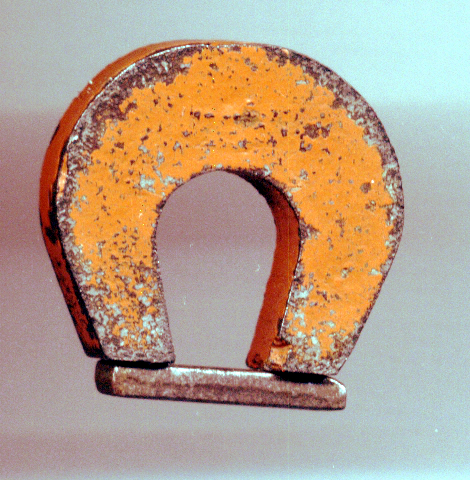
Ferromagnetism is a special property of certain materials that makes them magnetic! 🌟This means they can stick to magnets, which is super cool! Ferromagnetic materials, like iron and nickel, can become permanent magnets. These materials are used in many everyday items, from fridge magnets to electric motors. When enough tiny magnetic regions align in the same direction, the whole material turns into a magnet! 🌍So, next time you see a magnet, remember there’s some ferromagnetism magic behind it!
Explore with ChatDinoKey Points
Did you know that inside ferromagnetic materials, there are tiny regions called magnetic domains?
Curie Temperature is a special fancy term in magnetism!
Ferromagnetism is a type of magnetism found in certain materials.
The story of ferromagnetism began a long time ago!
Want to learn about magnets yourself?
Ferromagnetism is super important in our lives!
There are different types of ferromagnetic materials based on their properties!
The future of ferromagnetism looks bright!
Temperature plays a huge role in ferromagnetism!
Ferromagnetic and antiferromagnetic materials are like opposites!
Photos of Ferromagnetism

Phase diagram of a second order quantum phase transition

Electromagnetic dynamic magnetic domain motion of grain-oriented electrical silicon steel
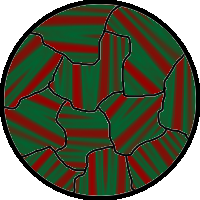
Kerr micrograph of a metal surface showing magnetic domains, with red and green stripes denoting opposite magnetization directions

Moving domain walls in a grain of silicon steel caused by an increasing external magnetic field in the "downward" direction, observed in a Kerr microscope. White areas are domains with magnetization directed up, dark areas are domains with magnetization directed down.
🏰 Magnetic Domains
Did you know that inside ferromagnetic materials, there are tiny regions called magnetic domains? 🏰Each domain is like a miniature magnet with its own north and south poles. When a ferromagnetic material is not magnetized, these domains point in random directions, so their magnetism cancels out. But when you apply a magnetic field, many of these domains line up, and the material becomes magnetized! This alignment helps create strong magnets used for all sorts of cool technologies that help us every day! ✨
Go deeper🌡️ Curie Temperature
Curie Temperature is a special fancy term in magnetism! 🌡️ It’s the temperature at which a ferromagnetic material loses its magnetic properties. For example, iron's Curie Temperature is about 770°C (1,420°F)! When it gets too hot, the heat makes the atoms jiggle too much, and they can't line up anymore. So, if you heat up a magnet like iron, it'll stop being a magnet! This is an important concept in science, as it helps us understand how magnets behave in different temperatures and environments! 🔥
Go deeper🧲 What Is Ferromagnetism?
Ferromagnetism is a type of magnetism found in certain materials. 🧲It happens when tiny particles inside these materials, called atoms, work together to create a strong magnetic field. Atoms have their own magnets, but normally they point in different directions, which cancels out the magnetism. In ferromagnetic materials, the atoms can line up and stay that way! Some common ferromagnetic materials are iron, cobalt, and nickel. These materials are usually found in nature, and that's why they're often used to make magnets we use every day. 📏
Go deeper⚙️ History Of Ferromagnetism
The story of ferromagnetism began a long time ago! ⚙️ The ancient Greeks discovered that a rock called magnetite could attract iron. This was the beginning of magnet discovery! In the 19th century, scientists like Hans Christian Ørsted and James Clerk Maxwell studied magnetism more. In 1907, Pierre Curie introduced the term “ferromagnetism” and explained how the alignment of atoms creates magnetism. His work helped scientists understand magnets better! Today, we keep discovering more about ferromagnetism to use it in technology. Isn’t it amazing how something ancient still brings us new ideas? 🌌
Go deeper🎉 Fun Experiments With Magnets
Want to learn about magnets yourself? Here are some fun experiments! 🎉You can start by playing with a magnet and different objects around your house to see what sticks and what doesn’t! You could use paper clips, coins, and plastic items to explore. Another exciting experiment is making a compass! Just float a magnetized needle on water in a small dish, and it’ll point north! 🧭You can also try creating your own magnet by rubbing a magnet on a paperclip for 30 seconds. Watch it become a magnet itself! Have fun discovering the world of magnetism!
Go deeper🌍 Applications Of Ferromagnetism
Ferromagnetism is super important in our lives! 🌍It helps power many electronic devices. For example, in electric motors, magnets help move and turn things effortlessly! Ferromagnetic materials are also used in transformers, which change electricity from one form to another. We also find them in computers, telecommunication devices, and MRI machines in hospitals! 🏥Magnets keep our lives running smoothly every day, even if we don’t always notice them! Isn’t it fun to think about how many things are possible because of ferromagnetism?
Go deeper💡 Types Of Ferromagnetic Materials
There are different types of ferromagnetic materials based on their properties! 💡The most common ones are pure metals like iron, cobalt, and nickel. However, there are also special alloys (mixtures of metals) that have unique magnetic features, like permalloy, which is made of nickel and iron. Some ceramics can exhibit ferromagnetism too! Each type of material has its own special characteristics, making them useful for different things in our everyday life, like refrigerators, speakers, and even robotics! 🦾
Go deeper🌟 Future Research In Ferromagnetism
The future of ferromagnetism looks bright! 🌟Scientists all over the world are researching new materials that can be used in cool technologies! They are experimenting with new compounds, and materials and even exploring nanotechnology, which deals with tiny particles. This research could lead to making smaller, more powerful magnets for things like computer storage, energy production, and medicine! 🛠️ The possibilities are endless, and who knows what amazing inventions are ahead thanks to ferromagnetism! We might even see flying cars or super-fast trains powered by magnets one day!
Go deeper🌡️ Impact Of Temperature On Ferromagnetism
Temperature plays a huge role in ferromagnetism! 🌡️ As we learned, at high temperatures near the Curie Temperature, magnets can lose their power because the atoms keep moving around too much. On the other hand, when temperatures drop, ferromagnetic materials can become even stronger magnets! ❄️ Scientists explore these changes to understand better how to use magnets in various temperatures, like in electronics and space instruments. That’s why knowing the impact of temperature is key in using magnetic materials effectively! 📈
Go deeper⚖️ Ferromagnetic Vs. Antiferromagnetic Materials
Ferromagnetic and antiferromagnetic materials are like opposites! ⚖️ Ferromagnetic materials, like iron, can become magnets because their magnetic domains align in the same direction. On the other hand, antiferromagnetic materials, like manganese oxide, have their domains align in opposite directions, canceling out each other’s magnetism! ❄️ This means they don’t become magnets at all. Both types of materials are interesting and useful in different ways, and scientists study them to learn more about magnetism and create new technologies!
Go deeper