European Nightjar Facts For Kids
The European Nightjar is a crepuscular and nocturnal bird known for its beautiful camouflaged plumage and haunting calls, found across Europe and parts of Asia.
Select reading age
European Nightjar Facts For Kids
Videos & Quizzesincluded
About this topic
The European Nightjar is a special bird that sings at night 🌙! It is also known as the Common Goatsucker, and it comes from a family of birds called nightjars. You can find these fascinating creatures across most of Europe, Mongolia, and Northwestern China. Nightjars are cool because they are crepuscular, which means they are most active during dawn and dusk🌅. They have a unique camouflage pattern that helps them blend into the ground, making it hard for predators to spot them. They are also known for their beautiful, soft calls that echo through the night.
Explore with ChatDinoKey Points
There are several birds that are similar to the European Nightjar!
European Nightjars are migratory birds, which means they travel long distances for better weather and food.
The European Nightjar is currently classified as “Least Concern” by the International Union for Conservation of Nature (IUCN).
When it comes to breeding, European Nightjars are quite unique!
The European Nightjar has inspired many stories and legends!
The European Nightjar loves open woodland, scrubland, and heathland, often near agricultural areas.
The European Nightjar has an interesting appearance!
The scientific name of the European Nightjar is Caprimulgus europaeus.
European Nightjars are amazing insects hunters!
Photos of European Nightjar
![Young bird hissing with mouth open in threat display[13]](https://upload.wikimedia.org/wikipedia/commons/thumb/0/0e/Caprimulgus_europaeus_-_Mior_Rino_001.jpg/960px-Caprimulgus_europaeus_-_Mior_Rino_001.jpg)
Young bird hissing with mouth open in threat display[13]

Heathland is a favoured habitat.

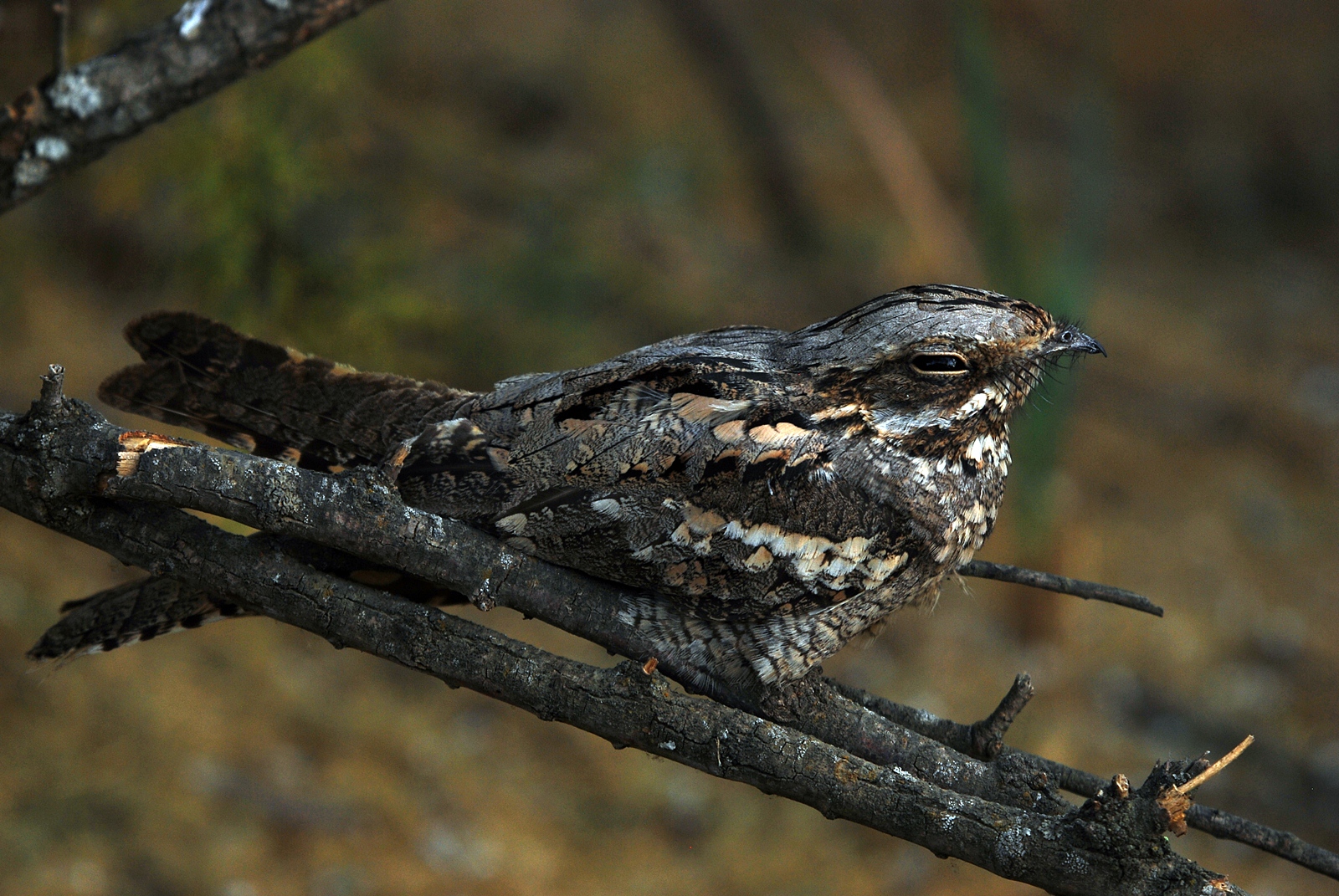
Roosting lengthwise on a branch to enhance camouflage

A clutch of two eggs on the ground in Turkey

Egg, Collection Museum Wiesbaden

Adults with chicks from Saudi Arabia

Perching in a tree at night in France. The eyeshine is due to reflected light.

Bristles around the mouth may help in feeding

"Nightjar, goatsucker, or fern-owl", alternative old names, by J.G. Keulemans
🦉 Similar Species
There are several birds that are similar to the European Nightjar! One of them is the Common Nightjar (*Caprimulgus europaeus*), which looks quite similar but can be found in different regions. 🦉Another is the Whip-poor-will, found in North America, known for its loud call. 🌎Although they share similar traits, each bird has its unique songs and habitats. They all belong to the nightjar family, making them great cousins! 🕊️ Learning about these birds helps us understand how diverse and fascinating our feathered friends can be!
Go deeper🦩 Migration Patterns
European Nightjars are migratory birds, which means they travel long distances for better weather and food. 🦩In summer, they breed in Europe, but when winter arrives, they fly all the way to Africa, where it’s warmer! 🌍This journey can be thousands of kilometers long and is important for survival. They generally leave their breeding grounds in late summer. They know when it’s time to go by the changing seasons and temperatures. This incredible journey showcases the adventurous spirit of the European Nightjar! 🌊
Go deeper🌿 Conservation Status
The European Nightjar is currently classified as “Least Concern” by the International Union for Conservation of Nature (IUCN). 🌿This means there are still many of them in the wild, but their numbers can change depending on habitat loss and changes in farming practices. 🌻To protect these mysterious birds, we can conserve their natural habitats and plant more trees and bushes. Every little effort counts in helping these beautiful night singers thrive! 🌼
Go deeper🥚 Breeding And Nesting
When it comes to breeding, European Nightjars are quite unique! They usually mate between April and June, in areas where they feel safe. The female lays about 2 eggs, which are brown and camouflaged to look like the ground. 🥚Both parents take turns keeping the eggs warm and camouflaged from predators! The baby nightjars, called chicks, are born after about 18 days. They leave the nest only a few days after hatching and rely on their parents for food until they can fly independently. 🌱This helps keep the chicks safe in their early days!
Go deeper🌌 Cultural Significance
The European Nightjar has inspired many stories and legends! 🌌In some cultures, it is associated with nighttime magic and mystery because of its haunting song. 🦸♂️ People often hear its calls in fairy tales and folklore. In literature, this bird represents the beauty of nature and the tranquility of the night. Artists and writers love to capture its elegance and elusive nature. By understanding the European Nightjar, we deepen our appreciation of the natural world and the wonders of wildlife! 📖
Go deeper🌳 Habitat And Distribution
The European Nightjar loves open woodland, scrubland, and heathland, often near agricultural areas. 🌳They are commonly found across Europe, from the United Kingdom to Eastern Europe, and even into parts of Mongolia and Northwestern China! They prefer places with plenty of insects to eat. During the breeding season, they like to stay close to the ground where they can easily camouflage themselves. 🏞️ In winter, they migrate to Africa to escape the cold, showing just how far these birds can travel to find a home! ✈️
Go deeper🌿 Physical Characteristics
The European Nightjar has an interesting appearance! It has a beautiful mix of brown, gray, and white feathers, which helps it hide in the leaves and grass 🌿. Adult nightjars are about 23–27 cm long, with a wingspan of about 50–60 cm. Their wings are long and wide, perfect for flying silently at night! They have large eyes that help them see in the dark 🌒. Males have a unique white stripe on their wings, which makes them stand out during mating season. Overall, they look quite mysterious and are a joy to spot! 🦉
Go deeper📚 Scientific Classification
The scientific name of the European Nightjar is *Caprimulgus europaeus*. 📚It belongs to the family Caprimulgidae, which includes other nightjars. Here’s how this bird is classified:
- Kingdom: Animalia
- Phylum: Chordata
- Class: Aves
- Order: Caprimulgiformes
- Family: Caprimulgidae
- Genus: *Caprimulgus*
- Species: *C. europaeus*
This classification helps scientists understand how the European Nightjar is related to other birds. Just like how we are all part of a big family! 👨👩👦
Go deeper- Kingdom: Animalia
- Phylum: Chordata
- Class: Aves
- Order: Caprimulgiformes
- Family: Caprimulgidae
- Genus: *Caprimulgus*
- Species: *C. europaeus*
This classification helps scientists understand how the European Nightjar is related to other birds. Just like how we are all part of a big family! 👨👩👦
🦟 Behavior And Feeding Habits
European Nightjars are amazing insects hunters! 🦟They are nocturnal, which means they mainly hunt at night. They wait quietly, then swoop down to catch insects with their wide mouths. They love to eat moths, beetles, and other flying insects. Nightjars are also known for their soft, whirring flight, making them nearly silent when they fly. 🌌During the day, they rest hidden on the ground, blending perfectly with their surroundings. You might hear their lovely songs at dusk or dawn, which they use to communicate with each other! 🎵
Go deeper