Drongo Facts For Kids
Drongos are medium-sized passerine birds known for their remarkable flight, striking plumage, and impressive mimicry, primarily found in the Old World tropics.
Select reading age
Drongo Facts For Kids
Videos & Quizzesincluded
About this topic
A drongo is a special bird that belongs to the family Dicruridae. 🐦These birds are found in tropical areas around the world, especially in Africa, Asia, and Australia! Drongos are known for their cool black feathers and long, forked tails. There are over 20 species of drongos, and they can be very fun to watch as they flit around in search of insects and other food! 🌳Their name comes from a word in the Hindi language, and drongos are lively and energetic, making them a favorite among bird watchers.
Explore with ChatDinoKey Points
Did you know that drongos can mimic up to 25 different bird species?
Most drongo species are not endangered and have stable populations.
Drongos have a special place in various cultures!
Drongos are insectivores, which means they love eating insects!
Drongos love tropical places with lots of trees!
Drongos have unique physical traits that make them stand out!
During the breeding season, drongos build their nests high in trees using twigs, leaves, and grasses.
Drongos belong to the family Dicruridae, which places them in the order Passeriformes, or perching birds.
Drongos are very social birds!
Drongos are known for their amazing vocal skills!
Photos of Drongo


Sharpe's drongo in Konso, Ethiopia.

Drongo — photo 3


Drongo — photo 5


Drongo — photo 8

🦜 Interesting Facts
Did you know that drongos can mimic up to 25 different bird species? 🦜Their incredible skills make them unique in the bird world! Some drongos are also known to play tricks by pretending to be hurt to lure predators away from their nests. 😲African cultures have even given drongos their nickname because of their loud calls and friendly behavior. These lively birdwatchers are called "the jesters of the sky"! With their striking appearance and extraordinary intelligence, drongos are truly amazing birds! 🌈
Go deeper🌍 Conservation Status
Most drongo species are not endangered and have stable populations. 🌍However, habitat loss due to deforestation and urbanization can threaten certain species. Conservation efforts are important to keep their habitats protected and to ensure their survival. Organizations work to preserve forests and educate people about these fascinating birds. 🏞️ By planting trees and keeping environments clean, everyone can help drongos thrive and flourish in their natural habitats!
Go deeper🌟 Cultural Significance
Drongos have a special place in various cultures! In some regions, they are seen as symbols of intelligence and adaptability. 🌟They are even featured in folklore and stories, admired for their cleverness. In India, the Black Drongo is popular for its skill in catching pests in rice fields, helping farmers. 🧑🌾 Many birdwatchers enjoy spotting drongos in the wild, making them an essential part of nature-loving communities. Their graceful flight and cheerful songs bring joy to people around the world!
Go deeper🐜 Diet And Feeding Habits
Drongos are insectivores, which means they love eating insects! 🐜They have a varied diet that includes flies, beetles, and caterpillars. Drongos are excellent hunters; they often catch insects in mid-air while flying. 🦋They can also eat fruits and small berries if they can’t find insects. Their sharp eyesight helps them spot food from a distance. Some species are known to follow larger animals like cows, picking off insects disturbed by them.
Go deeper🌴 Habitat And Distribution
Drongos love tropical places with lots of trees! 🌴You can find them in forests, savannas, and even gardens in many countries. The Black Drongo is widespread across Asia, while the Greater Drongo is common in parts of Africa and Asia. 🌏They build their nests high in trees, often close to human settlements. This makes it easier for them to find food! With their adaptable nature, drongos are great at living in different environments, from jungles to open grasslands.
Go deeper✨ Physical Characteristics
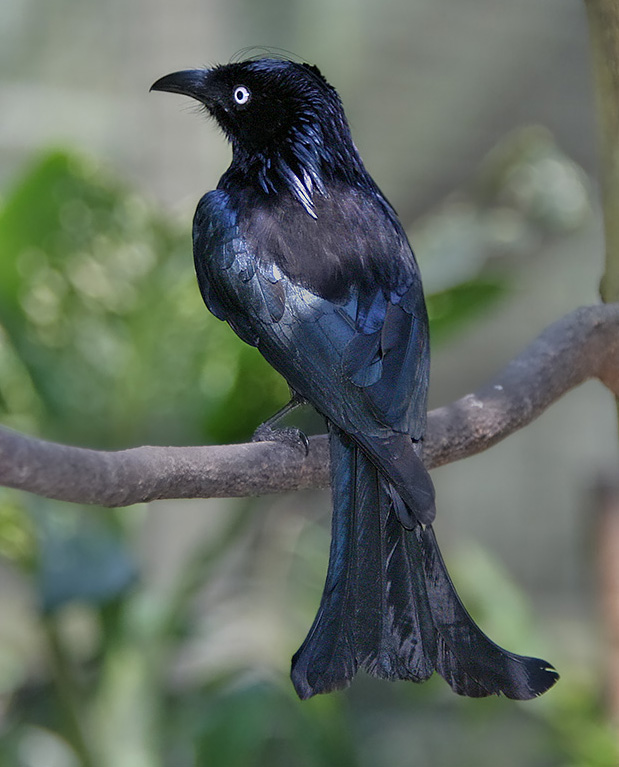
Drongos have unique physical traits that make them stand out! Most have shiny black feathers that can appear bluish in the sunlight. ✨Their long tails can be forked or even slightly curled at the ends! Drongos have strong, pointed beaks, perfect for catching insects. Some species can reach about 30 cm (12 inches) in length. 👐Male drongos tend to be slightly larger and more colorful than females. They have bright white markings on their throat or wings, depending on the species, which can make them look even more striking while flying!
Go deeper🏗️ Reproduction And Nesting
During the breeding season, drongos build their nests high in trees using twigs, leaves, and grasses. 🏗️ The female lays around 2-5 eggs, which are usually blue or green with dark spots. Both parents take turns sitting on their eggs to keep them warm. 🥚After about 14-18 days, the chicks hatch, looking for food and shelter. The parents work together to feed their hungry babies! Once the young drongos learn to fly, they stay close to their parents for several weeks while learning to hunt for themselves.
Go deeper🦜 Taxonomy And Classification
Drongos belong to the family Dicruridae, which places them in the order Passeriformes, or perching birds. 🦜The name "Dicruridae" is derived from Greek words meaning “two tails,” which describes their long, forked tails. The popular species include the Greater Drongo, found in India and Southeast Asia, and the Black Drongo, common in southern Asia. 🌍Scientists classify these birds into various genera, like Dicrurus and Surniculus. They are related to other birds such as kingfishers and cuckoos, making them an important part of our planet's ecology.
Go deeper🐦 Behavior And Social Structure
Drongos are very social birds! 🐦They often hang out in groups, especially when searching for food. These birds are known for their clever mimicry, imitating sounds of other birds and animals. 🎶They use their vocal talents to warn others of danger or to attract a mate. Drongos can be a bit aggressive when it comes to protecting their territory, sometimes chasing away larger birds. They also have a strong bond with their mates, working together to care for their young.
Go deeper🎤 Vocalizations And Communication
Drongos are known for their amazing vocal skills! 🎤They can make a variety of sounds, including squawks, whistles, and even the calls of other birds. Their ability to mimic helps them communicate and can also confuse predators. 🦅Drongos use their vocalizations to announce their presence and attract mates. When they spot danger, they make alarm calls to warn other birds nearby. Their songs can be heard all around their habitats, adding joy to the environment!
Go deeper