Dendrite Facts For Kids
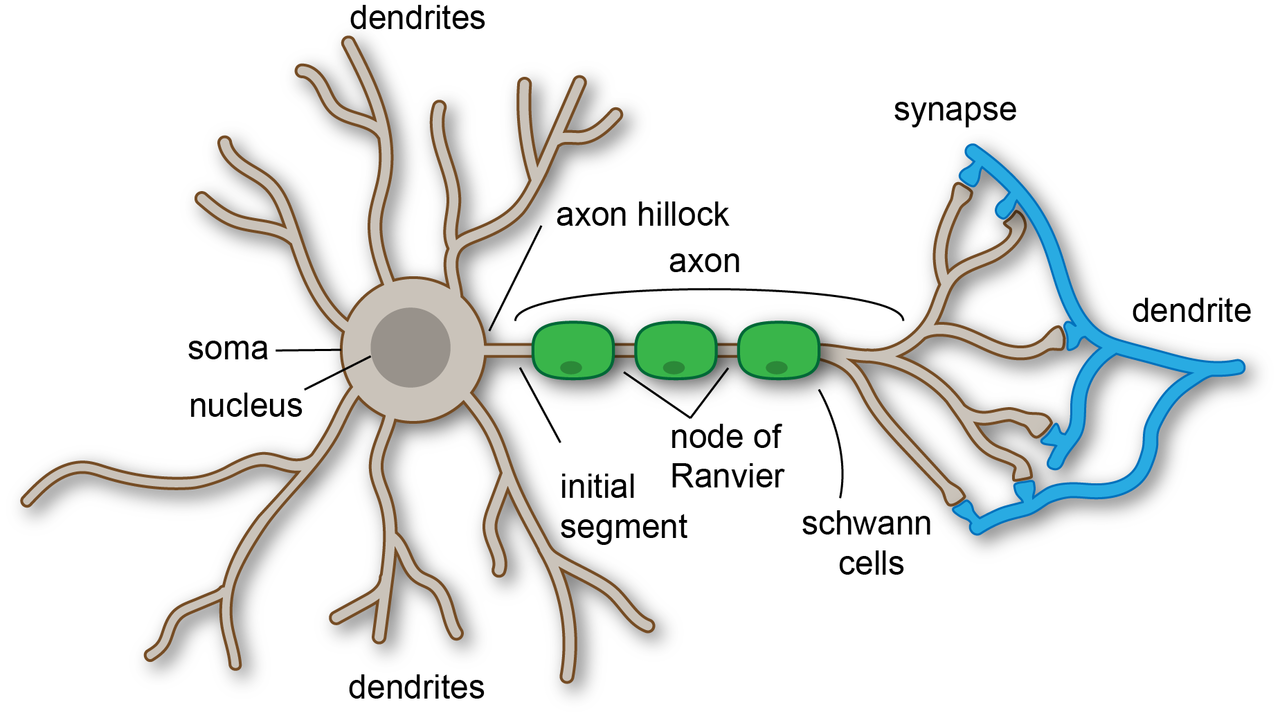
Dendrites are branched structures from nerve cells that receive signals from other neurons and send them to the cell body to facilitate communication in the brain.
Select reading age
Dendrite Facts For Kids
Videos & Quizzesincluded
About this topic
Dendrites are tiny branches that come from nerve cells (neurons) in our brain! 🧠They look like tree branches and help send messages to the cell's main part, called the soma. Each neuron can have many dendrites, which means they can get lots of messages from other neurons! These messages help us think, feel, and move. Dendrites play a significant role in how our brain connects with the rest of our body, making it super important for everything we do! When neurons work together, we learn new things and form memories. Isn’t that neat? 🌳💫
Explore with ChatDinoKey Points
Dendrites come in different shapes and sizes!
Dendrites are made of special cell material called cytoplasm.
Dendritic spines are tiny bumps on dendrites that make connections with other neurons.
Dendrites grow and change as we learn and experience new things!
Scientists are always looking for ways to learn more about dendrites!
Dendrites are like little receivers for neurotransmitters!
Dendrites are superstars when it comes to neuroplasticity!
Dendrites are essential for neuron communication!
Sometimes, dendrites can have problems, which can lead to disorders.
🌈 Types Of Dendrites
Dendrites come in different shapes and sizes! There are two main types: *simple* and *complex* dendrites. Simple dendrites are like short little branches that do not have many spines. They mainly receive basic signals. Complex dendrites have lots of branches and many spines, making them excellent at picking up many signals at once! 🌈Different types of neurons have different kinds of dendrites. For example, the pyramidal neuron in the brain has a tree-like appearance, while Purkinje neurons have a bushy structure. This diversity helps our brain work in a magical way! 🌟
Go deeper🌿 Structure Of Dendrites
Dendrites are made of special cell material called cytoplasm. They have a branched structure, which means they split into smaller and smaller parts. 🌿Each part can receive signals from other neurons, like little antennas catching radio waves! Dendrites are usually covered by tiny bumps called dendritic spines, which help them connect better with other neurons. The tips of the branches are where the magic happens! This branching structure allows dendrites to communicate with many other neurons at once. It’s like having a really cool network of friends! 🤗
Go deeper🌸 Dendritic Spines And Synapses
Dendritic spines are tiny bumps on dendrites that make connections with other neurons. 🌸They are like little bridges that help transmit signals from one neuron to another. When these spines connect with other neurons, they create a special junction called a synapse. This is where the magic happens! When one neuron sends a signal, the spines catch it and relay it to the soma. The more synapses and spines we have, the better our brains can work! Strong connections help us learn, remember, and even feel emotions! Isn’t that cool? 🌟
Go deeper🎈 Dendritic Growth And Development
Dendrites grow and change as we learn and experience new things! 🎈When we're babies, our brains are still developing, and dendrites start to form like roots of a tree. As we learn, more dendrites grow, helping our brain connect better! This growth is called "dendritic plasticity." It means our brains are flexible and can adapt. Just like how we can learn to ride a bike or play an instrument, our dendrites can strengthen or weaken based on what we practice! This is why it’s important to keep learning and trying new things! 🚴♀️🎶
Go deeper🔬 Research Advances In Dendritic Studies
Scientists are always looking for ways to learn more about dendrites! 🔬New technologies and tools, like special microscopes, help them see dendrites better. They're discovering how dendrites change with learning and even how they respond to different activities like art or sports! 🎨🏃♂️ Researchers are also investigating how environment and nutrition affect dendritic growth! This research is essential because it could help us develop new ways to keep our brains healthy! So, who knows? Maybe you could be a scientist studying dendrites one day! The possibilities are endless! 🚀
Go deeper💌 Dendrites And Neurotransmitter Reception
Dendrites are like little receivers for neurotransmitters! 💌Neurotransmitters are special chemicals that carry messages between neurons. When one neuron sends a neurotransmitter, it attaches to a receptor on a dendritic spine. This action helps the dendrite understand the message being sent! 💫Once the message is received, it gets sent to the soma, where the neuron can act on it. Different neurotransmitters can have different effects: some make us happy 🥳, while others might calm us down. Dendrites are important for how we feel and respond to the world around us! 🌍
Go deeper🦸♂️ The Role Of Dendrites In Neuroplasticity
Dendrites are superstars when it comes to neuroplasticity! 🦸♂️ Neuroplasticity is our brain's ability to change and adapt to new experiences. When we learn something new, our dendrites can grow, making more branches and spines. This helps our neurons communicate better! If we practice something we learn, the connections become stronger. But if we stop using them, they might shrink a bit! 🥺Just like a muscle, the more we exercise our brain, the stronger it gets! So remember, keep trying new things and learning every day! 💡
Go deeper💬 Function Of Dendrites In Neuron Communication
Dendrites are essential for neuron communication! 💬When a neuron wants to send a message, it sends out chemical signals called neurotransmitters. These chemicals travel to dendrites on other neurons. The dendrites catch these signals and convert them into electrical messages that travel to the neuron's soma. This quick process takes place in a tiny moment! It helps neurons communicate about everything from moving our hands to thinking about fun games. Without dendrites, neurons wouldn’t be able to connect, and we wouldn’t be able to do all the amazing things we love! 🎉
Go deeper🤕 Dendritic Disorders And Neurological Implications
Sometimes, dendrites can have problems, which can lead to disorders. 🤕For example, some conditions like autism or schizophrenia might affect dendritic growth and function. This could make it hard for the brain to communicate normally. 🧩Scientists study these issues to understand how to help people with these disorders. They are discovering new treatments to make connections stronger! By learning more about dendrites, they hope to help those who need it the most and improve brain health for everyone! So, understanding dendrites is important for helping our friends and families! ❤️
Go deeper