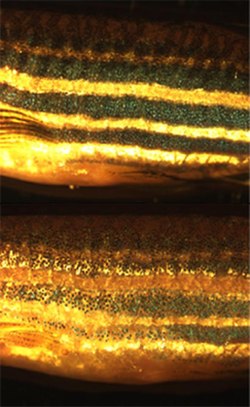
Danio rerio, commonly known as the zebrafish, is a small freshwater fish from South Asia known for its distinctive blue and silver stripes and its significance in scientific research.


Set reading age
View for Kids
Easy to read and understand
View for Students
Clear, detailed explanations
View for Scholars
Deep dives and big ideas
The zebrafish, scientifically known as Danio rerio, is a small, colorful fish from the minnow family! 🐟These little swimmers are usually about 1.5 to 2 inches long, with a striking blue and silver stripe pattern. Zebrafish are found in groups called schools and are popular pets because they are friendly and easy to take care of. They originate from rivers in India, Bangladesh, and Nepal. Zebrafish can be raised in tanks at home but are also vital in scientific research for studying genetics, disease, and development! Their lively nature makes watching them lots of fun! 🎉
Zebrafish are not currently endangered, but their populations can be affected by habitat loss due to pollution and overfishing. 🌍As more rivers and lakes get dirty, zebrafish may find it harder to survive. Organizations work to preserve habitats, making sure these little swimmers continue to thrive for years to come! 🌱When we understand their importance in the ecosystem, we can help protect their home by keeping our environment clean and being responsible pet owners! So, every action counts, making the world a better place for zebrafish and other animals! ❤️
Zebrafish have made a splash in culture too! 🌊In some cultures, these fish symbolize friendship and community because they thrive in schools. People also celebrate them in festivals, showcasing how important fish are in our lives. Zebrafish have become stars in research and education, helping many understand the secrets of life! 🎓Scientists around the world share their discoveries about zebrafish, making them interesting topics for school projects. So next time you see a zebrafish, think about how much they teach us about health, nature, and friendship – just like our friends! 🙌
Zebrafish are superstars when it comes to reproducing! 🌟Female zebrafish can lay up to 300 eggs at once, releasing them in the water. Males are eager to fertilize these eggs, which float among plants and debris. The eggs are tiny, clear, and jelly-like, making them hard to see! Within a day or two, baby zebrafish (called fry) hatch and swim around, learning to find their food. Baby zebrafish grow fast, developing stripes within a week! Zebrafish are known for their playful nature, so watching them grow from tiny eggs to full-grown fish is a fascinating adventure! 🐠
Zebrafish love to eat small food! 🥗In the wild, they mostly feast on tiny insects, plankton, and crustaceans. They also enjoy munching on algae and plant matter. They have tiny mouths and can nibble on small foods easily. When they are kept in fish tanks, their owners often feed them flake food, pellets, or freeze-dried foods specially made for zebrafish. 🥣It’s important to give them the right amount of food, as overfeeding can make them sick. Feeding them at the same time each day helps them know it’s chow time, creating a fun fishy routine! ⏰
Zebrafish thrive in shallow, slow-moving waters like rivers, streams, and ponds in South Asia. 🌏They prefer habitats with plenty of plants and hiding spots, where it’s easy to find food and safety! In India, you might catch them in the Ganges River, while in Bangladesh, they are found in many lakes. Zebrafish enjoy warm water temperatures between 72°F and 82°F (22°C to 28°C). Because they reproduce quickly, zebrafish populations can grow rapidly in the wild, so they’re commonly seen swimming around in schools – just like friends at a classroom party! 🥳
Zebrafish have a sleek, elongated body shape that helps them swim fast! 🏃♂️ They usually have a transparent body with five distinct horizontal stripes that can be blue or silver. The males are often slimmer and more vibrant than the females. Zebrafish also have tiny, bright eyes, which allow them to see well in their aquatic world. They have fins on their back (dorsal fin), sides (pectoral fins), and bottom (pelvic fins) to help them navigate through water easily. Their special ability to regenerate parts of their bodies, like fins, helps scientists learn how healing works in all animals! 🌊
Zebrafish play a key role in their habitats! 🌿As small fish, they help keep the water clean by eating algae and tiny creatures that could cause problems. By being a food source for larger animals like birds and bigger fish, zebrafish help support the entire food chain. 🐦Not only that, but when they nibble on harmful pests, they can help plants grow better in their environment! Their friendly nature and quick reproduction means they can adapt to changes, making them an essential part of their ecosystems, much like a superhero team in a school! 🌈
Taking care of zebrafish at home is quite simple and enjoyable! 🏡They thrive in a tank of at least 10 gallons with a filter to keep the water clean. It’s essential to maintain the right temperature (72°F to 82°F) and provide hiding spots with rocks and plants. 😊Feeding them once or twice a day with high-quality fish food helps keep them healthy! If you want to breed zebrafish, make sure you have both males and females in your tank. Just provide them with plenty of plant cover, and let nature do the rest! Their cheerful energy brightens up any space! 🌟
Like all pets, zebrafish can get sick too! 😷Some common health issues include fin rot, where their fins get damaged, and ich, a disease caused by tiny parasites. These problems can make them feel unwell, so it's important to keep their tank clean and watch for any unusual behavior, such as staying at the water’s surface, hiding too much, or having faded colors. If zebrafish seem sick, it's best to consult a vet who specializes in fish. Regular water changes and a balanced diet can help keep them happy and healthy! 🐋
Zebrafish are important in science! 🧪Because they’re so easy to breed and observe, scientists use them to study everything from genetics to human diseases. In laboratories, researchers can see how diseases develop because the fish’s body is similar in some ways to ours. Zebrafish embryos are transparent, which makes them perfect for watching how cells grow and change. 👀This research has helped scientists learn about heart diseases, cancer, and how body parts regenerate. By studying these fish, scientists can discover new medicines and treatments that could help people live healthier lives! 💉
🐟 The zebrafish is a small, colorful fish that belongs to the minnow family.
🏃♂️ Zebrafish can swim fast thanks to their sleek, elongated bodies.
🌏 They are found in shallow waters of rivers, streams, and ponds in South Asia.
🌟 Female zebrafish can lay up to 300 eggs at once during breeding time!
🥗 In the wild, zebrafish eat tiny insects, plankton, and algae.
🌿 Zebrafish help keep water clean by eating algae and tiny pests.
🧪 Scientists study zebrafish to learn more about genetics and diseases!
😊 Taking care of zebrafish at home is simple and enjoyable.
🐋 Common health issues in zebrafish include fin rot and ich.
🌍 Though not endangered, zebrafish face habitat loss due to pollution.


DIY is a creative community where kids draw, build, explore ideas, and share.
No credit card required