Crystalline Schist Facts For Kids
Crystalline schist is a medium-grained metamorphic rock characterized by its pronounced schistosity, allowing it to break into thin layers.
Select reading age

Crystalline Schist Facts For Kids
Videos & Quizzesincluded
About this topic
Crystalline schist is a special kind of rock! 🪨It's a medium-grained metamorphic rock, which means it was formed when other rocks changed due to heat and pressure. Schist has shiny layers called schistosity. These layers make it look beautiful, often sparkling in the sunlight! 🥳It can be found in many places around the world like the Himalayas in Asia and the Scottish Highlands. When you see schist, you can tell it has been transformed over millions of years from materials like clay and granite, showing how nature works over time! 🌍✨
Explore with ChatDinoKey Points
Crystalline schist forms through a process called metamorphism.
Crystalline schist is made up of different minerals!
Schist has some cool physical properties.
Did you know that schist can be used in various ways?
Geologists love studying schist!
Crystalline schist is found in many places around the world!
Fossils are not commonly found in crystalline schist because it forms under high heat and pressure, which usually destroys fossil remains.
Mining schist, like any rock, can have effects on the environment.
Crystalline schist is one of many metamorphic rocks!
Schist has been used by humans for ages!
Photos of Crystalline Schist
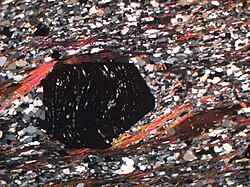
Crystalline Schist — photo 1
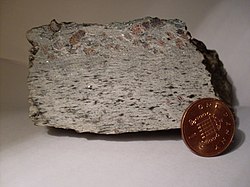
Crystalline Schist — photo 2

Manhattan Schist from Southeastern New York state, USA. Photo taken by myself on 3-13-05. A very flaky kind of medium-grade metamorphic rock. I picked it up in New York.
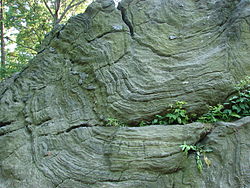
Metamorphic sedimentary Manhattan schist rock in Central Park in New York City.

Crystalline Schist — photo 5

Crystalline Schist — photo 6

Crystalline Schist — photo 7
🌋 Formation Processes
Crystalline schist forms through a process called metamorphism. 🌋This happens when rocks like shale or granite are buried deep in the Earth. As they go deeper, they experience heat 🔥 and pressure ⚖️ from the rocks above. Over long periods of time—sometimes millions of years—these rocks change. They become more solid and develop those shiny layers we love to see! The minerals in the original rocks rearrange themselves to create new ones, like mica, which gives schist its sparkly look. This fascinating process shows how powerful nature can be! 🌱
Go deeper💎 Mineral Composition
Crystalline schist is made up of different minerals! The main ones include mica, quartz, and feldspar. 💎Mica is what gives schist its shiny appearance because it can flake into thin sheets. Quartz is hard and can make up a big part of the rock, while feldspar adds color and variety. Together, these minerals can create beautiful patterns! 🎨Schist can also contain garnet and kyanite, making each piece unique. Did you know that the colors of schist can vary from silver to dark green? This is because of the different minerals mixed inside! 🌈
Go deeper🌊 Physical Properties
Schist has some cool physical properties. One key property is its schistosity, which means it has noticeable layers. 🌊When you look closely, you can see how these layers are stacked. The rock is typically medium-sized, meaning it's not too big and not too small. Schist also has a shiny surface because of the mica crystals. When you tap it, you’ll hear a soft sound, and it feels smooth! It can also be broken into thinner pieces easily along those layers. 🌟This is why we often find it in places where the ground has been pushed and pulled by the Earth.
Go deeper🎉 Uses And Applications
Did you know that schist can be used in various ways? 🎉People often use it for decorative purposes, like in landscaping or as building stones. The beautiful layers and colors make schist a great choice for art, sculptures, and even countertops! 🏡Some people use schist in construction because it is strong and can resist weathering. Plus, if you are into gardening, crushed schist can be used as mulch! This helps to keep soil moist and encourages plant growth. 🌼So, schist is not just pretty; it’s practical too!
Go deeper🧑🔬 Geological Significance
Geologists love studying schist! 🧑🔬 Why? Because it helps them understand how the Earth works and how rocks change over time. Schist often indicates that a region has experienced lots of geological activity, like mountain-building. The presence of schist shows that heat and pressure were involved in forming the Earth's crust in that area. 🏔️ It also helps scientists learn about past environments, showing what kinds of rocks existed before. By studying schist, scientists get clues about the history of landforms, mountains, and even earthquakes! 📊
Go deeper🌍 Occurrence And Locations
Crystalline schist is found in many places around the world! 🌍Some famous locations include the Adirondack Mountains in New York, the Scottish Highlands, and the Swiss Alps. 🏔️ These areas have mountains made from schist due to the geological forces that shaped them! Schist can also be seen in parts of Canada, Norway, and Madagascar. 🌞Each location has its unique pattern of schist based on the minerals found there. So next time you're hiking in these beautiful mountains, keep an eye out for the shiny schist rocks along the trails! 🚶♂️
Go deeper🦕 Fossils And Paleoenvironments
Fossils are not commonly found in crystalline schist because it forms under high heat and pressure, which usually destroys fossil remains. 🦕However, schist can tell us about ancient environments! By studying the minerals and textures in schist, scientists can understand the conditions that existed long ago when the rocks were formed. This process helps them learn about the Earth's history and what it was like millions of years in the past! 🌌So, while schist might not show us actual fossils, it still holds important clues about our planet's story. 📜
Go deeper⛏️ Environmental Impact Of Mining
Mining schist, like any rock, can have effects on the environment. ⛏️ When we extract schist from the ground, it can lead to land disturbances and habitat loss for plants and animals. 🌳If not managed carefully, it can also pollute nearby rivers and streams with dust and debris. That's why it's essential to mine responsibly and restore the land afterward. 🌻Many companies work on ways to reduce these effects, ensuring the beautiful landscape remains healthy for future generations! 🌍Let's protect our planet and its resources!
Go deeper🌈 Comparison With Other Metamorphic Rocks
Crystalline schist is one of many metamorphic rocks! 🌈It’s often compared to gneiss, another metamorphic rock known for its banding patterns. While gneiss has visible bands of minerals, schist is famous for its shiny, flaky layers. Schist is more medium-grained than granite, which is an igneous rock made from cooled magma. In contrast to slate, schist is coarser and more sparkly. 🌟So, while all these rocks are special in their own way, schist stands out for its unique schistosity and beautiful shimmer! 💖
Go deeper🏺 Cultural Significance And Historical Uses
Schist has been used by humans for ages! 🏺In ancient times, it was utilized for tools and building materials because of its sturdy nature. People in places like ancient Greece made structures with schist to last a long time. ⛪Today, some communities celebrate the beauty of schist in their local art and architecture, preserving its cultural significance. In some cultures, schist is also believed to have spiritual meaning. 🌟People in these cultures regard schist as a symbol of strength and durability, reflecting the rich history and connection humans have with this fascinating rock! 🎉
Go deeper