Cryptoprocta Ferox Facts For Kids
The fossa is a slender, long-tailed mammal resembling a cat, found only in Madagascar, where it is the top predator of its unique ecosystem.
Select reading age
Cryptoprocta Ferox Facts For Kids
Videos & Quizzesincluded
About this topic
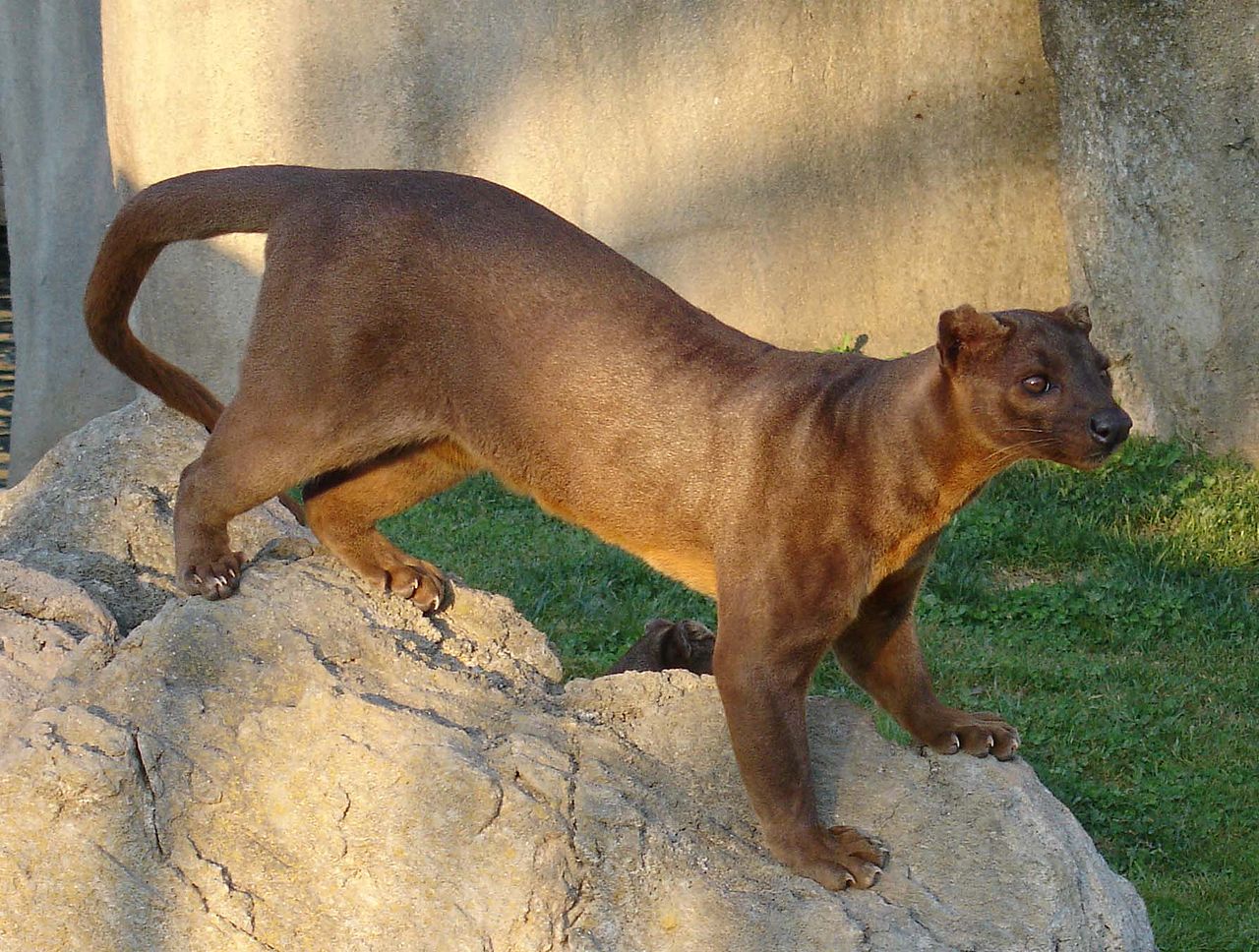
The fossa (Cryptoprocta ferox) is a fascinating mammal found only in Madagascar! 🐾It resembles a mix between a cat and a dog, but it is neither. Fossas are known for their impressive climbing skills and can leap from tree to tree. They can grow up to 6 feet long, including their long tails, which help them balance! 🐆They are the top predator on this magical island, and their diet mainly consists of lemurs, birds, and small mammals. Fossas are nocturnal, meaning they sleep during the day and come alive at night! 🌙
Explore with ChatDinoQuick Facts
Key Points
Fossas are currently classified as “vulnerable” by the International Union for Conservation of Nature (IUCN).
Fossas are found only in Madagascar, an island nation off the southeastern coast of Africa.
Fossas are quite striking with their slender bodies, short legs, and long tails.
Fossas are carnivorous mammals, meaning they eat other animals.
Fossas mate in the rainy season between September and December.
Fossas belong to the family Eupleridae, which is special because it includes unique animals found only in Madagascar.
Fossas are solitary animals, which means they like to live alone.
In Madagascar, the fossa is considered an important symbol of biodiversity.
Unlike most carnivorous mammals, fossas are unique to Madagascar and don’t have close relatives anywhere else in the world.
Photos of Cryptoprocta Ferox


Cranium (dorsal, ventral, and lateral views) and mandible (lateral and dorsal views)

External genitalia of Cryptoprocta ferox

Fossa are active both day and night (cathemeral).

Cryptoprocta Ferox — photo 5

Cryptoprocta Ferox — photo 6

Fossa illustration circa 1927
🌍 Conservation Status
Fossas are currently classified as “vulnerable” by the International Union for Conservation of Nature (IUCN). 🌍This means they are at risk of becoming endangered. One reason for this is habitat loss due to deforestation, which is when trees are cut down. Additionally, they face threats from hunting and competition for food with domestic animals. Conservation efforts are taking place in Madagascar to help protect these amazing animals. Organizations are working to save their natural habitats and are educating locals about the importance of preserving the fossa!
Go deeper🌴 Habitat And Distribution
Fossas are found only in Madagascar, an island nation off the southeastern coast of Africa. 🌴They love living in tropical rainforests, dry forests, and rocky areas. There are many different kinds of habitats in Madagascar, and the fossa has adapted to live in them all! These amazing creatures prefer places where they can easily climb trees and have lots of cover to sneak up on their prey. Madagascar is home to unique wildlife, and the fossa is one of its most incredible animals! 🦎
Go deeper🐕 Physical Characteristics
Fossas are quite striking with their slender bodies, short legs, and long tails. They typically weigh between 15 to 26 pounds (7 to 12 kg) and grow to about 5 to 6 feet in length! 🐕Their fur is reddish-brown with a bit of a gray tint. Fossas have small, rounded ears and bright yellow eyes that shine at night. 🌙Their claws are sharp, making it easier for them to climb trees and catch prey. Plus, their flexible spines allow them to twist and turn quickly! With these features, they are expertly built for life in the wild!
Go deeper🐦 Diet And Hunting Behavior
Fossas are carnivorous mammals, meaning they eat other animals. 🐦Their main meal is often lemurs, which are also found in Madagascar. They are great hunters and can leap several feet into the air to catch their prey. Fossas use their keen senses, especially their sharp vision and smell, to track animals. They hunt alone and are mostly active at night, which makes them stealthy predators! 🌜Besides lemurs, they also enjoy birds, small mammals, and even reptiles! This makes them an important part of Madagascar's ecosystem.
Go deeper🌧️ Reproduction And Lifespan
Fossas mate in the rainy season between September and December. 🌧️ After a gestation period of about three months, females give birth to 2 to 4 young. Baby fossas are born blind and helpless, so they stay with their mother for about 6 months. During this time, they learn how to hunt and navigate their environment. Fossas can live around 12-20 years in the wild, depending on threats they may face. In captivity, they can live even longer. Life for a fossa is all about growing strong and becoming great hunters! 🦊
Go deeper🌍 Classification And Taxonomy
Fossas belong to the family Eupleridae, which is special because it includes unique animals found only in Madagascar. 🌍They are closely related to mongooses and civets. Fossas belong to the order Carnivora, which means they mainly eat meat. They have their own genus called Cryptoprocta. This name comes from two Greek words: "kryptos," meaning hidden, and "procta," meaning anus. This is because fossil remains of these animals were found at hidden sites. 😮Their scientific name might sound fancy, but it's a fun way to learn where they fit in nature!
Go deeper🚫 Social Structure And Behavior
Fossas are solitary animals, which means they like to live alone. They mark their territory with scent to let others know where they are! 🚫They are stealthy and prefer to stay hidden while they hunt. Interestingly, during mating season, males and females may come together, but they usually part ways afterward. Fossas are mostly active at night (nocturnal), which helps them avoid competition with other predators. 🦉They have a unique way of moving — they can jump from branch to branch in the trees, just like a feline!
Go deeper🌿 Cultural Significance In Madagascar
In Madagascar, the fossa is considered an important symbol of biodiversity. 🌿Locals tell stories and legends that involve these magnificent animals, often depicting them as cunning and clever. The fossa is featured in the country’s folklore, connecting people to their unique wildlife. 🌟Some Madagascar people believe that fossas have special powers, making them significant in cultural traditions. Protecting fossas also helps protect the beautiful island's rich biodiversity, which is vital for the culture and economy of Madagascar.
Go deeper🐕 Comparison With Other Carnivorous Mammals
Unlike most carnivorous mammals, fossas are unique to Madagascar and don’t have close relatives anywhere else in the world. 🐕In contrast to big cats like lions and tigers, which are larger and hunt in packs, fossas are smaller and prefer to hunt alone. 🐾While paws and claws are common among carnivores, fossas have incredibly flexible spines that help them climb and leap with agility! Additionally, unlike wolves that howl and communicate in packs, fossas rely on their keen sense of smell and stealth to communicate. Each carnivore has its own special skills for survival! 🌟
Go deeper