Classical Economics Facts For Kids
Classical economics is a school of thought that emphasizes free markets, competition, and the self-regulating nature of the economy, foundational to modern economic theories.
Select reading age
Classical Economics Facts For Kids
Videos & Quizzesincluded
About this topic
Classical economics is a way of thinking about how countries can use money and resources to help people live better lives! 💰✨ It started in the late 18th century and became popular by the 19th century. Classical economists believed that if people worked hard and traded freely, it would help everyone. Think of it like a big puzzle where all the pieces fit together to make a beautiful picture of wealth and happiness for people in society! 🌍
Explore with ChatDinoKey Points
In classical economics, the government's role is important but limited.
Some people believe classical economics doesn't always explain real-life problems.
Classical economics started in the late 1700s with thinkers like Adam Smith, who is often called the "father" of economics.
Neoclassical economics is like an upgraded version of classical economics!
Modern economics still uses many ideas from classical economics!
The key idea of classical economics is called "the invisible hand," which means that people's choices can help many others, even if they just want to help themselves!
Key people in classical economics included Adam Smith, whose "invisible hand" theory explained how markets work.
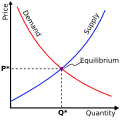
Supply and demand is a simple way to understand how prices are set.
📏 Role Of Government In Economy
In classical economics, the government's role is important but limited. 📏It should help create laws that support fair trading and protect property rights, so everyone knows what belongs to them! But classical economists believe that if the government tries to control everything, it might hurt the economy. They think businesses should mostly operate freely. Think of the government as a referee in a game, making sure everyone plays fair but not telling players how to play! ⚖️
Go deeper😕 Critiques Of Classical Economics
Some people believe classical economics doesn't always explain real-life problems. For example, it assumes everyone acts rationally and isn't influenced by emotions. 😕This can be very different from what we see! Many jobs might be unfairly paid or people can be affected by things like recessions (when the economy is not doing well), which classical economics doesn't always cover. Some critics say it needs to be updated to include more social issues. Their comments led to new economic ideas! 🏦
Go deeper📚 Historical Context And Development
Classical economics started in the late 1700s with thinkers like Adam Smith, who is often called the "father" of economics. He wrote a famous book called “The Wealth of Nations” in 1776. 📚Over time, other economists like David Ricardo and John Stuart Mill added their ideas, helping classical economics grow. Countries like England and France were the main places where these ideas were discussed! 🎉This was also during the time of the Industrial Revolution, when factories and machines were changing how things were made!
Go deeper📈 Evolution To Neoclassical Economics
Neoclassical economics is like an upgraded version of classical economics! It started in the late 1800s, when economists added new ideas about consumer choices and firm behavior. 📈The main thinkers, like Alfred Marshall and Leon Walras, focused on how individual preferences affect markets and dealt with more complex equations. It’s a bit like moving from a simple drawing to a detailed painting! 🎨Neoclassical economics today uses more math and models, making it a bit different but still connected to classical ideas.
Go deeper🤔 Influence On Modern Economic Thought
Modern economics still uses many ideas from classical economics! 🤔For example, the importance of free markets and how people make choices continues to be studied today. Governments around the world use some principles of classical and neoclassical economics when deciding on laws and policies. 🌟Even kids can see this when they trade snacks or toys on the playground! So, classical economics isn’t just about the past, it helps us understand money and choices in our everyday lives! 🍎
Go deeper🖐️ Key Principles Of Classical Economics
The key idea of classical economics is called "the invisible hand," which means that people's choices can help many others, even if they just want to help themselves! 🖐️ It also talks about wealth creation—how goods and services are made—and how these can be distributed fairly. Free markets, where sellers and buyers interact, are very important! Prices are determined by what people want and what’s available. So, if you want more toys, the prices might go up because more children want them! 🎈
Go deeper🌎 Major Contributors And Their Theories
Key people in classical economics included Adam Smith, whose "invisible hand" theory explained how markets work. David Ricardo said that trade could help countries grow, even if one country is better at making everything! 🌎John Stuart Mill focused on government roles and how it should help fairness in society. These thinkers created ideas that are still important in the economy today! They showed how smart decisions can lead to better lives for everyone! 🌟
Go deeper🎁 Supply And Demand In Classical Economics
Supply and demand is a simple way to understand how prices are set. When a lot of people want a new toy (demand), companies will make more of that toy (supply) until everyone can get one! 🎁If too many toys are made, their prices might go down because nobody wants an extra one. 🛍️ The classic supply and demand curve is like a colorful graph that shows how price changes. Kids can think of it as a balancing act—like a see-saw where both sides must be equal for everyone to be happy! 🎢
Go deeper