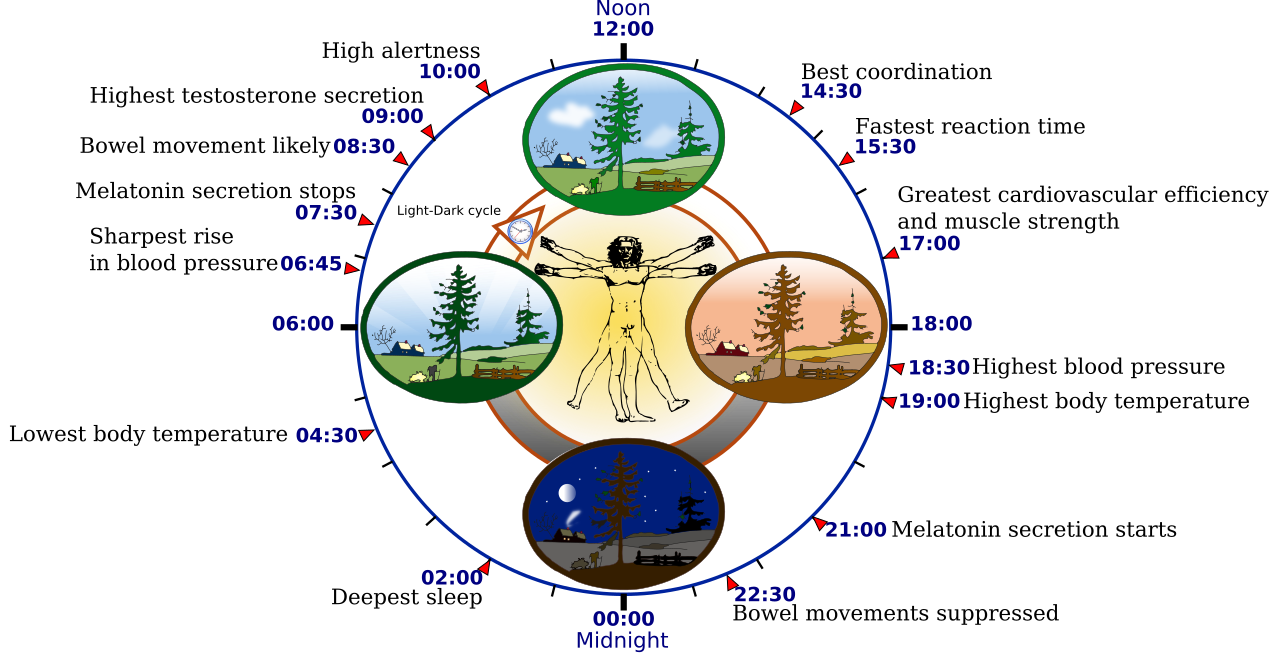
A circadian rhythm is a natural oscillation that repeats roughly every 24 hours, regulating sleep, eating, and other bodily functions.
Set reading age
View for Kids
Easy to read and understand
View for Students
Clear, detailed explanations
View for Scholars
Deep dives and big ideas
Circadian rhythms are like magic internal clocks that help our bodies know when to sleep and when to wake up! 🌙⏰ These rhythms repeat every 24 hours and keep us in sync with day and night. They affect many things, like our mood, sleeping patterns, and even when we're hungry! Scientists have discovered that these rhythms are controlled by tiny cells in our brains, which respond to light and darkness. For example, when it's bright outside, we feel energetic, and when it's dark, we get sleepy. Isn't our body's clock cool? ⏳😊
A circadian rhythm is a natural cycle in our bodies that helps us know what time it is. It repeats every 24 hours, telling us when to be awake and when to rest. 🌞🌜 This rhythm affects many living things, like animals, plants, and even tiny bacteria! It helps us feel awake during the day 🦋 and sleepy at night. Everyone has their own circadian rhythm, so some people like to go to bed early while others stay up late! Understanding our rhythm is super important for our health and happiness! 🎈
Did you know your body's clock also affects your mood? 😊When we don't sleep well, we can feel cranky or sad. Studies show that people with disrupted circadian rhythms have a higher chance of feeling anxious or depressed. 🌧️ Keeping a regular sleep schedule helps improve our mood and gives us energy for each day! Happiness levels can rise when we wake up and sleep at the same time and enjoy some sunlight. ☀️ If you are ever feeling down, cozying up with a good night's sleep might just bring back your sparkle! 🌈✨
Some people have trouble with their circadian rhythms, which can lead to sleep disorders. 😴For instance, people with insomnia find it hard to fall asleep at night. Others might have something called "shift work disorder," which is when someone has irregular work hours, mixing up their sleep patterns. 🕐Many scientists are studying ways to help those with sleep issues get back on track! If someone has trouble, they can try some techniques to reset their rhythm, like creating a nighttime routine or using light to help. 🌌💡
Circadian rhythms are controlled by special proteins called "clock genes" found in our bodies. 🧬These proteins respond to light, helping us adjust our internal clocks. The most famous "clock gene" is called "CLOCK," which tells our bodies when to be awake or sleepy. 🌅The brain's “master clock” is called the suprachiasmatic nucleus (or SCN for short) and it sits right behind our eyes. When the sun rises, it sends signals to the SCN to wake us up! This amazing system keeps everything running smoothly! 🚀
When our circadian rhythms get messed up, it can be a little tricky. 😟For example, if you don’t sleep enough or stay up too late, you might feel grumpy the next day. Disruption can happen if we travel long distances or have bright lights on at night. This can lead to problems like trouble sleeping, feeling tired, or even being sick more often! 🏥Proper sleep helps our body fight germs and keep our batteries charged! So, it’s important to keep our rhythms regular for a happy and healthy life! 💪
Circadian rhythms aren't just for humans! 🌍Many living things have their own unique rhythms. For example, birds know when to sing at dawn and flowers open up in the morning to soak in sunlight. 🌷🐦 Even animals like nocturnal owls and sleeping sloths have special rhythms for their activities! People aren’t the only ones that can be affected by light too; some fish can change color depending on the time of day! 🐠Each species has adapted to its environment, showing us how amazing nature is! 🌟
Light is like a superhero for our circadian rhythm! ☀️ When bright light shines in the morning, it tells our bodies, "Hey, time to wake up!" 🌄 But when the sun sets and it gets dark, our brain tells us it's time to get cozy and sleep. 💤Different types of light can affect how we feel: natural sunlight is the best! Daylight helps our bodies produce a hormone called melatonin that makes us sleepy at night. The blue light from screens can trick our brains into thinking it’s still daytime, so it’s important to turn off electronics before bed! 📱🛌
Did you know that different cultures have their own unique sleep patterns? 🌍In many countries, some people take short naps called siestas during the day, especially in warm climates! 💤In ancient times, people often slept in two separate periods at night, with a wakeful time in between! They would read or pray before going back to sleep. 📜These variations show us that sleep is important everywhere in the world! Understanding different sleep customs helps us appreciate how important a good night’s rest is for everyone! 🌙💤
Want to keep your internal clock happy? Here are some easy tips! 🌟First, go to bed and wake up at the same time every day, even on weekends! 🛌⏰ Make sure your room is dark and cool when you sleep. Avoid screens and bright lights an hour before bedtime. 📵Also, try getting some sunlight in the morning to boost your mood and energy! 🌅Lastly, eat healthy meals at regular times to help your body understand when to feel hungry. Following these tips leads to a happy, healthy rhythm! 🎉


DIY is a creative community where kids draw, build, explore ideas, and share.
No credit card required