Cimmerians Facts For Kids
The Cimmerians were an ancient nomadic people known for their horse riding, fierce warrior culture, and interactions with various civilizations in the Pontic-Caspian steppe.
Select reading age
Cimmerians Facts For Kids
Videos & Quizzesincluded
About this topic
The Cimmerians were a group of ancient nomadic people who lived long ago, around 700 BC, in a region called the Pontic-Caspian steppe, which is in Eastern Europe and Western Asia 🌍. They were known for being great horse riders and living in tents. The Cimmerians moved around a lot, following their animals to find fresh grass for them to eat. They were fierce warriors and had a big impact on other cultures. Although they aren't around today, they are still remembered for their exciting history and brave adventures.
Explore with ChatDinoKey Points
The Cimmerians created unique art and artifacts that tell us about their lives 🎨.
The Cimmerians left a significant mark on history 🌍!
The Cimmerians were always moving, often in search of better grazing land for their animals 🌾.
The Cimmerians were known as fierce fighters and often engaged in battles to defend their tribes or conquer new lands ⚔️.
Even though the Cimmerians faded away as a distinct group, their impact is still felt today!
The Cimmerians had their own beliefs about the world around them 🌜.
The Cimmerians lived in a culture tied to nature, relying on herding animals like horses, sheep, and goats 🐑 for food and materials.
The Cimmerians came from the Pontic-Caspian steppe, which stretches from Ukraine 🏞️ to Kazakhstan.
Cimmerian society was organized into tribes, with each tribe led by a chief 🏇.
As the Cimmerians moved around, they interacted with many other ancient cultures 🌟.
Photos of Cimmerians

Cimmerians — photo 1

Cimmerian invasions of Colchis, Urartu and Assyria in 715–713 BC.

The Assyrian king Sargon II (left) and the crown prince Sennacherib (right).

An Assyrian relief depicting Cimmerian mounted warriors

Reproduction of a depiction of Cimmerian mounted archers from a Greek vase.

A Thracian mounted warrior followed by a warrior on foot.

Painting depicting Cimmerian mounted warriors from a Klazomenian sarcophagus.

Reproduction of a depiction of a Cimmerian archer from a Greek vase.

A relief depicting mounted Lydian warriors on slab of marble from a tomb.
🎨 Art And Artifacts
The Cimmerians created unique art and artifacts that tell us about their lives 🎨. They made beautiful jewelry from gold and silver, some shaped like animals they admired. They also crafted pottery and tools used for daily activities. Many of their designs reflected their connection to nature, showing flowers, animals, and mythical creatures. Artifacts like weapons, horse gear, and decorations have been found in archaeological sites, helping historians learn more about their culture and lifestyle. These objects continue to encourage curiosity about the wonderful world of ancient Cimmerians!
Go deeper🌍 Historical Impact
The Cimmerians left a significant mark on history 🌍! Though they eventually vanished, their interactions with various civilizations shaped the ancient world. They influenced the cultures in regions like Asia Minor and the Black Sea area. Their warrior skills also inspired later nomadic tribes, like the Scythians, who admired their fighting techniques and way of life. The Cimmerians' legacy is reflected in stories and writings from other cultures, showing how they were remembered. They remind us of the bravery and adventurous spirit of ancient peoples.
Go deeper🌾 Migration Patterns
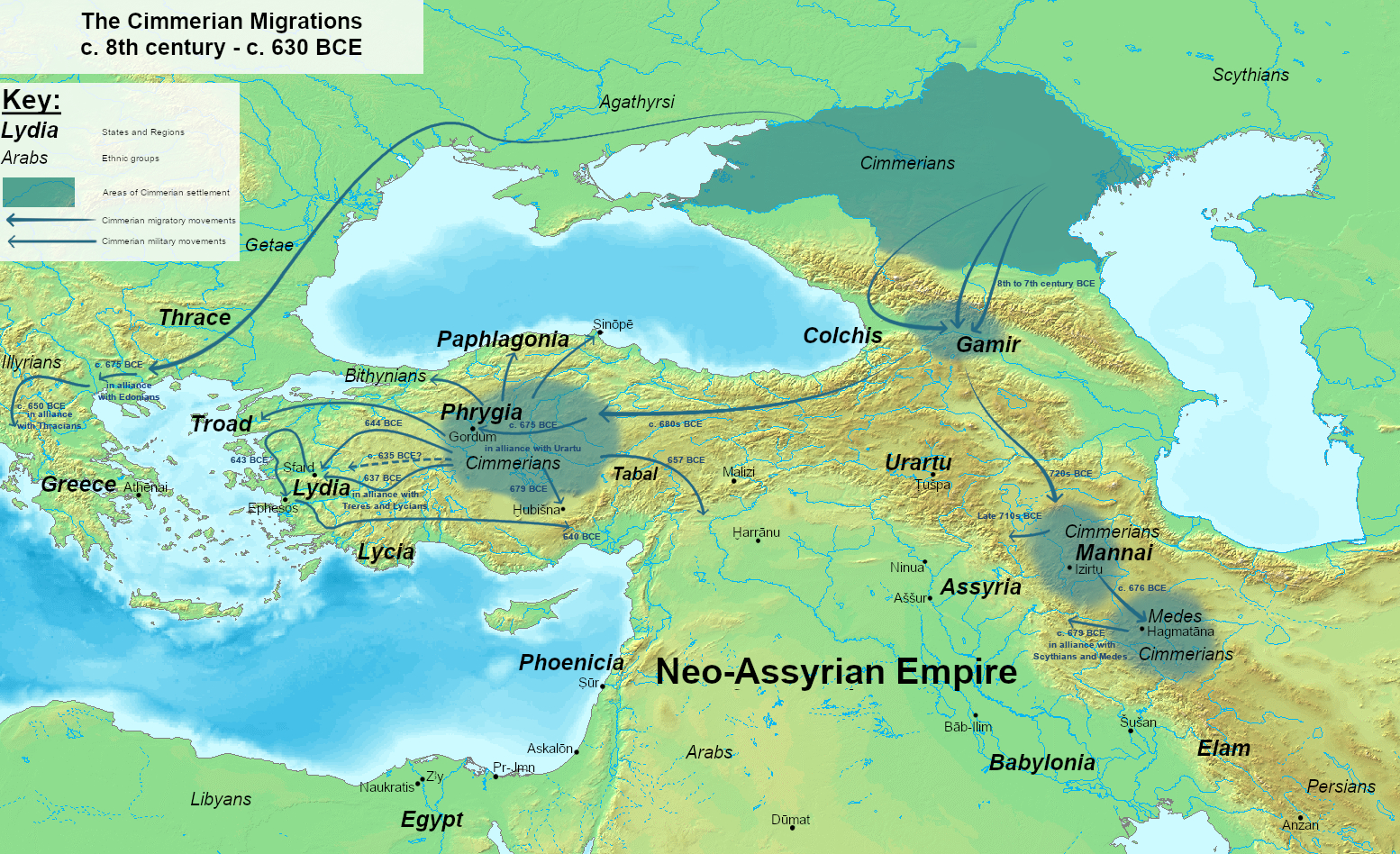
The Cimmerians were always moving, often in search of better grazing land for their animals 🌾. Historical records show they migrated from the Pontic-Caspian steppe to places like Asia Minor (now part of Turkey). They often followed animal migration paths and seasonal weather changes. This nomadic way of life allowed them to adapt and thrive in various regions. The Cimmerians roamed in groups, searching for food and safety. Their migrations created connections with other cultures, influencing the lands they visited. This dynamic lifestyle showed their resilience and adventurous spirits!
Go deeper⚔️ Wars And Conflicts
The Cimmerians were known as fierce fighters and often engaged in battles to defend their tribes or conquer new lands ⚔️. They clashed with other groups, such as the Scythians, who lived not far from them. These conflicts sometimes led them to migrate even further, searching for safety and resources. The Cimmerians used horses in warfare, which gave them a speedy advantage. They would attack in groups, surprising their enemies! Their reputation as warriors made other civilizations respect and fear them during their time as nomads in the ancient world.
Go deeper💫 Legacy And Influence
Even though the Cimmerians faded away as a distinct group, their impact is still felt today! 💫They are mentioned in ancient texts and stories, keeping their memory alive. Some scholars believe that they influenced the culture of neighboring groups, including the Greeks. The tales of their bravery on horseback and exciting nomadic life inspire many authors and filmmakers. Their way of life continues to be an exciting topic for kids and historians alike! For us today, the Cimmerians represent adventure, resilience, and the importance of understanding our world's past.
Go deeper🌜 Religion And Beliefs
The Cimmerians had their own beliefs about the world around them 🌜. They worshipped various gods and spirits they believed protected them and their animals. Nature played a vital role in their religion, as they respected the earth, sky, and seas. These beliefs were often shared through oral traditions and stories, connecting their community. The Cimmerians practiced rituals to honor their gods when they had victories in battle or good fortune. Though we might not know all their practices, we do know they valued spirituality in their lives!
Go deeper🐑 Culture And Lifestyle
The Cimmerians lived in a culture tied to nature, relying on herding animals like horses, sheep, and goats 🐑 for food and materials. They lived in homes called "yurts," which were easily movable and suitable for their nomadic life. Their society had a strong warrior tradition, and they were skilled in hunting. They wore clothes made from animal skins and wove wool into beautiful textiles. The Cimmerians shared stories of their adventures around fires, much like we tell stories today! 🏕️ This oral tradition helped keep their history and legends alive.
Go deeper🏞️ Origins Of The Cimmerians
The Cimmerians came from the Pontic-Caspian steppe, which stretches from Ukraine 🏞️ to Kazakhstan. This area is known for its grassy plains, perfect for raising horses! Some scholars believe the name "Cimmerian" is linked to "Gimirri," an ancient term. They possibly migrated from places like the Caucasus Mountains and settled in different regions, including areas of what is now Turkey. This movement helped them adapt to different climates and find new places to live and explore. These skilled horse riders became well-known across the lands they traveled! 🐴
Go deeper🏇 Society And Social Structure
Cimmerian society was organized into tribes, with each tribe led by a chief 🏇. Families worked together and shared responsibilities, like herding animals and cooking. They valued bravery and strength, so warriors were highly respected. Social gatherings often included celebrations for successful hunts or victories in battle. Cimmerians encouraged teamwork, teaching their children to ride horses and become skilled hunters from a young age. Their sense of belonging to a tribe was strong, as the support of the group helped them survive in their tough, nomadic lifestyle!
Go deeper🌟 Interactions With Other Civilizations
As the Cimmerians moved around, they interacted with many other ancient cultures 🌟. They faced groups like the Assyrians and the Scythians, trading goods and sometimes clashing in battles. Some historians believe the Cimmerians had contact with the Hittites, an ancient civilization in modern-day Turkey. Through these interactions, they exchanged ideas, stories, and even food! While some of these encounters were friendly, others were hostile, as the Cimmerians fought to protect their territory. These relationships influenced the history of the regions they entered.
Go deeper