Chondrichthyes Facts For Kids
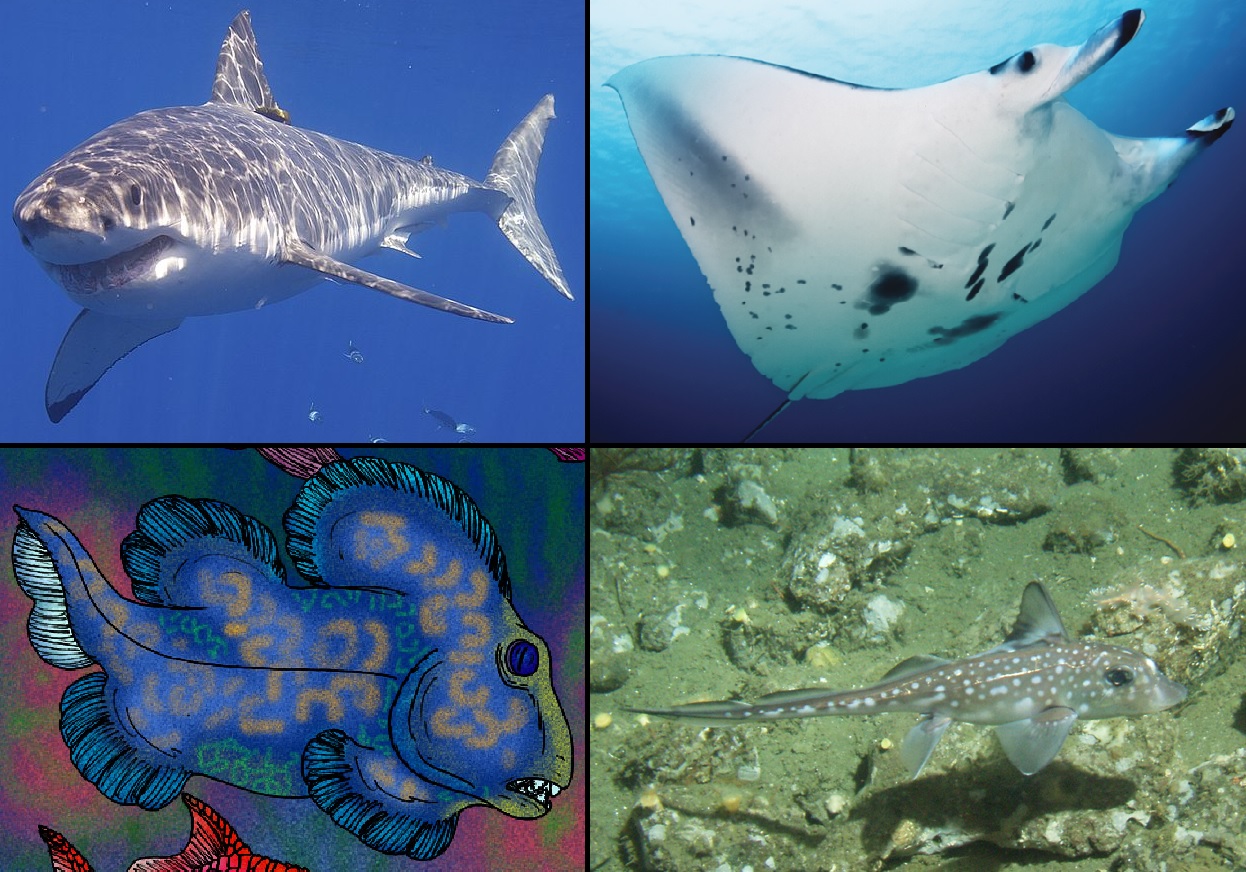
Chondrichthyes is a class of jawed fish composed mainly of cartilage, including diverse species such as sharks and rays!

Do more with AI
Introduction
Chondrichthyes are a special group of fish known as cartilaginous fish! 🐟✨ This means their skeletons are made mostly of cartilage, not hard bones like many other fish. Sharks, rays, and skates are examples of Chondrichthyes. They live in oceans all around the world 🌍 and are fascinating creatures with unique features, like sharp teeth and keen senses. Did you know that there are over 1,200 species of Chondrichthyes? Some can be as small as a catfish and others, like the whale shark, can grow as long as a school bus! 🚍They have been around for over 400 million years—wow!
Images of Chondrichthyes


![Regions of a Chondrichthyes brain colored and labeled on dissected skate. The rostral[broken anchor] end of the skate is to the right.](https://upload.wikimedia.org/wikipedia/commons/thumb/4/43/Skate_Brain_Regions.png/330px-Skate_Brain_Regions.png)
Regions of a Chondrichthyes brain colored and labeled on dissected skate. The rostral[broken anchor] end of the skate is to the right.


Ecological Role
Chondrichthyes play important roles in the ocean ecosystem! 🌊They are often referred to as "keystone species," meaning they help balance the marine environment. Sharks control fish populations by eating sick or weaker individuals, keeping the ecosystem healthy. This predation helps maintain diversity, as it prevents any one species from taking over! Rays also contribute by feeding on shellfish and other organisms, helping to keep their populations in check. 🌍By maintaining balance within their habitats, Chondrichthyes play a vital role in keeping the ocean thriving!
Feeding And Diet
Chondrichthyes are unique eaters! 🦈Most sharks are carnivores, which means they enjoy eating meat. They love to munch on fish, squid, and even seals! Some sharks have special filters in their mouths to help them eat tiny creatures called plankton. 🦐Rays, on the other hand, feed on small fish, shrimp, and mollusks by burying themselves in the sand and capturing prey that swims nearby. Sharks have super-efficient senses—they can smell a tiny drop of blood from a mile away! This helps them find food and thrive in their underwater homes! 🌊
Unique Adaptations
Chondrichthyes have some super cool adaptations! 🦈For example, many sharks can detect electric fields produced by other animals, which helps them find prey hiding in the sand. Their bodies are also incredibly hydrodynamic, allowing them to glide through the water efficiently. Some rays have flattened bodies that help them camouflage against the ocean floor. 🏝️ Others, like the manta ray, can leap out of the water, which is spectacular to see! 🐟These adaptations help Chondrichthyes survive and thrive where they live, making them truly remarkable!
Conservation Status
Many Chondrichthyes species are facing tough challenges! 😟Overfishing for their fins, meat, and oil has led to population declines. Some species, like the hammerhead shark, are now endangered! The World Wildlife Fund (WWF) and other organizations work hard to protect them. 🛡️ It's important to create marine protected areas and enforce fishing regulations to ensure their survival. To help, we can learn about these amazing fish and spread the word about their importance in our oceans! 🌊Protecting Chondrichthyes means protecting the health of our seas and the beautiful life within them.
Cultural Significance
Chondrichthyes have a big presence in culture! 🌊Many ancient societies viewed sharks and rays as powerful beings. In some Native Hawaiian cultures, sharks are considered 'aumakua, or personal gods that protect people. 🛡️ Some legends tell tales of giant sea monsters resembling modern-day sharks! In movies, like "Jaws," sharks are depicted as fearsome figures, but they are really important for maintaining ocean health! By studying these fascinating fish, we learn more about our oceans and their mysteries—we must celebrate and respect them! 🌏
Anatomy And Physiology
Chondrichthyes have some really cool body parts! 🦈Their skeletons are made of cartilage, which makes them light and flexible. This helps them swim faster! They also have gills on the sides of their bodies, allowing them to breathe underwater. Their skin is covered in tiny scales called "dermal denticles," which feel like sandpaper. These scales help them glide smoothly through the water. Chondrichthyes also possess strong jaws packed with sharp teeth. 🦷Some sharks can lose thousands of teeth in their lifetime, but new ones just keep growing back. Isn't that amazing?
Reproductive Strategies
Chondrichthyes have several ways of having babies! 🐾Some species, like the great white shark, give birth to live young—called "ovoviviparous." Others lay eggs, which hatch later. These smaller eggs, called "mermaid's purses," are often found washed up on beaches. What’s extra special is that some rays can also have live births! 🐡This means young fish start their lives almost like their parents instead of starting as tiny eggs. Reproduction can be a slow process, with some sharks taking several years to mature before they have babies. 🌱
Habitat And Distribution
Chondrichthyes live in many ocean habitats, from shallow coral reefs to deep, dark waters! 🌊🌐 Sharks can be found in warm tropical seas, while others prefer colder waters like the Arctic Ocean. Rays often lie flat on the ocean floor, hiding in sand or mud. Chondrichthyes can be found in all the world's oceans: the Atlantic, Pacific, Indian, and even the Mediterranean Sea! 🌍They love exploring the underwater world, sometimes swimming alone or in schools with other fish. Their ability to adapt helps them thrive in various environmental conditions!
Interesting Myths And Facts
There are many fun facts and myths about Chondrichthyes! 🐠For example, did you know that some people believe sharks can smell a drop of blood from a mile away? While they can smell very well, they usually need closer distances to trigger a feeding response. 🌊Another interesting fact is that whale sharks—the largest fish in the world—are gentle giants that feed mainly on plankton! 🐋They’re friendly and harmless to humans, as they have no interest in nibbling on people! Learning about these creatures helps us appreciate their wonder and importance!
Classification Of Chondrichthyes
Chondrichthyes are divided into two main groups: Elasmobranchii and Holocephali. 🦈Elasmobranchii includes sharks and rays, which are the most well-known types. They have flat bodies and often live close to the ocean floor. Holocephali includes chimeras ("ghost fish"), which are less common. They have a unique appearance with large heads and long tails! 🌊There are about 500 species of Elasmobranchii and around 47 species of Holocephali. Each group has its own special characteristics, but what they share is their amazing ability to adapt to different ocean environments!
Chondrichthyes Quiz
Learn more about Chondrichthyes
