Cahokia was a monumental Mississippian cultural center located near present-day St. Louis, Missouri, known for its large earthen mounds and complex societies.
Set reading age
View for Kids
Easy to read and understand
View for Students
Clear, detailed explanations
View for Scholars
Deep dives and big ideas
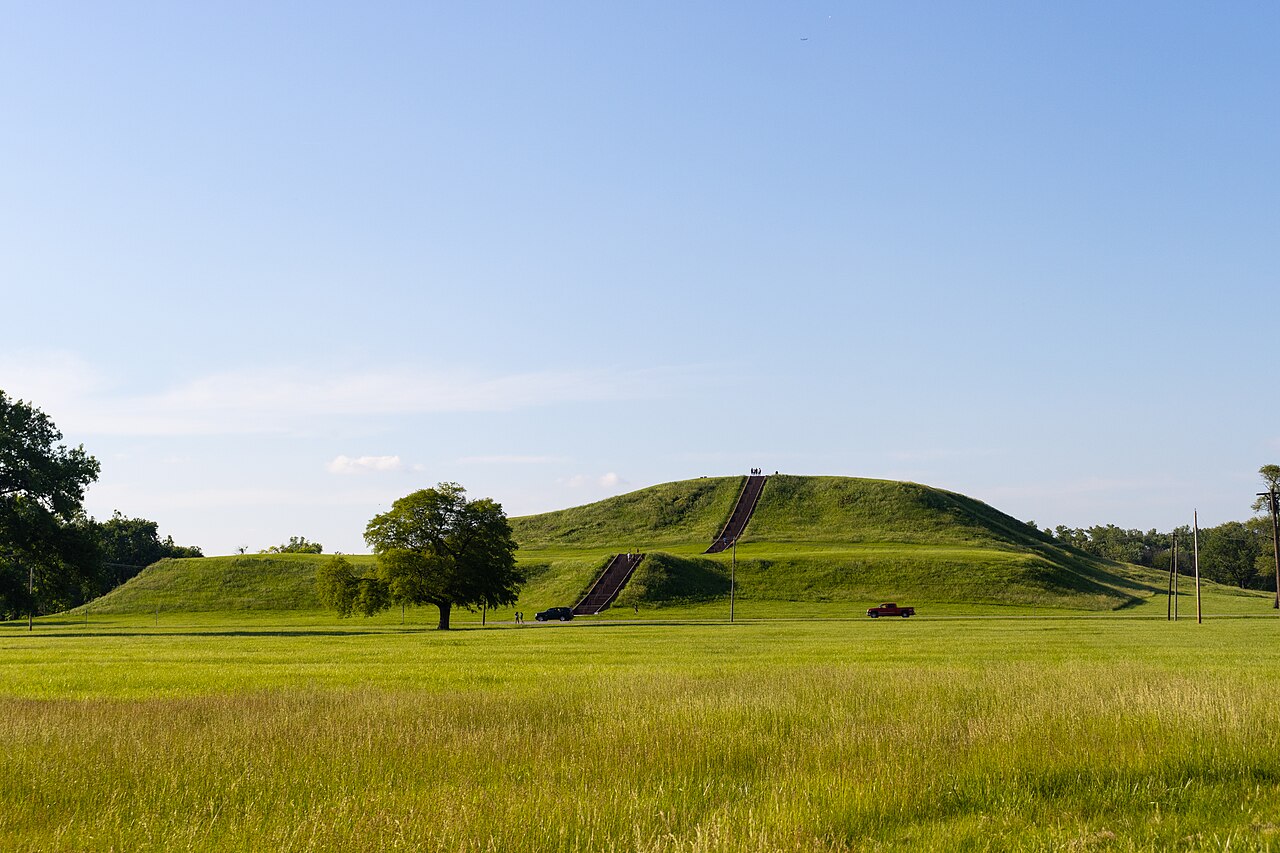
Cahokia was a large Native American city located near present-day Collinsville, Illinois 🇺🇸, around 1050 to 1350 AD. It was home to the Mississippian culture, known for building impressive earthen mounds. 😲At its peak, over 20,000 people lived there, making it one of the largest cities in North America! The city is famous for its largest mound, Monk's Mound, which is about 100 feet tall and covers 14 acres! 🏞️ Cahokia was an important center for trade, culture, and religion and played a big role in the history of Native Americans. 🌍
Cahokia had a complex social structure! 👩👩👦 The society was divided into different groups, including chiefs, priests, and commoners. The chiefs were leaders who made important decisions, while priests were responsible for spiritual ceremonies. 👑Commoners were farmers, artisans, and workers who contributed to the community. Families often lived together in large households and worked collaboratively. 💪This structure helped everyone play a role in the society, and it highlights how they depended on each other for survival and success! 🌟
Cahokia was a bustling trade center! 🛍️ Merchants traveled long distances to sell items like shells, copper, and colorful stones. The city’s location near rivers made trade easier. People traded goods not just with nearby tribes but also with distant lands like the Great Lakes and Gulf Coast! 🌎This trade allowed the economy to flourish. Farmers grew crops like corn and traded them for other foods. The exchange of goods created strong connections between different cultures, adding to Cahokia's importance! 🤝
Religion played a significant role in Cahokia culture! 🙏People believed in many spirits and practiced rituals to honor them. They built large ceremonial mounds for important ceremonies, where they worshipped and conducted rituals. Music, dance, and storytelling were essential parts of these events! 🎶Archeologists have found evidence of offerings made to spirits, including pottery and food. The people also practiced a unique burial ceremony, laying their dead in special mounds, which showed how much they valued their ancestors. 🕊️
Cahokia was an important cultural center for many Native American tribes! 🎉They held festivals and ceremonies that brought people together from various places. The city had a complex social structure, with leaders called “chiefs” guiding their communities. They created beautiful artwork, including pottery, jewelry, and carving! 🖼️ The people spoke different languages, but they shared stories, traditions, and spiritual beliefs. Cahokia's culture influenced many tribes in North America, making it a significant part of history. 📚
Mystery surrounds the decline of Cahokia! ❓By the late 1300s, the population decreased rapidly. Scholars suggest several reasons for this decline: climate changes that affected crops, wars with other tribes, and possibly diseases. 😷People started moving away for better living conditions. By the early 1400s, Cahokia was largely abandoned, leaving behind the fascinating earthen mounds and secrets of its once-thriving civilization. The reasons for its decline remain an ongoing mystery for historians today! 🕵️♂️
Cahokia was located in the Midwest, close to the confluence of the Mississippi, Illinois, and Missouri rivers. 🌊This area provided rich soil for farming and plenty of resources for trading. The city was surrounded by forests, which offered wood for building, and wetlands, which attracted lots of animals. 🦌This natural environment helped the people thrive as they grew crops like corn, beans, and squash, known as the "Three Sisters." The rivers were like highways, helping them transport goods to and from other areas. 🚣
Cahokia was known for its remarkable architecture, especially its mounds. 🏰The largest, Monk's Mound, was used for ceremonies and as a residence for community leaders. The city was carefully planned, with roads and neighborhoods. They built wooden houses called "wattle and daub" that had roofs made of grass. 🌿The layout of Cahokia included plazas for gatherings, suggesting it was a vibrant community hub! The city also had a stockade, a wooden wall for protection, showing how the people valued safety. 🏗️
Today, Cahokia is a UNESCO World Heritage Site, and archaeologists continue to study it! 🏺They dig up artifacts like tools, pottery, and bones, which help us learn about the lives of the Cahokian people. New technologies, like ground-penetrating radar, allow researchers to explore buried areas without digging! 🔍In 2018, archeologists discovered a new mound that might contain more clues about the city! Each new find helps us understand Cahokia’s incredible history, showing how advanced this ancient civilization was! 🌟
🏛️ Cahokia was the largest pre-Columbian settlement north of Mexico, thriving around 600 to 1400 CE.
🌳 It featured massive earthen mounds, the largest being Monks Mound, which stands about 100 feet tall.
🌍 Cahokia covered approximately 6 square miles and had an estimated population of 10,000 to 20,000 residents at its peak.
🧱 The city served as a major trade center, connecting various cultures in North America through intricate trade networks.
🌞 The city was oriented to align with celestial events, including the solstices and equinoxes.
🌾 Cahokia's economy was primarily based on agriculture, with maize as the staple crop.
⚒️ It is believed that Cahokia was a matrilineal society where lineage and inheritance were traced through the female line.
🏞️ The site is now a UNESCO World Heritage Site, recognized for its archaeological significance.
🛶 Cahokia had a complex political structure, with a chiefdom led by an elite ruling class.
📉 The decline of Cahokia began around the 13th century, linked to environmental changes and social upheaval.


DIY is a creative community where kids draw, build, explore ideas, and share.
No credit card required