Buttonquail Facts For Kids
Buttonquails are small, quirky ground-dwelling birds of the Turnicidae family, resembling but not closely related to true quails.
Select reading age

Buttonquail Facts For Kids
Videos & Quizzesincluded
About this topic
Buttonquails are unique little birds that belong to a special family called Turnicidae 🌿. They are also known as hemipodes! These small birds are found in warm places around the world, like Africa, Asia, and Australia. One cool thing about buttonquails is that they often look like true quails, but they're not actually related! Buttonquails measure about 6 to 8 inches long, and they can have very colorful feathers 💚🟠. With their plump bodies and short tails, they are super cute and fun to learn about!
Explore with ChatDinoKey Points
Buttonquails have clever adaptations that help them survive in the wild 🌿.
Buttonquails are shy birds that prefer to stay low on the ground 🌱!
There are about 18 different species of buttonquails around the world!
The conservation status of buttonquails varies by species ⚖️.
Buttonquails have a unique breeding system, where the males take the lead in nesting!
In some cultures, buttonquails are admired for their beauty and grace 🌟.
You can find buttonquails living in various habitats around the world 🌍.
Buttonquails have special features that make them stand out ✨.
Scientists and bird watchers love to observe buttonquails because they provide valuable information about ecosystems 🐦💡.
Photos of Buttonquail

Buttonquail — photo 1

Buttonquail — photo 2

Buttonquail — photo 3
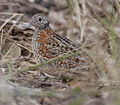
Buttonquail — photo 4
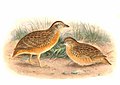
Buttonquail — photo 5
🌿 Adaptations
Buttonquails have clever adaptations that help them survive in the wild 🌿. Their round bodies and short tails make it easy for them to run quickly and avoid danger. Their camouflage feathers allow them to blend into their surroundings, making them hard to spot! 🦟They also have strong legs, which help them scratch at the ground to find food. By staying on the ground and hiding in grass, they protect themselves from larger animals. These adaptations show how important it is to be well-suited to one's environment!
Go deeper🌱 Behavior And Diet
Buttonquails are shy birds that prefer to stay low on the ground 🌱! They are excellent runners, and they quickly dart away when they feel threatened. They mainly eat seeds, insects, and small plants, munching on whatever they can find along the ground 🍃. To find their food, they use their sharp beaks to scratch and dig in the dirt. They may not sing like other birds, but they communicate using soft, low sounds, which helps them stay hidden from predators. This sneaky behavior is essential for survival!
Go deeper🌏 Species Diversity
There are about 18 different species of buttonquails around the world! 🌏Some of the most well-known include the Common Buttonquail and the Painted Buttonquail, each with unique colors and patterns. These species have adapted to various environments, allowing them to thrive in different areas. Some are very colorful, while others have more muted shades, helping them stay hidden from predators 🦅. Observing the various species can be a fun adventure for bird watchers and nature lovers.
Go deeper⚖️ Conservation Status
The conservation status of buttonquails varies by species ⚖️. Some, like the Australian Painted Buttonquail, have stable populations, while others might be threatened due to habitat loss. Deforestation and farming can take away their homes and food sources 🌱. Many organizations work hard to protect these fun little birds by creating reserves and educating people about their importance. By learning about them, we can help ensure their survival for future generations! It’s important to understand how our actions can affect wildlife.
Go deeper🐦 Breeding And Nesting
Buttonquails have a unique breeding system, where the males take the lead in nesting! 🐦The male builds the nest, often tucked away in dense grass or low bushes. He creates a hidden spot to keep the eggs safe. The female lays about 1 to 6 eggs, which are usually spotted or speckled! 🌙After the eggs hatch, the male takes care of the chicks, teaching them how to find food and stay safe. This role reversal is fascinating and shows how different bird families can have unique behaviors!
Go deeper🌟 Cultural Significance
In some cultures, buttonquails are admired for their beauty and grace 🌟. They can symbolize joy and abundance in various traditions. In art and stories, these little birds are noted for their uniqueness and charm. Some people enjoy bird watching and even collecting images of buttonquails! In regions where they are common, children often learn about buttonquails in school, highlighting their role in the ecosystem as seed dispersers 🌾. This makes them important not just in nature, but also in cultural storytelling!
Go deeper🌍 Habitat And Distribution
You can find buttonquails living in various habitats around the world 🌍. They like grassy fields, scrublands, and open woodlands. They are mostly found in countries like India, Australia, and parts of Africa 🌳. In fact, the Australian Painted Buttonquail is well known for its bright colors! They enjoy warm and dry areas, often hiding among scrubby bushes or tall grass. Their special homes help them protect themselves from predators like foxes and birds of prey. Isn't it amazing how birds can adapt to different environments?
Go deeper✨ Physical Characteristics
Buttonquails have special features that make them stand out ✨. They usually have round bodies covered in a mix of brown, gray, and black feathers, which helps them blend into their surroundings 🌾. Male buttonquails are often more brightly colored than females, which is different from many other bird species! Their legs are strong but short, helping them run quickly on the ground. They also have small wings but prefer to walk instead of flying. These color patterns and sizes make them fascinating for bird watchers everywhere!
Go deeper🐦 Research And Observation
Scientists and bird watchers love to observe buttonquails because they provide valuable information about ecosystems 🐦💡. Researchers study their behavior, breeding, and habitats to learn more about how they interact with their environment. Birdwatching can be a fun hobby for families, as they can go on adventures to spot these shy birds. Citizen science projects encourage people to share their observations of buttonquails, helping researchers gather data on these lovely creatures. Together, we can discover and protect more about these fascinating birds!
Go deeper