Brown Trout Facts For Kids
Brown trout (Salmo trutta) are highly adaptable fish known for their distinctive spots and importance in recreational fishing.
Select reading age

Brown Trout Facts For Kids
Videos & Quizzesincluded
About this topic
The brown trout (Salmo trutta) is a popular fish found in rivers and lakes across Europe, North America, and parts of Asia! 🐟These fish can grow up to 30 inches long and weigh around 20 pounds! They have a beautiful golden-brown body with black and red spots, making each one unique, just like a fingerprint! Brown trout love cool, clear waters and are commonly found in streams and lakes. They are both fun to catch and important for ecosystems, as they help control the population of smaller fish. 🎣
Explore with ChatDinoKey Points
Brown trout have a streamlined body shaped for swimming swiftly through water.
Brown trout are not endangered but require healthy habitats to thrive.
Did you know that brown trout can change color depending on their environment?
In many cultures, brown trout hold a special place!
Brown trout are carnivorous, meaning they eat other animals!
Brown trout are found in many cool, freshwater habitats!
A brown trout's life cycle starts with eggs!
Fishing for brown trout can be both exciting and rewarding!
Brown trout are part of the salmon family, but they differ from other species like rainbow trout (Oncorhynchus mykiss) and brook trout (Salvelinus fontinalis).
Photos of Brown Trout

Brown trout in Värmland, Sweden, after the first summer
![In the Kerguelen Islands. Brown trout were introduced here in 1954.[8]](https://upload.wikimedia.org/wikipedia/commons/thumb/3/3c/Omble_chevalier_Kerguelen.jpg/960px-Omble_chevalier_Kerguelen.jpg)
In the Kerguelen Islands. Brown trout were introduced here in 1954.[8]
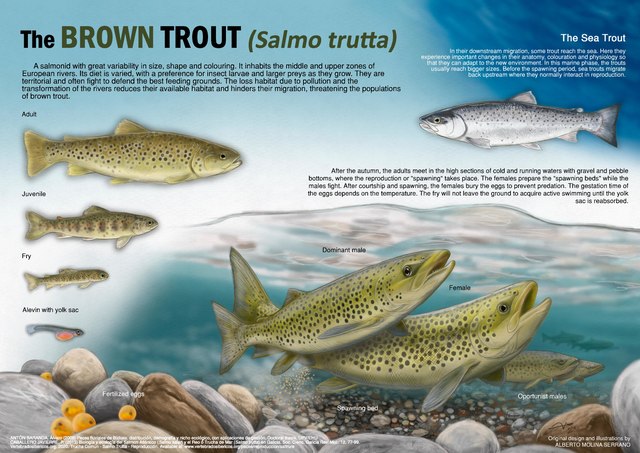
Infographic about the brown trout

A 2.7-kg (6 lb), 60-cm (2 ft) sea trout, from Galway Bay in the west of Ireland bearing scars from a fishing net

Brown trout in a creek

A young brown trout from the River Derwent in North East England

Brown trout from a western Wyoming creek


S. t. fario in a Faroese stamp issued in 1994
🌊 Biology And Anatomy
Brown trout have a streamlined body shaped for swimming swiftly through water. 🌊Their fins help them steer and maintain balance. They have a mouth filled with sharp teeth to catch prey. Brown trout are cold-blooded, meaning their body temperature matches the temperature of the water around them. They can live for over 20 years! Female brown trout grow slightly larger than males and can lay thousands of eggs in gravel beds. They also have excellent vision, enabling them to spot both predators and food! 👀
Go deeper🏞️ Conservation Status
Brown trout are not endangered but require healthy habitats to thrive. 🏞️ However, pollution, overfishing, and habitat loss can threaten their populations. Many organizations work hard to protect rivers and lakes where browns live. You can help by being a responsible angler and supporting clean-water initiatives! 🌊It’s essential to keep these beautiful fish around so future generations can appreciate fishing and exploring nature!
Go deeper🌈 Fun Facts And Myths
Did you know that brown trout can change color depending on their environment? 🌈This camouflage helps them blend in with rocks and plants to avoid predators! Some people believe that a brown trout can "scream" when it’s caught, but that’s just a myth! 🗣️ These fish are silent, but they do splash and wiggle to try and escape. Lastly, brown trout are great jumpers! They can leap out of the water to evade threats or grab flying insects! 🐟✨
Go deeper🎣 Cultural Significance
In many cultures, brown trout hold a special place! 🎣They are often featured in folklore, art, and stories. In the United States, golden trout is the state fish of California, symbolizing the beauty of nature. Many people also enjoy trout fishing as a recreational activity, making it a part of family traditions. 🍂Some cultures even believe that catching a brown trout brings good luck or prosperity!
Go deeper🦠 Diet And Feeding Habits
Brown trout are carnivorous, meaning they eat other animals! 🦠Their diet mainly consists of insects, small fish, and even crustaceans like crayfish. Young brown trout mainly eat tiny insects, while adults may hunt for larger fish! 🎣They have a keen sense of smell and excellent vision, which helps them find food, even in murky waters. Brown trout often feed early in the morning or late in the evening when their prey is most active. This makes them challenging to catch for anglers! 🌅
Go deeper🏞️ Habitat And Distribution
Brown trout are found in many cool, freshwater habitats! 🏞️ They thrive in streams, rivers, and lakes, particularly in Europe and North America. In Europe, you can find them in countries like Germany, the UK, and Switzerland! 🌍In North America, they are popular in mountain rivers and lakes in states like Colorado and Montana. Brown trout prefer clean water with a lot of oxygen. These environments are essential for their survival, as they help them grow and reproduce!
Go deeper🥚 Life Cycle And Reproduction
A brown trout's life cycle starts with eggs! 🥚In the spring, female brown trout lay eggs in gravel nests called "redds." After about 4-7 weeks, tiny fish called fry hatch from the eggs! At first, they rely on the yolk sack for food. As they grow, they develop into juvenile trout and start to eat small insects and fish. 🐠Brown trout reach adulthood in about 2-5 years, depending on their environment. They may return to their spawning grounds to lay eggs, continuing the cycle of life! ♻️
Go deeper🎣 Fishing Techniques And Regulations
Fishing for brown trout can be both exciting and rewarding! 🎣Many anglers use a fishing rod, reel, and bait like worms or artificial flies to catch them. It's important to know local fishing regulations, which help protect fish populations and habitats. Regulations may include size limits and catch-and-release rules, which ensure that brown trout can continue to thrive in nature. Always remember to respect nature and clean up after yourself when fishing! 🌳
Go deeper🌈 Comparison With Other Trout Species
Brown trout are part of the salmon family, but they differ from other species like rainbow trout (Oncorhynchus mykiss) and brook trout (Salvelinus fontinalis). 🌈Rainbow trout are often brighter and have a pink stripe along their side, while brook trout have delicate, colorful spots and a unique, squiggle-like pattern on their backs. Each species has its unique habitat preferences and diets, making them fascinating to study! 📚
Go deeper