All Articles

Boethius

Boethius Facts For Kids

Boethius was a Roman senator and philosopher from the Early Middle Ages, known for his influential writings on philosophy and happiness, especially 'The Consolation of Philosophy.'
🎨 Reading age for 6-8
Background blob
Boethius
Boethius
Facts for Kids!

Do more with AI

Introduction

Boethius was a smart man from Ancient Rome, born around 480 AD! 🏛️ He was a senator and held important jobs because he was really wise. He is best known for his writings about philosophy, which is the study of big questions like "What is happiness?" His most famous book is called "The Consolation of Philosophy." Boethius lived a long time ago, but his ideas are still important today! 🌟He showed people how to think deeply about life and find joy even in tough times.

Images of Boethius

Consular diptych depicting Narius Manlius Boethius, Boethius' birth father

Consular diptych depicting Narius Manlius Boethius, Boethius' birth father

Boethius (right) and his adoptive father, Symmachus (left); both had been appointed consuls in their own right

Boethius (right) and his adoptive father, Symmachus (left); both had been appointed consuls in their own right

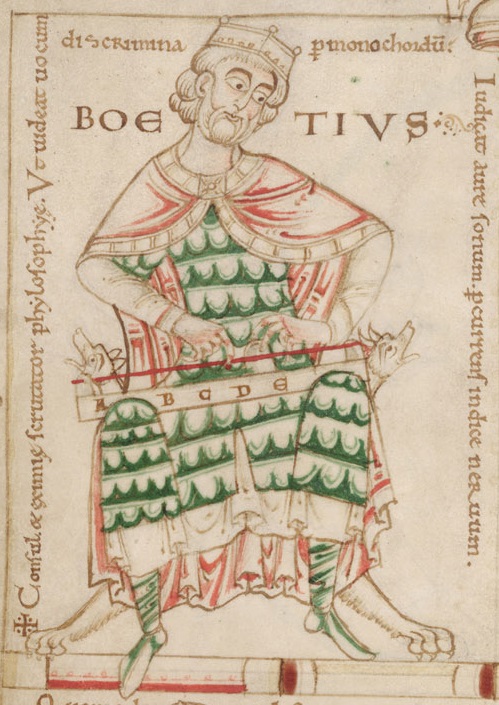
Manuscript depicting Boethius teaching students (initial) and while imprisoned

Manuscript depicting Boethius teaching students (initial) and while imprisoned

Marble bust. Vatican, Braccio Nuovo, inv. 2203. Marble head. Restored: lower half of nose, both ears, chin and beard, and neck. Cracks in forehead and left eye. Mounted on a modern bust. Sold to the Vatican Museums by Charles Albacini in 1804. The origin of the bust is unknown, but it may have come from Ostia as three similar busts were all discovered in Ostia in the 20th century. The identification as Plotinus is plausible but not proven.

Marble bust. Vatican, Braccio Nuovo, inv. 2203. Marble head. Restored: lower half of nose, both ears, chin and beard, and neck. Cracks in forehead and left eye. Mounted on a modern bust. Sold to the Vatican Museums by Charles Albacini in 1804. The origin of the bust is unknown, but it may have come from Ostia as three similar busts were all discovered in Ostia in the 20th century. The identification as Plotinus is plausible but not proven.

During the 13th century, Saint Thomas Aquinas sought to reconcile Aristotelian philosophy with Augustinian theology. Aquinas employed both reason and faith in the study of metaphysics, moral philosophy, and religion. While Aquinas accepted the existence of God on faith, he offered five proofs of God’s existence to support such a belief.

During the 13th century, Saint Thomas Aquinas sought to reconcile Aristotelian philosophy with Augustinian theology. Aquinas employed both reason and faith in the study of metaphysics, moral philosophy, and religion. While Aquinas accepted the existence of God on faith, he offered five proofs of God’s existence to support such a belief.

Photos of Boethius
Photos of BoethiusImage by self-created (Moscarlop), licensed under Creative Commons Attribution-Share Alike 3.0
Class in a medieval university: a doctor of canon law with his pupils

Class in a medieval university: a doctor of canon law with his pupils

The beginning of Aristotle's De interpretatione in Boethius' Latin translation

The beginning of Aristotle's De interpretatione in Boethius' Latin translation

Biography

Boethius was born in a city called Rome, Italy, where much of the world’s history began! He belonged to a noble family and went to a school to learn many things, such as math and music. 🎼He became a consul, which is a fancy way of saying that he helped govern Rome. Sadly, Boethius was sometimes jailed because of politics. But even from prison, he kept writing, which helped many people understand life better. He passed away around 524 AD, but he left behind a thought-provoking legacy. 📜

Philosophical Works

Boethius wrote many important books! 📚One of his famous works is "The Consolation of Philosophy," where he talks with a lady named Philosophy while he is in prison. He also wrote about music in "De institutione musica," showing how music connects to math! 🎶His other writings explore logic, which is like solving puzzles with words and ideas. Through his works, he taught people to think clearly and understand the world around them. His ideas were so impressive that they influenced many great thinkers later on!

Legacy And Relevance Today

Even though Boethius lived a long time ago, his ideas still matter today! 🌍People still read "The Consolation of Philosophy" to find comfort in tough times. His thoughts on happiness and wisdom help many understand life better. Schools, philosophers, and artists often refer to his work when discussing meaning and moral values. 📚Boethius taught us that life is not only about what happens to us but how we think about those happenings. His legacy encourages everyone to seek knowledge and find their inner strength. 💪

Boethius And The Roman Senate

As a member of the Roman Senate, Boethius had a busy life! 🏛️ He discussed important laws and helped run the government. But not everyone liked what he said, especially when it came to making the Emperor happy. 😕Eventually, political disagreements led to his imprisonment. Despite the troubles, he used his time in jail to write about philosophy instead of giving up. His experience in the Senate showed how politics can be challenging, but his writings inspired future leaders to seek justice and wisdom. 🕊️

Influence On Medieval Thought

Boethius had a huge impact on Medieval thinkers, like St. Thomas Aquinas and Dante Alighieri, who lived between the 13th and 14th centuries! 🌟They read Boethius' works and used his ideas in their own writings. He helped them mix ancient Greek philosophy with Christian teachings. Because of him, many people began to think about the meaning of life differently during the Middle Ages. 📅His ideas were like a bridge between different ways of thinking, which helped shape medieval education and thought.

The Consolation Of Philosophy

"The Consolation of Philosophy" is a special book! 📖Boethius wrote it while he was in prison and feeling sad. He imagined talking to a lady named Philosophy, who helped him understand that happiness comes from within. 🌈She explained that good things, like wisdom and friendship, are more important than material wealth. This book has 5 parts, where Boethius learns how to deal with bad luck. It's a guide for anyone feeling down and shows that thinking can be a source of comfort.

Views On Fortune And Happiness

Boethius believed that fortune, or luck, is tricky! 🍀In "The Consolation of Philosophy," he explains that lucky events can change quickly. Sometimes, someone can be very happy one moment and sad the next. He taught that true happiness comes from having inner strength, wisdom, and virtues, not from material things. 🌼Boethius wanted people to understand that it’s more important to be a good person than to always have good luck. This idea helps kids remember that kindness and love are what truly make us happy!

Reception In Literature And Arts

Boethius' work has been super popular in literature and art! 🎨Writers like Geoffrey Chaucer and Dante Alighieri were inspired by him. In fact, Dante even mentioned Boethius in his famous work "The Divine Comedy"! 📖His ideas on fortune and happiness have inspired many modern artists and authors as well. Many paintings and illustrations show scenes from "The Consolation of Philosophy," and his thoughts on life are still discussed in schools every day. 🎓Boethius’ teachings remind everyone how creativity and ideas connect over time!

Political Career And Imprisonment

Boethius had a fascinating political career! 🎤He became a senator and even served as the magister officiorum, which means he was in charge of important state affairs. He was loyal to the emperor at first but later faced enemies who wanted power. When things went wrong, he was unjustly imprisoned. 😔Even in jail, he continued to think deeply and wrote his best works on philosophy. His experience in prison made his ideas about happiness and fortune even more powerful and relatable to those who face challenges.

Comparative Analysis With Other Philosophers

Boethius' ideas are sometimes compared to Plato and Aristotle, two famous ancient philosophers! 🏛️ Plato believed in the world of forms, while Aristotle thought happiness comes from living a virtuous life. Boethius blended ideas from both philosophers but added a unique twist by focusing on inner happiness and personal reflection. ✨While Aristotle thought happiness meant doing good things, Boethius added that our perspective on fortune and life's ups and downs shapes how we feel. This makes Boethius special in the world of philosophy!

Boethius Quiz

Q1
Question 1 of 10

Learn more about Boethius

Ready to create?

Drop Files here
Make

To create a safe space for kid creators worldwide!

Create

Vibe Coding

Kids GPT

All Tools

Kibu

Resources

Worksheets

SafeTube

Blog

FAQ

Account

Pricing

Log-in

Sign-up

Data Deletion

Company

About

Community Guidelines

Privacy Policy

Terms of Service

2025, URSOR LIMITED. All rights reserved. DIY is in no way affiliated with Minecraft™, Mojang, Microsoft, Roblox™ or YouTube. LEGO® is a trademark of the LEGO® Group which does not sponsor, endorse or authorize this website or event. Made with love in San Francisco.