Berimbau Facts For Kids
The berimbau is a traditional Brazilian percussion instrument that consists of a single string stretched across a wooden bow with a resonating gourd, often used in capoeira music.
Select reading age

Berimbau Facts For Kids
Videos & Quizzesincluded
About this topic
The berimbau is a musical instrument from Brazil! 🎶It is often used in Capoeira, a fun martial arts dance where people kick, spin, and move gracefully. The berimbau looks like a long stick with a curved bow and a gourd that acts as its sound box. 🌍You usually hear it playing a rhythm that helps dancers know when to jump and move. Kids love the sounds because they are happy and playful! The berimbau can make different sounds depending on how it's played, and it is an important part of Brazilian culture.
Explore with ChatDinoKey Points
The berimbau is still played today, but in different and exciting ways!
Playing the berimbau can be lots of fun!
Capoeira would not be the same without the berimbau!
The berimbau is very important in Brazilian culture!
Many talented musicians and Capoeira masters play the berimbau!
The history of the berimbau goes back many hundreds of years.
The berimbau is made up of three main parts: the stick (called the “verga”), the bow (the “arame”), and the gourd (the “cabaça”).
There are different types of berimbaus, each with its own unique sound!
Photos of Berimbau
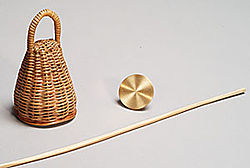
A caxixi, baqueta, and dobrão

Making the three sounds of a berimbau. A: buzz sound. B: high sound. C: open string sound.

An audio speaker emitting sound waves, in the Gnome style
🎶 Modern Adaptations
The berimbau is still played today, but in different and exciting ways! 🎶Modern musicians mix it with electronic music, pop, and even hip-hop! This fusion creates fresh sounds that appeal to kids and teenagers. 🎧Many artists also use the berimbau in movies, videos, and performances, making it a cool instrument to learn. Schools and community centers offer Capoeira classes, and kids can even play the berimbau themselves! 🎉So, whether you join a Capoeira class or just enjoy the music, the berimbau will keep making beautiful sounds in the world!
Go deeper🎉 Playing Techniques
Playing the berimbau can be lots of fun! 🎉The player strikes the string with the wooden stick to create sound, while using their other hand to touch the gourd. This changes the pitch, making high, low, or soft notes. 🥁By moving the coin or rock, players can create different rhythms. The berimbau usually plays in three main rhythms: "baqueta", "cerca", and "meia." These rhythms guide Capoeira dancers in their movements, like a musical boss! Players can also learn different sounds and styles, making each performance special and unique.
Go deeper🤸♂️ Berimbau In Capoeira
Capoeira would not be the same without the berimbau! 🤸♂️ The instrument sets the rhythm for the entire game, guiding dancers and fighters through their moves. When the berimbau plays faster, the Capoeira can become more intense, while a slower rhythm allows for graceful movements. 🎤In a Capoeira circle, called the “roda,” the berimbau player leads the others with rhythms and signals. This connection between music and movement is what makes Capoeira special, enriching friendships and creating fun memories during practices and performances!
Go deeper🥳 Cultural Significance
The berimbau is very important in Brazilian culture! 🥳It symbolizes joy, freedom, and community. In Capoeira, the berimbau brings everyone together, encouraging teamwork among dancers. 🌟Many celebrations in Brazil, like Carnival and cultural festivals, use the berimbau in their music. It connects generations, passing down stories and traditions from parents to kids. The berimbau helps people express their feelings, whether they're happy or sad, and it’s a big part of Brazil's identity. 🎊
Go deeper🎉 Famous Berimbau Players
Many talented musicians and Capoeira masters play the berimbau! 🎉One famous player is Mestre Bimba, who helped spread Capoeira around the world in the 1930s. Other incredible players include Mestre Pastinha and Besouro Manganga, both known for their unique styles and contributions to Capoeira. 🌍They continued to inspire generations with their music and passion. Today, many modern musicians incorporate layers of berimbau in their songs, keeping its amazing sounds alive! It's exciting to learn about these great players and their legacy!
Go deeper🎉 History Of The Berimbau
The history of the berimbau goes back many hundreds of years. 🎉It is said to have been brought to Brazil by African slaves in the 1600s. They used it in the spirit of freedom and joy while working in the sugarcane fields. 💪The berimbau was made from local plants and materials, showing the creativity of the people. Over the years, it became an essential part of Capoeira, helping players synchronize their moves while expressing themselves through music. The name "berimbau" comes from the Bantu language, spoken by some African tribes.
Go deeper🌿 Construction And Materials
The berimbau is made up of three main parts: the stick (called the “verga”), the bow (the “arame”), and the gourd (the “cabaça”). 🌿The stick can be 4 to 6 feet long and is often made of wood or bamboo. The gourd — which is dried out — is attached to the stick and gives the sound its unique rich tone. 🎵The string is made of steel, wire, or metal, and it is stretched across the stick. Players use a small wooden stick (called a “baqueta”) and a coin or a rock to make different sounds.
Go deeper🎷 Variations Of The Berimbau
There are different types of berimbaus, each with its own unique sound! 🎷The most popular are the "berimbau gunga," "berimbau médio," and "berimbau viola." The "gunga" is the largest and has a deep sound, while the "médio" is medium-sized and offers a balanced tone. 🎻The "viola" is smaller and has a high sound, making it perfect for quick melodies! Each berimbau is important in Capoeira and offers different feelings and styles of music. Kids love exploring these different variations to find their favorite sound!
Go deeper