Benedictines Facts For Kids
The Benedictines are a contemplative monastic order that focuses on prayer, work, and community living, following the Rule of Saint Benedict.
Select reading age

Benedictines Facts For Kids
Videos & Quizzesincluded
About this topic
The Benedictines are a special group of monks and nuns who follow the teachings of Saint Benedict. 📜Saint Benedict was born in Italy in 480 AD and is known for his wisdom and love for God. The Order of Saint Benedict helps people to pray, learn, and live together peacefully! Today, there are many Benedictine monastic communities all over the world, like in the United States, Germany, and Italy. 🌍Their motto is "Ora et Labora," which means "Pray and Work." This means they spend time in prayer and also work hard, helping others and taking care of their surroundings. 🌱
Explore with ChatDinoKey Points
Saint Benedict established the Order of Saint Benedict in 529 AD when he built a monastery at Monte Cassino.
Benedictine spirituality emphasizes the importance of community, prayer, and everyday life!
The Rule of Saint Benedict is a book of guidelines written by Saint Benedict in the 6th century.
The story of the Benedictines began over 1,500 years ago!
Living as a Benedictine means following certain important practices!
Today, there are many active Benedictine communities worldwide!
The Benedictines have had a big impact on Western civilization!
Many important figures have shaped the Benedictine movement over the years!
The Benedictines played a huge role in education!
Benedictine churches are famous for their beautiful architecture!
Photos of Benedictines

Saint Benedict of Nursia (c. 480–543); detail from a fresco by Fra Angelico (c. 1400–1455) in the Friary of San Marco Florence
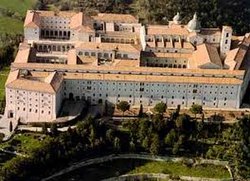
Abbey of Monte Cassino


Abbatiale Saint-Benoit, southern aspect as in 1893

Basilica of Saint-Martin d'Ainay

Benedictine church in Warsaw's New Town, depicted by Bellotto

The two sides of a Saint Benedict medal

Interior of Stanbrook Abbey Church, Wass, Yorkshire
🔑 Founding Of The Order
Saint Benedict established the Order of Saint Benedict in 529 AD when he built a monastery at Monte Cassino. 🔑He wanted to create a peaceful place for prayer and learning. The monks there lived together according to his special rules, which taught them how to be good friends and serve God. People admired Saint Benedict for his wisdom, and many wanted to join him! 🧑🤝🧑 As the years went by, monasteries popped up across Europe, where monks and nuns dedicated their lives to God and community.
Go deeper🙏 Benedictine Spirituality
Benedictine spirituality emphasizes the importance of community, prayer, and everyday life! 🙏Monks and nuns focus on living a simple life, deeply connected to God and each other. They practice mindfulness during their prayers, being present in the moment. 🌼Silence is also vital, allowing them to listen to God’s voice and reflect on their thoughts. They are encouraged to welcome guests, sharing love and kindness with everyone who enters their monastery. This spirituality helps them grow closer to God and teaches others about love and service! 💖
Go deeper📖 The Rule Of Saint Benedict
The Rule of Saint Benedict is a book of guidelines written by Saint Benedict in the 6th century. 📖It has 73 short chapters covering various aspects of monastic life, such as prayer, work, and sharing with others. The Rule emphasizes important values like humility, hospitality, and community. ✨Many monasteries still follow these guidelines today, as they help create a peaceful and loving environment for everyone. The Rule also encourages monks and nuns to balance their lives, always remembering to pray while they work. This harmony helps them live joyfully and faithfully!
Go deeper✨ History Of The Benedictines
The story of the Benedictines began over 1,500 years ago! ✨In the early 500s, Saint Benedict founded his first monastery in Monte Cassino, Italy. 🏰He wrote a set of rules for living together in harmony, which became known as the Rule of Saint Benedict. This helped monks and nuns lead a balanced life, focusing on prayer, work, and community. The Benedictines grew in number, spreading to many places across Europe, especially during the Middle Ages. 📅They became known for their hard work and care for education, farming, and helping the poor.
Go deeper🛏️ Monastic Life And Practices
Living as a Benedictine means following certain important practices! 🛏️ Monks and nuns wake up early to pray and help each other with their daily tasks. They live in communities called monasteries, where they share meals, work on projects, and spend time in prayer. 🙏They also study and learn skills, like farming, cooking, and teaching. Each day is filled with routines, including special prayers called the Liturgy of the Hours. These practices help them grow closer to God and support one another in their spiritual journey! 🌈
Go deeper🌏 Modern Benedictine Communities
Today, there are many active Benedictine communities worldwide! 🌏Monks and nuns continue to follow the Rule of Saint Benedict, living in harmony and serving their communities. They engage in various activities, like teaching in schools, running retreats, and providing social services. 🏫Each community has its unique traditions, linked by their commitment to prayer and work. Some monasteries welcome guests, allowing them to experience monastic life and learn about Benedictine spirituality. Modern Benedictines continue to make a positive impact on the world, inspiring others through their dedication and love for God! 🕊️
Go deeper🌍 Influence On Western Civilization
The Benedictines have had a big impact on Western civilization! 🌍They helped preserve knowledge through the Dark Ages by copying and preserving ancient texts. This made sure that learning continued, leading to the Renaissance, a time of great discovery and artistic expression! 🎉The Benedictine commitment to education also led to the foundation of many schools and universities. Additionally, they introduced new farming methods and improved agriculture across Europe. Their values of community, hard work, and care for others have influenced societies for centuries, and they continue to do so today! 🚀
Go deeper👩🦳 Major Figures In Benedictine History
Many important figures have shaped the Benedictine movement over the years! One of the most famous is Saint Scholastica, the twin sister of Saint Benedict, who also founded a religious community for women. 👩🦳 Another notable figure is Saint Anselm, who became a great philosopher and theologian! 🧠These saints and thinkers helped spread the teachings of the Benedictines throughout Europe during the Middle Ages. As their communities grew, many other monks and nuns contributed their wisdom and ideas, making the Order a vital part of Church history.
Go deeper🌟 Benedictine Contributions To Education
The Benedictines played a huge role in education! 🌟In the Middle Ages, they established schools in their monasteries where young people could learn to read, write, and study. These schools were some of the earliest forms of education in Europe! 🏫The Benedictines believed that knowledge is essential for understanding God and helping others. They wrote many important books and taught subjects like music, art, and philosophy. Today, many Benedictine communities continue to run schools and educational programs, helping students learn and grow in a loving environment. 📚
Go deeper🏛️ Art And Architecture In Benedictine Churches
Benedictine churches are famous for their beautiful architecture! 🏛️ Many early churches were built in the Romanesque style, with thick walls and rounded arches. Later, they added Gothic elements like pointed arches and tall ceilings. These structures often feature stunning stained glass windows and intricate carvings, telling stories of saints and biblical events. 🎨The artwork in Benedictine monasteries reflects their deep faith and love for God. Many monks were also skilled in painting and music, helping create magnificent works that inspire worship and capture the beauty of life! 🌈
Go deeper