Battle Of Poltava Facts For Kids
The Battle of Poltava was the largest and most decisive battle of the Great Northern War, fought between Sweden and Russia on June 28, 1709, leading to Russia's rise as a major power in Europe.
Select reading age
Battle Of Poltava Facts For Kids
Videos & Quizzesincluded
About this topic
The Battle of Poltava was an important conflict that happened on June 27, 1709, in modern-day Ukraine 🇺🇦. This battle was part of the Great Northern War, a large fight mainly between Sweden and Russia. It was a big deal because it changed the balance of power in Europe! Over 40,000 soldiers fought 🛡️, and Russia, led by Peter the Great, won against the Swedish forces commanded by King Charles XII. The victory at Poltava was like a big victory lap for Russia, showing everyone they were a powerful nation!
Explore with ChatDinoKey Points
On the day of the Battle of Poltava, the Russian army stood strong while the Swedish forces charged.
The Battle of Poltava has been represented in many forms of art and culture, showing its importance in history.
The Battle of Poltava changed Russia forever!
Two important leaders played a huge role in the Battle of Poltava: Peter the Great of Russia and King Charles XII of Sweden 👑.
After the Battle of Poltava, the outcomes affected many countries.
The aftermath of the Battle of Poltava was not good for the Swedish Empire.
The armies of Russia and Sweden used different strategies at the Battle of Poltava.
The legacy of the Battle of Poltava continues to influence both nations and their histories.
The Great Northern War started in 1700 and went on for 21 years!
The Battle of Poltava is remembered as a decisive turning point in history 🌟!
Photos of Battle Of Poltava

Initial dispositions. The Swedish forces are in blue, while the Russian forces are in red

The Battle of Poltava, mosaic by Mikhail Lomonosov

Charles XII at the Battle of Poltava by Carl Andreas Dahlström

The victory at Poltava by Alexander Kotzebue.
🌧️ Course Of The Battle
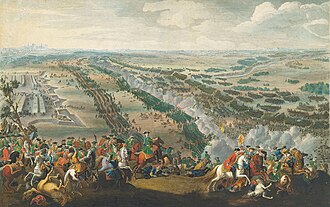
On the day of the Battle of Poltava, the Russian army stood strong while the Swedish forces charged. The Swedish troops were confident but quickly found themselves in a tough spot. As the battle began, it rained heavily 🌧️, making the ground muddy and difficult to navigate! The muddy terrain slowed down the Swedish soldiers. With their army well-prepared, Peter the Great's forces held their ground. After fierce fighting and brave efforts, the Swedish army was defeated, marking a turning point in the war. The victory at Poltava became a proud moment for Russia!
Go deeper🎨 Cultural Representations
The Battle of Poltava has been represented in many forms of art and culture, showing its importance in history. 🎨Many artists have painted scenes of the battle, capturing the bravery of the soldiers. There are also movies and plays that tell the story of Peter the Great and this famous fight! In Russia, the battle is celebrated in festivals and commemorated in monuments. This cultural representation reminds us how important and impactful this singular day in history was for both Russia and Sweden!
Go deeper🎉 Impact On Tsardom Russia
The Battle of Poltava changed Russia forever! 🎉With the victory, Peter the Great was able to establish Russia as a major player in Europe. It inspired changes in the army and government, and many young men were recruited to serve. The battle also made Peter more popular among the people, as they saw him as a strong leader. As a result, Russia gained new territories and improved its economy and trade connections. This is why the battle is considered a significant moment in the history of Tsardom Russia.
Go deeper👑 Key Figures In The Battle
Two important leaders played a huge role in the Battle of Poltava: Peter the Great of Russia and King Charles XII of Sweden 👑. Peter the Great was known for his ideas on modernizing Russia. He built new towns, trained his army, and even made new ships! On the other side, King Charles XII was a brilliant strategist, known for his bravery and tactics. However, he faced difficulties in the battle, like a hard winter and a shortage of food. These leaders' skills and decisions impacted how the battle unfolded immensely!
Go deeper⛔ Aftermath And Consequences
After the Battle of Poltava, the outcomes affected many countries. The defeat led Sweden to lose its power in Europe. With their army beaten, they couldn't defend their territories anymore ⛔. Russia, meanwhile, grew stronger and expanded its influence! Peter the Great used the victory to build a new Russian capital, St. Petersburg. This new city became a hub for trade and culture! The consequences of Poltava shaped the future of European politics and marked the rise of Russia as a great power for years to come. 🌍
Go deeper😞 Impact On The Swedish Empire
The aftermath of the Battle of Poltava was not good for the Swedish Empire. 😞After losing the battle, Sweden's influence began to decline. They lost control over many territories they once held and faced difficulties in keeping their army strong. The defeat ended Sweden's "Golden Age," and their focus turned from expansion to trying to maintain what they had left. Many people in Sweden felt sad and worried. The battle showed that even powerful countries can fall, stressing the importance of being prepared and strong!
Go deeper🪖 Military Strategies Employed
The armies of Russia and Sweden used different strategies at the Battle of Poltava. Peter the Great organized his soldiers in a big line, known as a "battle line," to defend against Swedish attacks. His troops were also well-trained using new weapons like muskets. 🪖Meanwhile, King Charles XII tried to outsmart his enemy with quick movements and surprise attacks. But the Russian soldiers were ready and waiting! This clash of strategies showed how important planning and teamwork are when it comes to battles and wars!
Go deeper🏛️ Legacy Of The Battle Of Poltava
The legacy of the Battle of Poltava continues to influence both nations and their histories. 🏛️ Today’s Russian military strategies still hold elements inspired by Peter the Great’s reforms. This victory is celebrated every year in Russia as a reminder of their strength and unity. For Sweden, the battle is a lesson in humility and resilience, showcasing how quickly fortunes can change. The effects of Poltava remind us that battles have long-lasting effects on nations and the world, shaping our history for generations! 🌌
Go deeper🎉 Background Of The Great Northern War
The Great Northern War started in 1700 and went on for 21 years! 🎉Sweden was a mighty empire at the time and wanted to keep its control over the Baltic Sea. Countries like Russia, Poland, and Denmark joined together to stop Sweden's power. Peter the Great became the ruler of Russia in 1682 and wanted to modernize his country and build a strong army 💪. As the war progressed, it became clear that Sweden and Russia were the two main players, with both wanting to become the leading force in Eastern Europe.
Go deeper🌟 Historical Significance Of The Battle
The Battle of Poltava is remembered as a decisive turning point in history 🌟! It marked the decline of the Swedish Empire and the rise of Russia as a major power in Europe. This battle taught many nations that battle strategies and leadership mattered a lot. Because of the victory, Russia expanded its territory and influence, transforming the layout of Europe forever. Schools and historians still study this battle today to understand how it influenced the world and shaped future events! 📚
Go deeper