All Articles

Auguste Comte

Auguste Comte Facts For Kids

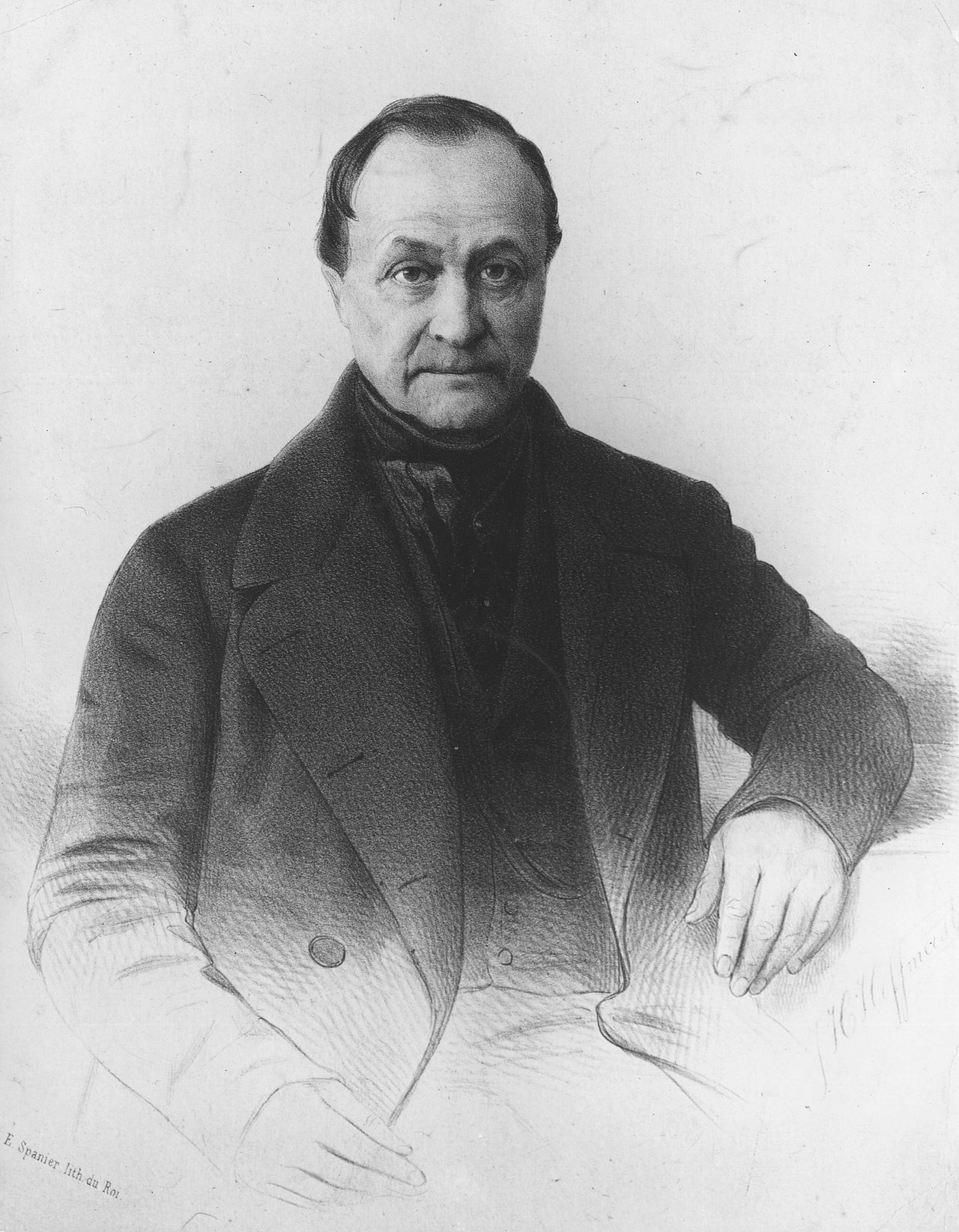
Auguste Comte was a French philosopher, mathematician, and writer who formulated the doctrine of positivism, laying the groundwork for sociology and emphasizing the importance of scientific knowledge to improve society.
🎨 Reading age for 6-8
Background blob
Auguste Comte
Auguste Comte
Facts for Kids!

Do more with AI

Introduction

Auguste Comte was a very important philosopher from France, born on January 19, 1798, in Montpellier. 🗓️ He is famous for creating a special way of thinking called positivism. Positivism helps us understand the world through science and facts! Comte believed that people could learn about society and improve their lives by studying it scientifically. He wanted to create a happier and better society by applying his ideas. Comte's work laid the foundation for sociology, the study of how people live together in groups. Although he lived over 150 years ago, his ideas are still important today! 🌍

Images of Auguste Comte

Tomb of Auguste Comte

Tomb of Auguste Comte

Comte's Theory of Science – According to him whole of sciences consists of theoretical and applied knowledge. Theoretical knowledge divides into general fields as physics or biology, which are an object of his research and detailed such as botany, zoology, or mineralogy. Main fields mathematics, astronomy, physics, chemistry, biology, and sociology it is possible to order according to a decrescent range of research and complicatedness of theoretical tools what is connected with the growing complexity of investigated phenomenons. Following sciences are based on previous, for example, to methodically capture chemistry, we must imply acquaintance of physics, because all chemical phenomena are more complicated than physical phenomena, are also from them dependent and themselves do not have on them an influence. Similarly, sciences classified as earlier, are older and more advanced from these which are presented as later.Image by UX Stalin, licensed under Creative Commons Attribution-Share Alike 4.0

Comte's Theory of Science – According to him whole of sciences consists of theoretical and applied knowledge. Theoretical knowledge divides into general fields as physics or biology, which are an object of his research and detailed such as botany, zoology, or mineralogy. Main fields mathematics, astronomy, physics, chemistry, biology, and sociology it is possible to order according to a decrescent range of research and complicatedness of theoretical tools what is connected with the growing complexity of investigated phenomenons. Following sciences are based on previous, for example, to methodically capture chemistry, we must imply acquaintance of physics, because all chemical phenomena are more complicated than physical phenomena, are also from them dependent and themselves do not have on them an influence. Similarly, sciences classified as earlier, are older and more advanced from these which are presented as later.

The motto Ordem e Progresso ("Order and Progress") in the flag of Brazil is inspired by Auguste Comte's motto of positivism: L'amour pour principe et l'ordre pour base; le progrès pour but ("Love as a principle and order as the basis; Progress as the goal"). Several of those involved in the military coup d'état that deposed the Empire of Brazil and proclaimed Brazil to be a republic were followers of the ideas of Comte.[16]

The motto Ordem e Progresso ("Order and Progress") in the flag of Brazil is inspired by Auguste Comte's motto of positivism: L'amour pour principe et l'ordre pour base; le progrès pour but ("Love as a principle and order as the basis; Progress as the goal"). Several of those involved in the military coup d'état that deposed the Empire of Brazil and proclaimed Brazil to be a republic were followers of the ideas of Comte.[16]

Positivist temple in Porto AlegreImage by User:Tetraktys, licensed under Creative Commons Attribution-Share Alike 3.0

Positivist temple in Porto Alegre

Impact On Sociology

Comte is often called the father of sociology because he created the term "sociology" and studied how people live in groups. 👪He believed that understanding societies would help solve social problems. Comte taught that if we studied people's behaviors and relationships scientifically, we could create a better world. 📊Sociologists use his methods to analyze how families, communities, and cultures function. Today, sociology helps us understand everything from friendships to laws, showing how important Comte's ideas are for making our world a better place!

Comte's Personal Life

Auguste Comte's personal life was full of interesting events! He fell in love with a woman named Caroline Massin, but their relationship ended in heartbreak. ❤️ Comte had a tough life, facing struggles with mental health and poverty. Despite this, he continued to write and share his ideas with the world! After his death on September 5, 1857, in Paris, France, his writings inspired many future thinkers. Comte's determination and passion for knowledge remind us of the importance of perseverance and curiosity in our own lives! 🌟

Founder Of Positivism

Auguste Comte is known as the founder of positivism! 🎉This philosophical idea is about using science to understand the world. Comte believed that humans should rely on proven facts and observations instead of just thinking or feeling. He thought that through science, people could discover ways to improve society and create a better future. Positivism has influenced many areas, including sociology, psychology, and education. By focusing on facts and real examples, Comte's ideas help us make sense of the world and work together to fix problems! 🤝

Early Life And Education

As a child, Auguste Comte was very curious and loved to learn! 😄He started his education at a school in Montpellier and later moved to Paris, France, where he continued his studies. Comte was influenced by great thinkers like Henri Saint-Simon, who inspired him to think about society and how it works. 🎓He studied mathematics, science, and philosophy, becoming one of the first people to change how we look at the world. His love for knowledge led him to create new ideas that would help people understand society better.

The Laws Of Three Stages

Auguste Comte developed the "Laws of Three Stages," which describe how societies grow and change over time. 🌱The first stage is the Theological Stage, where people explain things using religion and gods. The second stage is the Metaphysical Stage, where people seek reasons for everything and ask "why?" The final stage is the Positive Stage, where people use science and facts to understand the world. Comte believed that societies must go through these stages to become better and stronger. His idea teaches us how things change and evolve over time! 📈

Critiques And Controversies

Even though Comte's ideas were influential, not everyone agreed with him! Some people thought his views were too strict and limited the importance of feelings and beliefs. 😕Critics argued that society is not just about observable facts; emotions and personal experiences also play a role. Others thought Comte's hierarchy of sciences was too simple and didn’t reflect the complexities of different subjects. Despite these criticisms, his ideas still sparked debates and encouraged new thoughts on how we understand society and our world! 💬

Influence On Later Thinkers

Many later thinkers were inspired by Auguste Comte's ideas! His work influenced famous philosophers like John Stuart Mill and Émile Durkheim, who further developed sociology. 🧠They built on Comte's thoughts about society and knowledge, making them known worldwide. Comte's focus on using observing and experimenting to learn has also affected modern scientists, psychologists, and social researchers. This means Comte's ideas have shaped how we understand not just our social lives but also the scientific methods we use today! 📚

Legacy And Modern Relevance

Auguste Comte's ideas continue to be relevant today! 📅His work laid the groundwork for sociology, which helps us understand things like family dynamics, cultures, and communities. Comte's ideas taught us the importance of studying society scientifically, influencing researchers, educators, and policymakers. His concepts of positivism remind people to rely on facts and evidence in various fields, including education, health, and law. By examining his work, we can learn how to improve our world and create a better future! 🌈

Philosophical Contributions

Auguste Comte made many important contributions to philosophy! One of his main ideas was that knowledge should be based on observable facts and not just beliefs or opinions. 🔍He thought that people could understand everything around them by using science, observations, and experiments. Comte wanted to organize all knowledge into a hierarchy, meaning some subjects could help understand others better. This way of thinking changed how people saw philosophy, and it stressed the importance of using logic and evidence in everyday life. 💡

Comte's Hierarchy Of Sciences

Auguste Comte organized sciences into a hierarchy, showing how different subjects connect. 🔗At the base of his pyramid are mathematics and astronomy, which are the foundation for all other sciences. The next level up is physics and chemistry, followed by biology, and finally at the top is sociology. Comte believed that by understanding each level, we could solve problems in our lives and society! This cool idea helps us see how interconnected everything is in understanding the world around us. Comte's hierarchy is still discussed in science classes today! 🏰

Auguste Comte Quiz

Q1
Question 1 of 10

Learn more about Auguste Comte

Ready to create?

Drop Files here
Make

To create a safe space for kid creators worldwide!

Create

Vibe Coding

Kids GPT

All Tools

Kibu

Resources

Worksheets

SafeTube

Blog

FAQ

Account

Pricing

Log-in

Sign-up

Data Deletion

Company

About

Community Guidelines

Privacy Policy

Terms of Service

2025, URSOR LIMITED. All rights reserved. DIY is in no way affiliated with Minecraft™, Mojang, Microsoft, Roblox™ or YouTube. LEGO® is a trademark of the LEGO® Group which does not sponsor, endorse or authorize this website or event. Made with love in San Francisco.