Ammonium Cation Facts For Kids
Ammonium cation is a positively charged ion formed when ammonia (NH₃) gains an extra hydrogen atom, represented as NH₄⁺, and plays a crucial role in nature and industry.
Select reading age

Ammonium Cation Facts For Kids
Videos & Quizzesincluded
About this topic
Ammonium cation, often written as NH₄⁺, is like a superhero version of ammonia! 💥Ammonia (NH₃) has three hydrogen atoms, but when it gains an extra hydrogen atom, it becomes ammonium cation. This really cool ion has a positive charge because it has one more hydrogen than it needs. Ammonium is found everywhere, from the soil we walk on to the water we drink! 🌍This amazing cation plays a big role in nature and helps plants grow by providing essential nutrients.
Explore with ChatDinoKey Points
The structure of ammonium cation (NH₄⁺) is like a pyramid with a base!
Ammonium cation plays an essential but tricky role in the environment.
Ammonium cation is often found in nature where there are many plants and animals.
Ammonium has a rich history in science!
In the industry, ammonium cation is used for many exciting things!
Scientists can create ammonium cation in a few fun ways!
Ammonium cation is very important for living things!
Ammonium cation is a colorless and odorless ion, which means we can't see or smell it!
Scientists have clever ways to find ammonium cation in samples!
There are many compounds that contain ammonium cation!
Photos of Ammonium Cation

Dimethylammonium-formation-2D
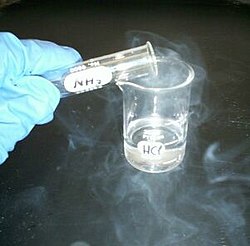
Fumes from hydrochloric acid and ammonia forming a white cloud of ammonium chloride

Ammonium-3D-balls

Ammonium-3D-vdW

Formation of ammonium

Ammonium exists as a result of ammonification and decomposers. Ammonium is eventually nitrified, where it contributes to the flow of nitrogen through the ecosystem. Human impacts are not shown here, but can impact the global nitrogen cycle.
🏰 Chemical Structure
The structure of ammonium cation (NH₄⁺) is like a pyramid with a base! 🏰It has one nitrogen atom at the center and is surrounded by four hydrogen atoms. This formation creates a special shape called a tetrahedron. Each hydrogen atom shares its electrons with nitrogen, giving ammonium its unique properties. The nitrogen atom holds a positive charge because it has an extra hydrogen compared to ammonia. This is what makes ammonium cation special! 🔗
Go deeper🌍 Environmental Impact
Ammonium cation plays an essential but tricky role in the environment. 🌍While it is vital for plants, too much ammonium can cause pollution! When it enters rivers and lakes from fertilizers, it can lead to algal blooms, which suffocate fish and other aquatic life. 🐟To prevent this, farmers need to use ammonium wisely and take care of how much they put on their fields. Balancing its use helps protect our habitats and keeps ecosystems healthy!
Go deeper🌼 Occurrence In Nature
Ammonium cation is often found in nature where there are many plants and animals. 🌼It comes from the decomposition of dead leaves, animals, and even from pee! Yes, that's right! When animals urinate, they release nitrogen compounds that can turn into ammonium. In soil, ammonium helps plants grow by providing them with essential nutrients. 🌾You can also find ammonium in the oceans and freshwater, where it plays a role in the nitrogen cycle that keeps our ecosystem balanced!
Go deeper🔬 Historical Significance
Ammonium has a rich history in science! 🔬The term "ammonium" was first named in 1809, derived from "sal ammoniac," a salt found near the Temple of Jupiter Ammon in ancient Egypt. This reflects how long humans have been utilizing ammonium salts. Famous chemists, like Dmitri Mendeleev, studied ammonium compounds when creating the periodic table! 🧙♂️ Understanding ammonium's past helps us appreciate its contributions and the scientists who uncovered its secrets!
Go deeper🏭 Applications In Industry
In the industry, ammonium cation is used for many exciting things! 🏭One of the biggest uses is in fertilizers that help crops grow. Farmers love ammonium because it gives plants the nutrients they need for healthy growth. Ammonium compounds are also used in cleaning products, dyes, and even explosives! 🚀These applications are essential for our food supply and many everyday products. Learning how ammonium is used helps us appreciate its importance in our lives!
Go deeper🌊 Synthesis And Preparation
Scientists can create ammonium cation in a few fun ways! One common method is mixing ammonia (NH₃) with acids, like hydrochloric acid (HCl). 🌊This produces ammonium chloride (NH₄Cl) and releases some hydrogen gas! There’s also a natural process that happens when bacteria break down organic materials in soil. This process, called ammonification, turns nitrogen in waste into ammonium! 🌿For teachers or young chemists, understanding how to make ammonium can lead to fascinating experiments!
Go deeper🌟 Role In Biological Systems
Ammonium cation is very important for living things! 🌟Plants use ammonium as a source of nitrogen, which is key for making proteins. This helps them grow big and strong! Animals also need ammonium. When they eat, they break down proteins into ammonium and other compounds, which their bodies use to build their own proteins. 🌈However, too much ammonium can be dangerous, so animals and plants have special ways to regulate it. Ammonium is like a superhero nutrient that helps all living things thrive!
Go deeper😯 Properties Of Ammonium Cation
Ammonium cation is a colorless and odorless ion, which means we can't see or smell it! 😯It dissolves easily in water, making it very helpful for plants and animals. When ammonium mixes with other chemicals, it can form different compounds that are useful for fertilizers! 🌱Ammonium can also react with acids to create ammonia gas, which can produce cool effects. Because of its charge, ammonium is attracted to negatively charged particles, helping it bond with other elements.
Go deeper🧪 Analytical Methods For Detection
Scientists have clever ways to find ammonium cation in samples! 🧪One common method is colorimetry, where special chemicals react with ammonium to produce a colored reaction. This helps scientists measure how much ammonium is present! Another technique is using a pH meter, which can show how acidic or basic a solution is, helping detect ammonium as well. These analytical methods are like treasure maps that lead to important discoveries about the environment and health! 🗺️
Go deeper🌟 Common Compounds Containing Ammonium
There are many compounds that contain ammonium cation! 🌟Some of the most popular are ammonium chloride (NH₄Cl), ammonium sulfate (NH₄)₂SO₄, and ammonium nitrate (NH₄NO₃). These compounds are used in fertilizers, helping plants grow strong! Ammonium hydroxide (NH₄OH) is a cleaning product found in many homes. 🏡Knowing these compounds helps us understand how ammonium cation is used daily!
Go deeper