American Paddlefish Facts For Kids
The American paddlefish is a prehistoric fish known for its distinctive paddle-shaped snout and filter-feeding habits, found primarily in North America's freshwater systems.
Select reading age
American Paddlefish Facts For Kids
Videos & Quizzesincluded
About this topic
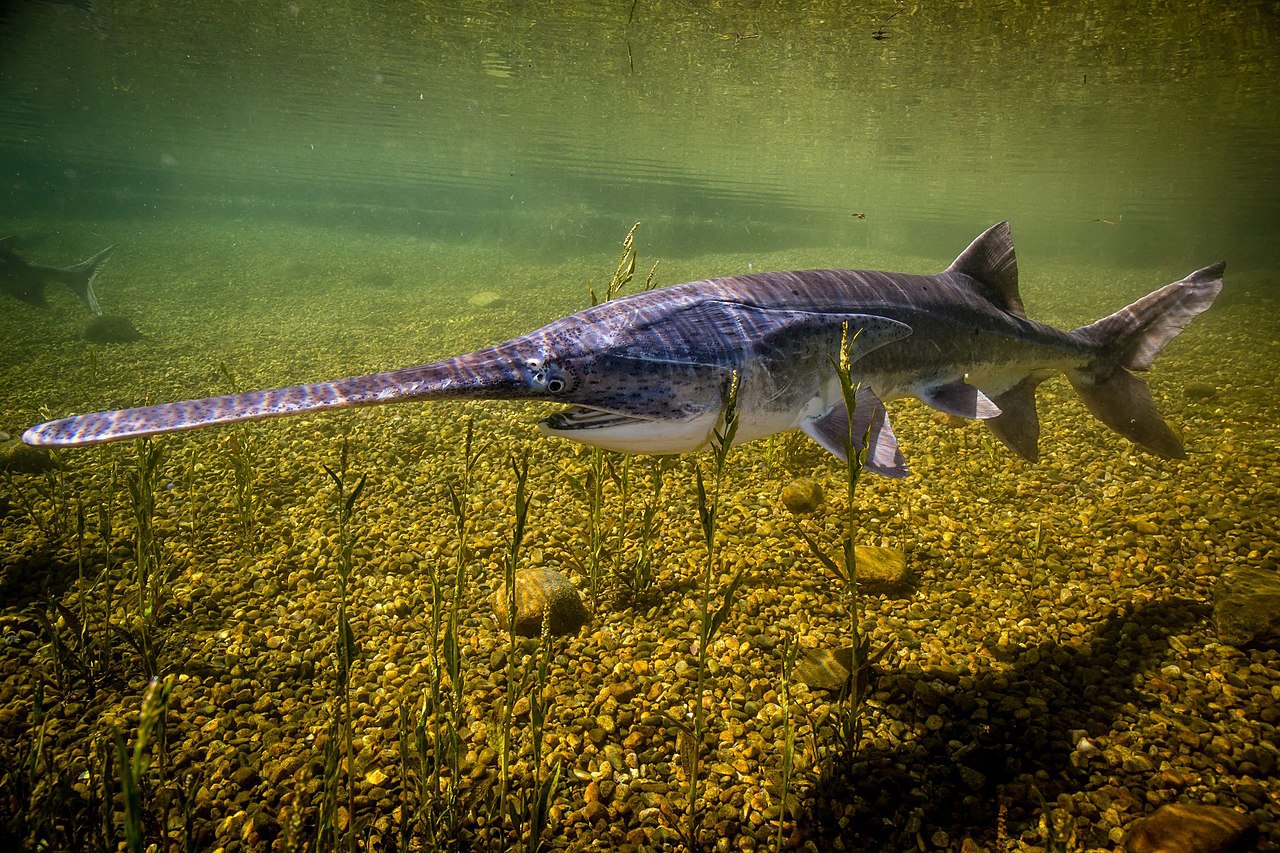
The American paddlefish is a unique fish found mainly in the rivers of North America, especially the Mississippi River and its tributaries. 🐟It can grow up to 6 feet long and weigh over 200 pounds! This fish is easily recognized by its long, paddle-shaped snout, which scientists believe helps it detect food in muddy waters. Paddlefish have been around for millions of years, making them "living fossils." They are part of a family called Polyodontidae and can live for more than 30 years in the wild! 🌊
Explore with ChatDinoKey Points
The American paddlefish is considered a "vulnerable" species, which means it faces threats that could put it at risk.
Scientists study American paddlefish to learn more about their habits and behaviors.
The American paddlefish has cultural importance too!
The American paddlefish mostly lives in freshwater rivers and lakes.
American paddlefish have smooth, greyish skin and a distinct flattened snout that can be up to one-third of their body length!
Paddlefish are filter feeders, which means they eat tiny food particles instead of hunting larger prey.
American paddlefish typically reach sexual maturity between the ages of 3 and 7.
The biggest threats to American paddlefish include habitat destruction, pollution from chemicals, and overfishing.
Photos of American Paddlefish

American Paddlefish — photo 1

An American paddlefish in a large aquarium tank

General morphology of the American paddlefish

Stages of rostrum development

Map of the United States showing distribution of paddlefish

Tin of freshly processed paddlefish caviar

Angler landing a large paddlefish
🛑 Conservation Status
The American paddlefish is considered a "vulnerable" species, which means it faces threats that could put it at risk. 🛑Habitat loss, pollution, and overfishing have led to declining numbers in some areas. Efforts to protect paddlefish include monitoring their populations, restoring habitats, and legal regulations to limit fishing. 🌍Many conservation groups work to raise awareness about these incredible fish and ensure their survival for future generations. Protecting our rivers is crucial for keeping paddlefish healthy!
Go deeper🔬 Research And Studies
Scientists study American paddlefish to learn more about their habits and behaviors. 🔬Researchers investigate how these fish navigate their rivers, find food, and reproduce. They also use technology to track paddlefish movements, helping to identify important areas for conservation. By understanding paddlefish better, scientists can develop strategies to protect them and their habitats. 📊This research is essential for ensuring that future generations can enjoy seeing paddlefish in the wild!
Go deeper🎨 Cultural Significance
The American paddlefish has cultural importance too! 🎨Native American tribes living along the Mississippi River have historically harvested paddlefish for food and ceremony. Their unique shape and size make them interesting features in local folklore and stories. Paddlefish roe (fish eggs) is considered a delicacy, similar to caviar! 🌟Nowadays, paddlefish are also a popular attraction for fishing enthusiasts and tourists who wish to experience the beauty of these ancient fish.
Go deeper🌊 Habitat And Distribution
The American paddlefish mostly lives in freshwater rivers and lakes. 🌊They are found in the Mississippi River Basin, which stretches from Minnesota to Louisiana. These fish prefer slow-moving waters with plenty of room to swim. Paddlefish often inhabit deep pools during the day and venture out to shallower waters to feed at night. This means they can be found in various areas, including rivers, reservoir lakes, and floodplains! 🐠Their habitat is essential for their survival and helps keep them safe from predators.
Go deeper🛶 Physical Characteristics
American paddlefish have smooth, greyish skin and a distinct flattened snout that can be up to one-third of their body length! 🛶They have a large mouth covered with small, sensitive "barbels" that help them find food underwater. Paddlefish also have a long, forked tail that helps them swim gracefully. Their bodies are streamlined, making them look like torpedoes! 🎯Not only are they big, but they also have very few scales, giving them a unique and smooth appearance. They can also be distinguished by their large eyes, which help them see in dark water.
Go deeper🦐 Diet And Feeding Behavior
Paddlefish are filter feeders, which means they eat tiny food particles instead of hunting larger prey. 🦐They mainly feed on zooplankton and small aquatic animals, such as larvae and minute crustaceans! Paddlefish use their large mouth to gulp water and filter out food using special gill rakers. They can eat a whopping 10,000 tiny creatures in a single gulp! 🥄This unique feeding behavior allows them to thrive in their river habitats, where food is plentiful!
Go deeper🐣 Reproduction And Lifespan
American paddlefish typically reach sexual maturity between the ages of 3 and 7. 🐣During the spawning season, usually in late spring, they travel upstream to reproduce. Female paddlefish lay thousands of eggs that float in the water! These eggs hatch into tiny larvae after several days. Paddlefish can live for more than 30 years, and some individuals have been known to live up to 50 years! 🌱Their long lifespan demonstrates the importance of healthy rivers and lakes for their populations and breeding.
Go deeper🏭 Threats And Protection Efforts
The biggest threats to American paddlefish include habitat destruction, pollution from chemicals, and overfishing. 🏭To combat these issues, various agencies and organizations work together to restore river ecosystems. This includes cleaning rivers, creating management plans for fishing, and establishing wildlife reserves. Volunteers often help with clean-up events to keep rivers healthy! 🌱By coming together, communities can make positive changes to protect paddlefish and their habitats for all to enjoy. 🐢
Go deeper