Alpine Accentor Facts For Kids
The Alpine Accentor is a small passerine bird in the family Prunellidae, known for its striking appearance and melodious song, native to the mountainous regions of Eurasia and North Africa.
Select reading age
Alpine Accentor Facts For Kids
Videos & Quizzesincluded
About this topic
The Alpine Accentor is a small bird that loves to hang out in high mountains! 🏔️ It belongs to the Prunellidae family and is known for its cozy, grey-brown feathers. You can spot them in parts of Europe, Asia, and even in North Africa. These little birds are about the size of a sparrow, with a length of 15-17 cm (about the size of a cupcake). Their cheerful songs can be heard in alpine meadows and rocky areas. Alpine Accentors are tough birds that enjoy living in cold, snowy environments! ❄️
Explore with ChatDinoKey Points
Alpine Accentors are not heavy migrators like some other birds.
The Alpine Accentor is not considered endangered and is classified as "Least Concern" by the International Union for Conservation of Nature (IUCN).
Alpine Accentors are devoted parents!
These birds love living in rocky, mountainous areas where they can find plenty of hiding spots.
In some cultures, the Alpine Accentor is a symbol of resilience and adaptability due to its ability to thrive in harsh mountain conditions.
Alpine Accentors are omnivores, meaning they eat both plants and insects.
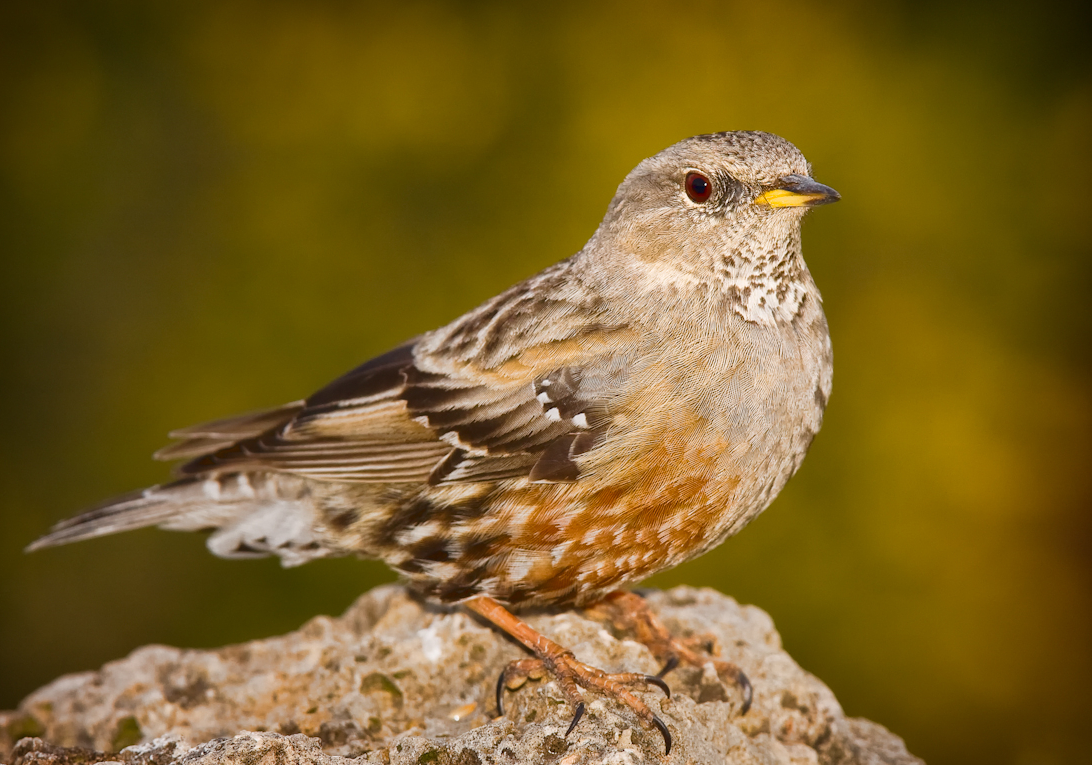
Alpine Accentors are small, with beautiful grey-brown plumage.
The Alpine Accentor's scientific name is Prunella collaris.
Alpine Accentors get along well with other mountain-dwelling birds!
Photos of Alpine Accentor

Alpine Accentor — photo 1

P. c. nipalensis at Pangolakha Wildlife Sanctuary in East Sikkim, India

Distribution of Prunella collaris

Prunella collaris collaris—Muséum de Toulouse (MHNT)
🌬️ Migration Patterns
Alpine Accentors are not heavy migrators like some other birds. 🌬️ Although they might slightly move down to lower elevations during harsh winters, they usually remain in their mountain territory year-round! This means they have adapted well to living in high altitudes, where they can find food and shelter. Their ability to thrive in cold environments is impressive, as many birds migrate to warmer places instead. ❄️
Go deeper🌱 Conservation Status
The Alpine Accentor is not considered endangered and is classified as "Least Concern" by the International Union for Conservation of Nature (IUCN). 🌱This means their population is stable and they are doing quite well in their mountainous habitats! However, climate change and habitat loss could pose a threat in the future. It's essential to protect their rugged homes to ensure these beautiful birds continue to grace our mountainside! 🦋
Go deeper💕 Breeding And Nesting
Alpine Accentors are devoted parents! 💕They typically build their nests in rocky crevices or under bushes to keep their eggs and baby birds safe from predators. The female usually lays 3-5 eggs, which are light blue with speckles. Both parents work together to care for their eggs, taking turns keeping them warm. After about 12-16 days, the chicks hatch and stay in the nest until they can fly. These little families stay close to their mountain homes as they grow! 🐣
Go deeper⛰️ Habitat And Behavior
These birds love living in rocky, mountainous areas where they can find plenty of hiding spots. ⛰️ Alpine Accentors are often seen hopping from rock to rock, searching for food and singing their cheerful songs! They typically prefer to stay outside and can be found in alpine meadows or close to glaciers. These birds are known to be social creatures and often form small flocks, especially in winter. They are also quite curious and may approach people! 👀
Go deeper🥾 Cultural Significance
In some cultures, the Alpine Accentor is a symbol of resilience and adaptability due to its ability to thrive in harsh mountain conditions. 🥾People hiking in the Alps sometimes share stories about encountering these delightful birds. They represent the beauty of nature and remind us of the importance of protecting our environment! The Alpine Accentor has even inspired local folklore in some regions, where it is admired for its song and beauty. 🎶🎉
Go deeper🐛 Diet And Feeding Habits
Alpine Accentors are omnivores, meaning they eat both plants and insects. 🐛Their diet consists of seeds, berries, and small invertebrates like worms and ants. During the summer months, they can often be spotted foraging in the grasses, looking for tasty snacks. They use their sharp beaks to pick at food and may also enjoy searching through snow to uncover hidden goodies! Yum! 🍲
Go deeper🌈 Physical Characteristics
Alpine Accentors are small, with beautiful grey-brown plumage. 🌈They have streaked feathers on their back and a lighter underside, which helps them blend in with the rocky surroundings. Their wings are short and rounded, which helps them hop quickly on rugged surfaces. They have bright yellow patches behind their eyes and a white line above the eye, making them easy to recognize! Plus, their sweet, melodic songs sound as lovely as they look. 🎶
Go deeper🌍 Taxonomy And Distribution
The Alpine Accentor's scientific name is *Prunella collaris*. 🌍They are found in various countries, including Switzerland, France, and parts of the Himalayas in Nepal. This bird prefers steep slopes and rocky terrains at altitudes around 2,000 to 4,500 meters. They are not very picky about where they live, as long as it's cold and mountainous! These birds migrate slightly during winter but generally stick around their high-altitude homes.
Go deeper🐦 Interactions With Other Species
Alpine Accentors get along well with other mountain-dwelling birds! 🐦They are often seen sharing their habitat with species like the Chough and Snowfinch. During the breeding season, they may defend their nesting territories from other birds, but generally, they focus on foraging for food. Their friendly nature and shared environment create a lively community in the mountains. These interactions help maintain the balance of life in these beautiful alpine areas! 🤝
Go deeper