Albertosaurus Facts For Kids
Albertosaurus was a large theropod dinosaur known for its predatory nature and close relation to Tyrannosaurus rex, living in North America during the Late Cretaceous period.

Do more with AI
Introduction
Albertosaurus was a large dinosaur that lived about 70 million years ago during the Late Cretaceous period! 🦖It was a meat-eater or carnivore and is known to have been about 30 feet long and weighed around 2 tons. This dinosaur was named after the province of Alberta in Canada, where its fossils were first found. Although it wasn't the largest dinosaur, it was fast and had powerful legs, making it a strong predator. It is a relative of the famous Tyrannosaurus rex, sharing some similar features! 🌟
Images of Albertosaurus

Holotype specimen CMN 5600

The Red Deer River near Drumheller, Alberta. Almost three-quarters of all Albertosaurus remains have been discovered alongside the river, in outcrops like the ones on either side of this picture.

Teeth from Dry Island and Drumheller, Royal Tyrrell Museum

Skull TMP 1985 098 0001

Gorgosaurus, which was described as a second species of Albertosaurus, A. libratus by Dale Russell.

Size comparison

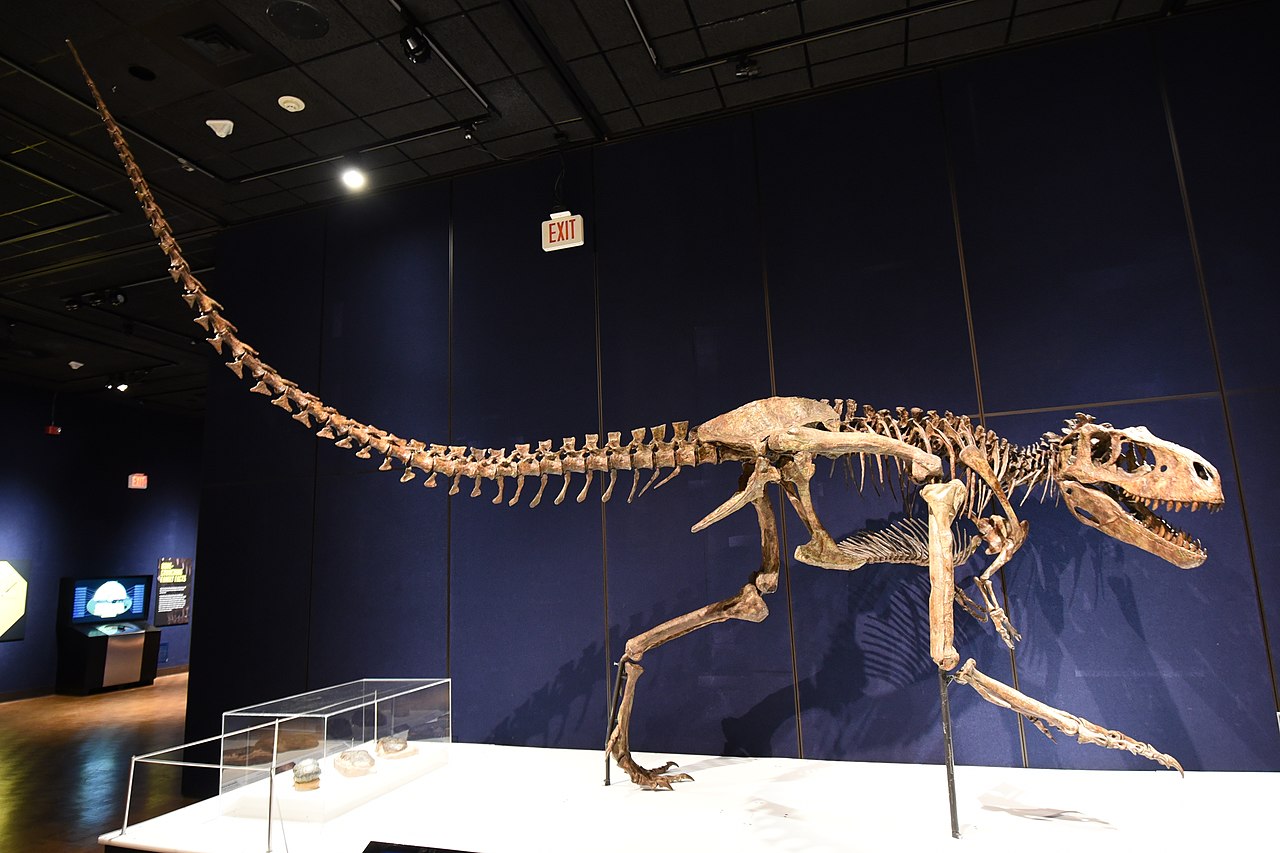
Skull cast at the Royal Tyrrell Museum of Palaeontology in Drumheller, Alberta


Cast in the Rocky Mountain Dinosaur Resource Center in Woodland Park, Colorado
Paleobiology
Paleobiology is the study of ancient life, especially dinosaurs like Albertosaurus. 🌟Scientists believe Albertosaurus was a social dinosaur that might have lived in groups. This could help protect them from bigger predators! Fossils show that they had strong bones, suggesting they were strong and fast. They probably communicated with each other through sounds and body language! 🦖Understanding how Albertosaurus lived, hunted, and behaved helps scientists learn about the ecosystems of the past and how different species interacted! 🌿🐾
Fossil Evidence
Paleontologists have found many Albertosaurus fossils in Alberta, Canada. 🦖These fossils include bones, teeth, and even some tracks! Some Albertosaurus skeletons are well-preserved, which helps scientists understand how they lived and moved. The first fossils were found in the late 1800s, and since then, many important discoveries have been made. Fossils tell us about the age of the dinosaurs and the environment they lived in. Each fossil is a clue that helps us learn more about this amazing dinosaur! 🏴☠️🔍
Habitat And Range
Albertosaurus lived in what is now Alberta, Canada, and the surrounding areas. 🌍💚 Back then, during the Late Cretaceous period, this region had warm weather and was covered with lots of plants, making it a great place to hunt! Dinosaurs like Albertosaurus roamed in forests, plains, and near rivers, searching for prey. The land looked very different back then! There were no people, and dinosaurs were the kings of the earth. Albertosaurus likely lived alongside other dinosaurs, including ceratopsians and hadrosaurs! 🏞️🐉
Discovery And Naming
In 1884, paleontologist Lawrence M. Lamb discovered the first Albertosaurus fossils in Alberta, Canada. 🏞️ These fossils included important bones, like the arms and legs. The name "Albertosaurus" means "Alberta lizard." It wasn't until 1904 that the dinosaur was officially named by another paleontologist, Henry Fairfield Osborn. Since then, many other fossils have been found, helping scientists learn more about this fascinating creature! Fossils are like pieces of a giant puzzle that help us understand what dinosaurs looked like and how they lived! 🧩🔍
Physical Characteristics
Albertosaurus had a large head filled with sharp teeth that were perfect for eating meat. 🦷Its body was powerful, and it walked on two strong legs, with short arms that had three fingers. An interesting feature is its lighter build compared to T. rex, which means it could run faster! Albertosaurus also had a long tail that helped it keep balance while running. It had a skull with small crests on top, which made it look unique! These characteristics helped it hunt and survive in its environment. 🏃♂️💨
Diet And Feeding Behavior
Albertosaurus was a carnivore, which means it ate meat! 🍖It hunted smaller dinosaurs, such as hadrosaurs (duck-billed dinosaurs), using its sharp teeth and strong jaws. Scientists think Albertosaurus might have hunted in packs, like wolves, which helped it catch prey more easily. Its strong legs would allow it to run swiftly and ambush unsuspecting targets. Albertosaurus also probably scavenged for leftover food from other dinosaurs' kills! Its keen senses helped it locate prey, making it a skilled hunter! 🦴🔍
Relation To Other Dinosaurs
Albertosaurus is part of the theropods, a group of bipedal dinosaurs that were mainly carnivores! 🦖It is closely related to the massive Tyrannosaurus rex. Both dinosaurs share common features, such as sharp teeth and powerful legs. Scientists also see connections to smaller theropods like Velociraptor. The differences in size and hunting techniques teach us how various dinosaurs adapted to their environments. Learning about these relationships helps paleontologists understand the evolution of predatory dinosaurs over millions of years! 📚✨
Cultural Impact And Representation
Albertosaurus has been featured in many films, books, and even toys! 🎥🦖 Children love learning about dinosaurs, and Albertosaurus is often included in games and puzzles. It has appeared in documentaries and animated series, helping kids understand what life was like in the dinosaur era. Museums around the world showcase Albertosaurus fossils, making it an important symbol of paleontology. There’s something exciting about imagining dinosaurs like Albertosaurus roaming the earth, capturing the imagination of many young dinosaur enthusiasts! 🎨🌍
Albertosaurus Quiz
Learn more about Albertosaurus
