Alans Facts For Kids
The Alans were an ancient nomadic pastoral people from Central Asia who migrated to the North Caucasus and had a lasting impact on European and North African cultures.
Select reading age
Alans Facts For Kids
Videos & Quizzesincluded
About this topic
The Alans were a fascinating group of people who lived a long time ago! 🌍They were nomadic, which means they moved around a lot instead of staying in one place. The Alans originally came from Central Asia and traveled to the North Caucasus, an area in modern-day Russia. Some even journeyed all the way to Europe and North Africa! 🗺️ They were known for their skills in horse riding, farming, and herding animals. The Alans played a vital role in the history of places they visited, bringing their traditions with them. They lived in groups, called tribes, which were important for their way of life.
Explore with ChatDinoKey Points
The Alans had a mix of beliefs, including elements of Zoroastrianism, an ancient religion that started in Persia!
The Alans spoke an ancient language called Alanian, which is part of the larger Iranian language group!
One notable figure from Alan history is Alanic warrior and leader known as the "Alan King."
The name "Alan" has interesting roots!
The Alans were known as fierce warriors!
The social structure of the Alans was based on family groups called clans.
The legacy of the Alans lives on through various modern-day groups!
The Alans began their big journey around the 1st century A.D.
The Alans contributed to art and science through their unique crafts and traditions.
The Alans interacted with many neighboring civilizations, including the Romans and the Goths!
Photos of Alans

Alans — photo 1

Alans — photo 2

Scythians and related Northeastern Iranic peoples in the Iron Age highlighted in green.

Europe, 117–138 CE, when the Alani were concentrated north of the Caucasus Mountains (centre right).

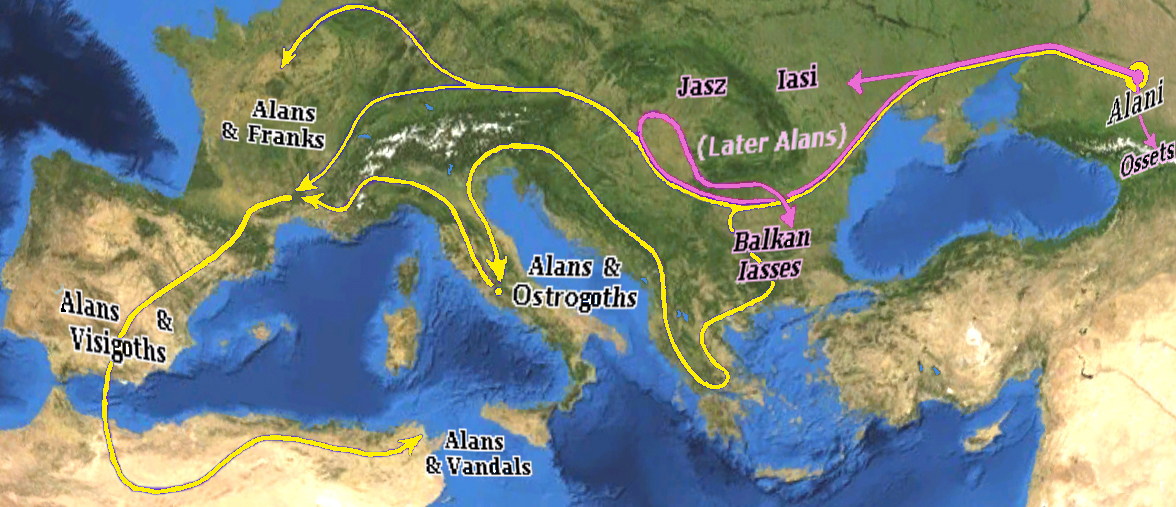
The migrations of the Alans during the 4th–5th centuries CE, from their homeland in the North Caucasus

Kingdom of the Alans in Hispania (409–426 CE).

Kingdom of the Vandals and Alans in North Africa (526 CE).

Map of Alania in IV Century.

🔥 Religion And Beliefs
The Alans had a mix of beliefs, including elements of Zoroastrianism, an ancient religion that started in Persia! 🔥Zoroastrianism focused on the struggle between good and evil. The Alans also believed in nature spirits and practiced rituals to honor their ancestors. They celebrated special events, like harvests and seasonal changes, with ceremonies. As they encountered other cultures during their travels, some Alans adopted new religions like Christianity. Today, we can see how their beliefs shaped their identity and their connections with others in history.
Go deeper📚 Language And Literature
The Alans spoke an ancient language called Alanian, which is part of the larger Iranian language group! 📚Sadly, there aren't many written records of their language, but researchers believe it was quite rich and expressive. The Alans loved storytelling and passed down their knowledge through oral tradition, sharing tales of bravery and adventure! As the Alans traveled to new places, they picked up other languages, such as Slavic and Latin. This helped them connect with different cultures and made their stories even more exciting!
Go deeper🏹 Notable Historic Figures
One notable figure from Alan history is Alanic warrior and leader known as the "Alan King." 🏹 Though many individual names may have been lost to time, their influence still resonates. They played key roles in battles and interactions with other civilizations. Their bravery and leadership inspired future generations to explore, trade, and connect with others. The legacy of the Alans continues to be studied by historians, keeping their stories alive for everyone to learn from! 📖
Go deeper🦁 Etymology And Name Origin
The name "Alan" has interesting roots! It is thought to come from a word in the ancient Persian language, meaning "noble" or "brave." 🦁 The Alans referred to themselves with words like "As," which may have meant "strong" in their language. Over time, the name became popular in history books and even today! People often think of the Alans as skilled warriors and travelers. The name has also inspired many stories and legends throughout history, reminding us of their special legacy!
Go deeper🛡️ Military Tactics And Warfare
The Alans were known as fierce warriors! 🛡️ They excelled in horse-riding and archery, making them very effective in battle. They often fought for their land and faced off against powerful civilizations like the Romans. 🌟Their military tactics included swift attacks and surprise movements. The Alans formed alliances with other tribes, helping them be stronger together. Their courage and skills in warfare left a mark on history and helped protect their territories and families.
Go deeper👪 Social Structure And Culture
The social structure of the Alans was based on family groups called clans. 👪They valued bravery, loyalty, and had a strong connection to their families. The Alans were also known for their colorful clothing, often made from wool or animal hides. Important events like weddings and festivals were celebrated with music, dancing, and feasting! 🎉They treasured their oral traditions, sharing stories of heroes and legends. The Alans lived close to nature, tending to their herds and relying on the land for food, making them skilled pastoralists.
Go deeper🌟 Legacy And Modern Descendants
The legacy of the Alans lives on through various modern-day groups! 🌟They are often linked to the Ossetians, who live mainly in regions of Russia and Georgia. Their language and traditions have influenced the culture in the region. Some historians study the Alans to better understand the past and how ancient civilizations shaped our world today. Their stories remind us of the importance of migration and the rich tapestry of cultures that have come together throughout history!
Go deeper⏳ History And Migration Patterns
The Alans began their big journey around the 1st century A.D. ⏳They traveled from Central Asia to different regions. Some settled in the grassy plains of the North Caucasus, while others explored areas such as Eastern Europe and North Africa. The Alans were part of the great movement of peoples known as the "Migration Period." This was a time when many different groups moved around, shaping the cultures and history of Europe! The Alans eventually split into various tribes, adapting to their new homes while keeping parts of their identity.
Go deeper🎨 Contributions To Art And Science
The Alans contributed to art and science through their unique crafts and traditions. 🎨They were skilled metalworkers, creating beautiful jewelry and weapons. The Alans made intricate designs that reflected their culture and values! They were also known for their excellent horsemanship, developing techniques that influenced training methods used today! 🐎Although not much is documented, the Alans' contributions helped shape the cultures they encountered along their migratory routes.
Go deeper🌍 Interactions With Neighboring Civilizations
The Alans interacted with many neighboring civilizations, including the Romans and the Goths! 🌍They engaged in trade, exchanging goods like horses, textiles, and metalwork. Sometimes, they fought alongside other tribes or against them to defend their land. These interactions allowed them to learn new ideas and skills from others, enriching their culture. The Alans were known as brave warriors, and their diplomacy played an important role in building relationships with various peoples in Europe and Asia!
Go deeper