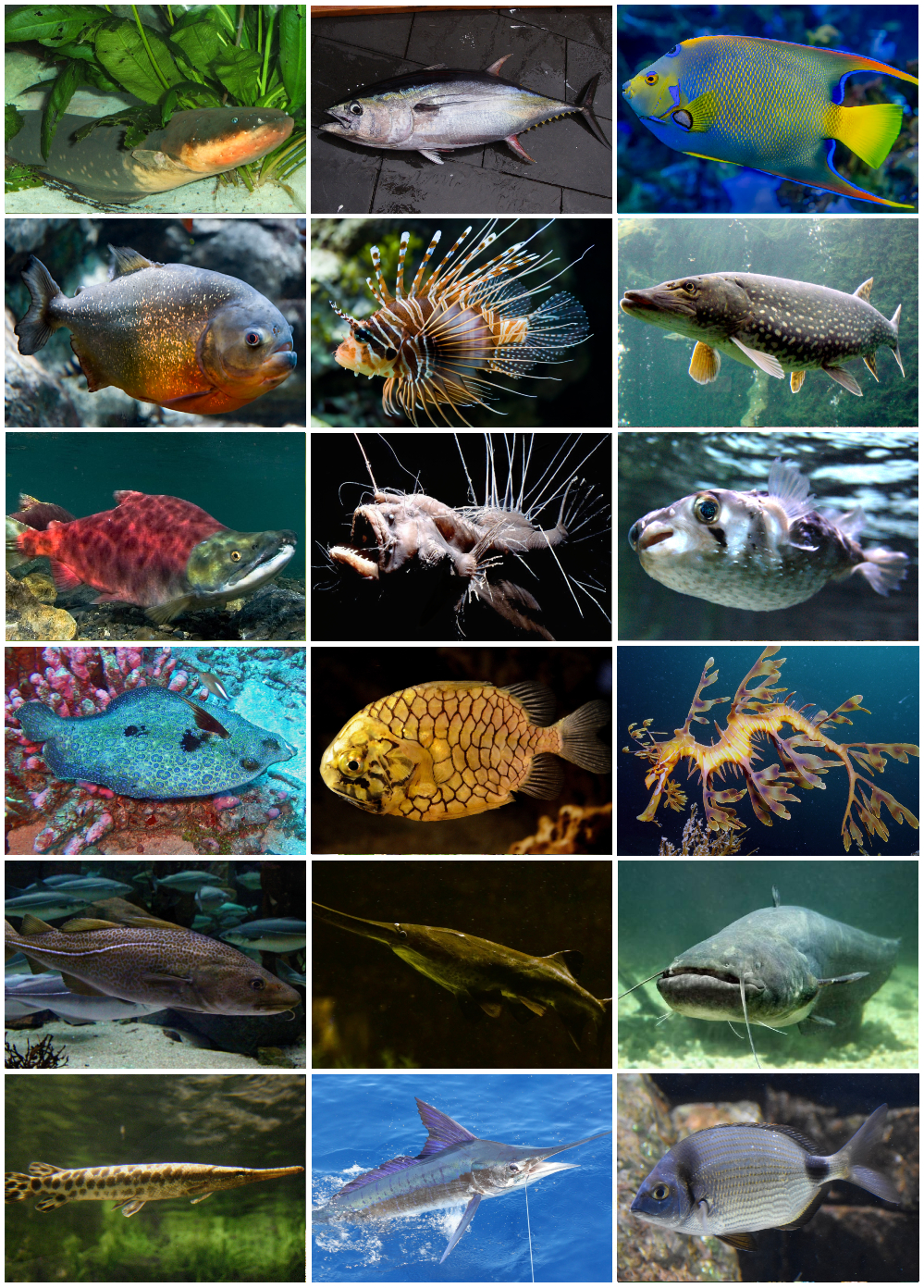
Actinopterygii is a class of bony fish known as ray-finned fish, characterized by fins supported by bony rays, and they comprise over 50% of all living vertebrate species.
Set reading age
View for Kids
Easy to read and understand
View for Students
Clear, detailed explanations
View for Scholars
Deep dives and big ideas
Actinopterygii, pronounced as "ak-tin-oh-per-i-jee," is a group of fish commonly known as ray-finned fish. 🐟These amazing creatures are called "ray-finned" because they have bony fins that look like rays! They are the largest class of vertebrates, making up over 50% of all living vertebrate species! 🌍This means there are more types of ray-finned fish than all other animals with backbones combined. Actinopterygii can be found in oceans, rivers, and lakes around the world. They play a big role in our ecosystems and come in many different shapes, sizes, and colors! 🌈
Some fascinating ray-finned fish include the mighty great white shark, colorful clownfish, and unique anglerfish! 🦐The great white shark can be up to 20 feet long and is found in oceans worldwide. Clownfish are famous from the movie "Finding Nemo"! 🎬They live among sea anemones and have bright orange and white stripes. The anglerfish, known for its bioluminescent lure, can adapt to deep-sea life! 🌌With over 25,000 species, there's always something new and exciting to learn about in the world of Actinopterygii!
Ray-finned fish have different diets depending on the species. Some are herbivores, eating plants and algae, while others are carnivores that feast on smaller fish and insects. 🐟👀 For example, clownfish love to munch on sea anemones, while pike hunt for other fish! 🎣Many species, like the parrotfish, use their beaks to scrape algae off rocks. 🪨They play an essential role in keeping their ecosystems healthy by helping control algae growth and balancing food webs. By being either predator or prey, these fish keep nature in balance!
Many ray-finned fish species need our help! 🆘Overfishing, pollution, and habitat loss threaten their populations. Some popular fish, like the Atlantic cod, have seen drastic decreases in numbers. 🚫Other species, like the saola, are critically endangered! Various organizations and governments work to protect these fish through fishing regulations and habitat restoration. 🌳Educating people about the importance of keeping rivers and oceans clean and sustainable practices can help fish populations thrive for generations to come! 🌊
Ray-finned fish have been important to human culture for thousands of years! 🌎They provide a source of food for people all around the world. 🥘Different cultures celebrate fish through festivals, fishing games, and art. For example, in Japan, sushi and sashimi, made from fish, are delicious and popular dishes! 🍣Additionally, many countries have fishing traditions that are passed down through generations. 🌊Fish are also seen in stories, movies, and even toys, showing how much they touch our lives and imagination. 🐟❤️
Ray-finned fish are unique because they have a skeleton made of bone instead of cartilage, like sharks. 🦈They have fins that are supported by long, thin bones called "rays." These fins help them swim and stay balanced in the water. Their bodies are covered in scales, which can be colorful or camouflaged to blend in with their surroundings! 🎨Most species also have a swim bladder, a special organ that helps them float at different depths in the water. The gills on the sides of their heads allow them to breathe underwater by filtering oxygen from the water. 💧
Ray-finned fish have various ways to reproduce! 🌼Most of them lay eggs, releasing thousands at once in the water. This is called spawning; it makes it easier for baby fish, called fry, to survive. Some species guard their eggs, while others leave them to hatch without protection. 🥚Some fish, like seahorses, have unique reproductive methods; the males carry the eggs until they hatch! 🎏Other Actinopterygii species give live birth, meaning they deliver fully formed babies instead of laying eggs. This means there are many fascinating ways these fish continue their families!
Ray-finned fish can live in many different habitats! 🏞️ You can find them in salty oceans, freshwater rivers, and even lakes. 🌊Examples include the Great Barrier Reef in Australia, home to many colorful reef fish, and the Amazon River in South America, where you'll find unique species like the piranha! 🐟Actinopterygii have adapted to live in almost every corner of the Earth, from the deep ocean to high mountain lakes. They also occupy different environmental conditions like coral reefs, mudflats, and riverbanks, showing how versatile they are!
Ray-finned fish play vital roles in their ecosystems! 🐠They are part of the food chain, providing meals for birds, mammals, and other marine life. For example, larger fish like sharks rely on smaller fish for food. 🦈Additionally, their feeding habits help control algae growth and promote healthy aquatic plants. 🌱When healthy populations of these fish are present, they signal that their environment is also healthy! They contribute to coral reef ecosystems by cycling nutrients and providing habitats for other creatures. 🦐Without ray-finned fish, many ecosystems would struggle to survive!
Scientists are always learning more about ray-finned fish! 📚They research their biology, behavior, and how they adapt to their environments. Technology, such as underwater cameras and tagging, helps them study fish in oceans and rivers. 🌊🏊 For example, researchers have found new species like the recently discovered purple frogfish! 🐸Through research, we learn how pollution impacts their habitats and how to protect them. Every discovery helps us understand these creatures better and ensures they have a brighter future in our ecosystems! 🌈
Actinopterygii belongs to a group called chordates, which means they have a backbone. 🦴These fish are grouped into different families and species based on their features. The class Actinopterygii has two main groups: Holostei, which includes fish like the bowfin, and Teleostei, which includes most fish we see, like salmon and goldfish. 🎣Teleostei is the largest group and has over 25,000 species! That's a lot of fish! 🐠Scientists study these fish to learn more about their evolution and how they adapt to their environments.


DIY is a creative community where kids draw, build, explore ideas, and share.
No credit card required