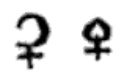
2 Pallas is a large, spherical asteroid in the asteroid belt between Mars and Jupiter, known for its dark, carbon-rich surface and unique orbital characteristics.
Set reading age
View for Kids
Easy to read and understand
View for Students
Clear, detailed explanations
View for Scholars
Deep dives and big ideas
2 Pallas is one of the largest asteroids in our solar system! It was discovered on March 28, 1802, by the German astronomer Heinrich Wilhelm Olbers. Named after the Greek goddess Pallas Athena, this asteroid is a bit like a big rock floating in space! 🌌Pallas is not a planet; it's categorized as a "dwarf planet" and is one of the largest in the asteroid belt, which is a region between Mars and Jupiter. It is about 512 kilometers (319 miles) across, making it the third-largest asteroid known!
Pallas has experienced lots of impacts throughout its life, which means that it has many craters on its surface! 🌑Each crater is like a reminder of a time when something hit Pallas. Some are big, and some are small. These impacts have helped shape its weird surface. Scientists study these craters to learn about how old Pallas is and the history of the asteroid belt. By knowing how many craters are there, they can guess how often things crash into it!
Pallas has a special relationship with other asteroids in the solar system through something called orbital resonance. This means that Pallas and other asteroids sometimes line up in a way that affects each other's orbits. 🌌For example, every time Pallas completes its orbit, the gravitational pull it gets can change the paths of smaller asteroids. This amazing dance in space helps scientists understand how groups of asteroids behave together and keeps them from bumping into one another too much!
Pallas travels around the Sun in a path called an orbit. Its orbit is quite special because it takes Pallas about 4.6 Earth years to complete one trip around the Sun! That means when Earth has a birthday, Pallas has a birthday every 4.6 years! 🎉Pallas is about 415 million kilometers (258 million miles) away from the Sun. Its orbit is also tilted, making it different from many other asteroids. Because it’s in the asteroid belt, it dances around with other asteroids in a big celestial party!
The surface of Pallas tells scientists a lot about what it is made of! It is mostly made of silicate rock and hydrated minerals, which means it has some water in it! 💧Scientists believe it might even have a thin layer of ice under its surface! The surface is also covered in dark materials like carbon compounds, making it look quite different from other bright asteroids. Understanding what Pallas is made of can teach us important things about how asteroids like it formed in the early solar system!
The cool discovery of Pallas was made by Heinrich Wilhelm Olbers in 1802. 🌟He noticed it while looking at the night sky from Germany! Olbers named this asteroid after Pallas Athena, who was known for her wisdom. People believed she was a strong protector. After its discovery, Pallas received lots of attention from astronomers and scientists because it was so big and different! Today, we still study Pallas to learn more about the early solar system and how things formed long ago!
Even though we haven't sent any spaceships to visit Pallas yet, scientists have studied it using telescopes and spacecraft that took pictures of it from a distance. 🌠For example, the Hubble Space Telescope has helped us gather important information about Pallas. Some scientists have plans to study it more closely using future missions. They hope to learn even more about Pallas and how it might help us understand the wider universe!
Pallas has a unique shape that's not perfectly round like a ball. Instead, it looks a bit like a potato! 🥔It has a dark surface covered in a mix of minerals. Scientists believe it might contain a lot of water ice and clay. The surface is uneven and has lots of craters from bumps and hits it has taken over billions of years! When scientists look at Pallas through telescopes, they see that it’s kind of gray and has a bizarre texture, like a rough stone. 🌑
Scientists are excited about studying Pallas more closely in the future! 🚀They want to send missions to learn about the minerals on its surface and see if there's any water present. Studying asteroids like Pallas could provide clues about the formation of our solar system, Earth, and even life itself! 🌱Future missions might help us understand better how asteroids can change shape over time, and how they interact with other space objects, unlocking even more mysteries of space!
Pallas is special compared to other asteroids like Ceres and Vesta. While Ceres is the largest and classified as a dwarf planet, Pallas is the third-largest! 🌍Vesta is also large but has a much brighter surface because it’s made of different materials. Pallas stands out with its unique shape and composition, making it a vital piece of the puzzle for scientists wanting to learn how asteroids formed and their roles in the solar system!