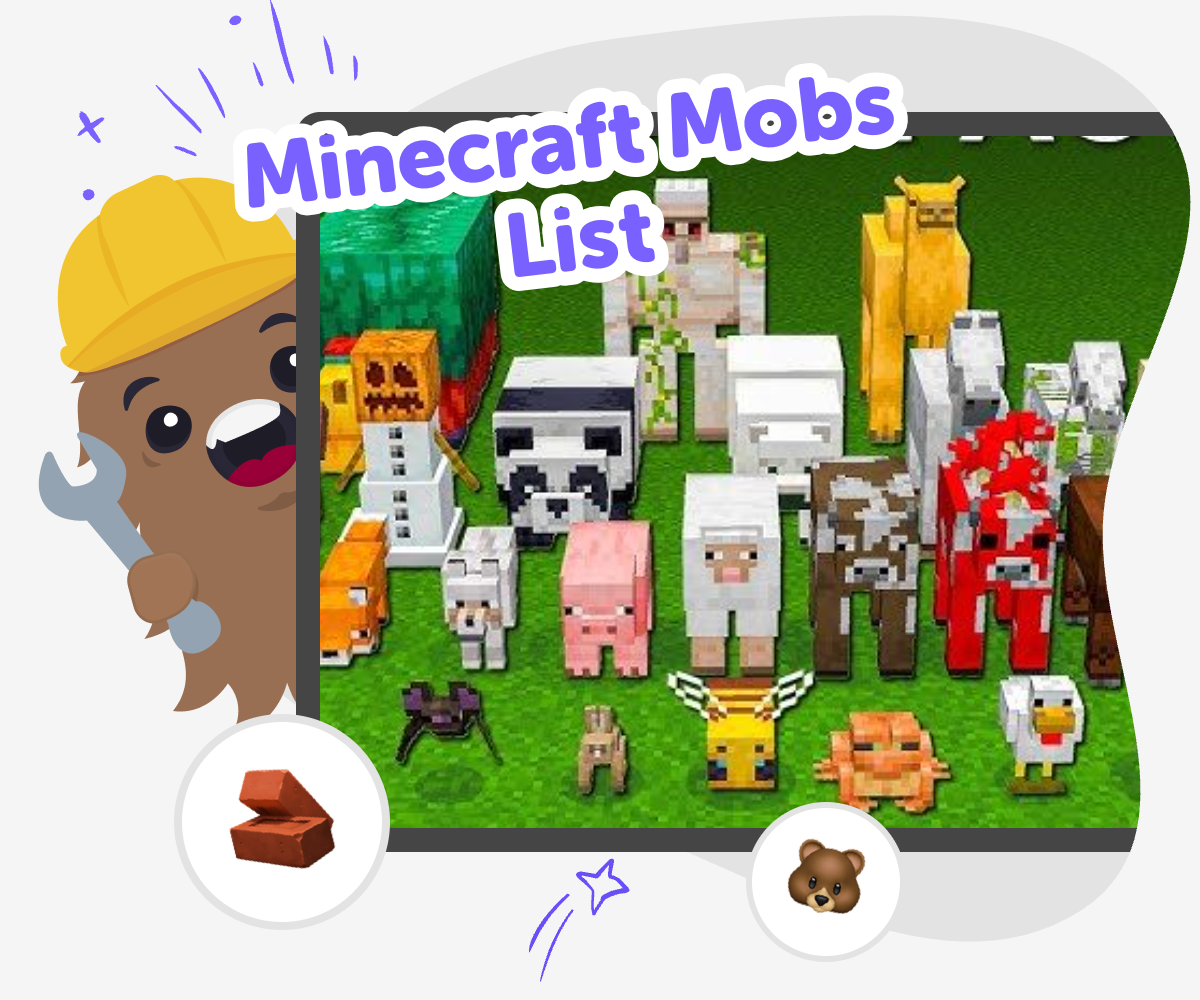
Minecraft Mobs List
Explore the minecraft mobs list and learn how different creatures shape the world, the challenges, and the stories kids can build inside Minecraft. Then use Vibe Coding to turn ideas inspired by mobs into playful interactive projects with guided support.
Learn the mobs list
The minecraft mobs list is a simple way to understand the creatures you meet in Minecraft, from helpful animals to scary monsters and mysterious monsters in between. Knowing the mobs helps kids recognize danger, find useful resources, and imagine better stories, builds, and games inside the world they play in. It also helps players make smarter choices. Once you know what each mob does, you can plan where to go, what to carry, and how to react when something appears nearby.
Vibe Coding gives kids a guided way to explore the minecraft mobs list by turning mob ideas into interactive projects they can shape themselves. Kids can build a quiz, a guide, or a mini game about mobs, then test it, change it, and make it better with support along the way. That makes the topic active instead of passive. Kids learn by making, which builds coding confidence, problem-solving, and creative technology skills in a safe, hands-on way.
What is a Minecraft mobs list?
A Minecraft mobs list is a way to sort the creatures and characters that live in the game world. Some mobs are friendly, like cows, sheep, and villagers. Some are neutral, which means they might leave you alone unless you bother them. Others are hostile and can attack if they spot you. When kids learn the list, they start to understand how the game works instead of just reacting to surprises. That can make play feel more confident and more fun. It also helps players remember which mobs drop useful items, which ones are safe to approach, and which ones need extra care. A clear list can turn a long game world into something easier to explore and discuss.
Why do Minecraft mobs matter in play?
Mobs change how Minecraft feels in every biome, cave, and village. A peaceful animal can give food, wool, or leather, while a dangerous mob can make a trip more exciting or more risky. That means mobs are not just decorations. They help shape survival choices, building plans, and adventure stories. Kids who know the mobs list can make better guesses about what might happen next and plan how to respond. They may decide where to build a base, what tools to carry, or when to travel at night. This kind of thinking supports problem-solving because the player is not only exploring the world, but also learning how different creatures affect the game around them.
How can kids turn mob facts into a project?
Once kids know a few mobs, they can use those ideas in their own creations. A project might ask players to match each mob to its habitat, sort mobs by friendly or dangerous, or guess what item a mob might drop. Another idea is a story or adventure game where each mob changes the path in a different way. With Vibe Coding, kids can shape those ideas step by step instead of trying to build everything at once. They can start small, test a version, and improve it as they learn. That process teaches iteration, which means trying something, noticing what happens, and making it better. It also helps kids feel that creative technology is something they can actually do.
How can families keep mob learning safe and creative?
A Minecraft mobs list is a good place to talk about game choices in a calm, friendly way. Families can focus on what each mob does, how players stay prepared, and why some creatures are best explored with care. That keeps the conversation practical instead of scary. It also opens the door to creative play, because kids can invent their own mobs, make a guide for younger players, or build a quiz that checks what they remember. When kids use Vibe Coding for that kind of project, they get a guided space for experimenting without needing to start from scratch alone. The result is a mix of safety, imagination, and confidence that helps the topic feel useful beyond the screen.
Explore mobs with code
Choose a mob
Pick one Minecraft mob you want to learn about, such as a cow, zombie, creeper, or villager. Write down where it appears and what it does in the game.
Sort its traits
List the mob’s shape, behavior, and whether it is friendly, neutral, or dangerous. Keep the facts short so they are easy to compare.
Build a simple idea
Use Vibe Coding to turn your mob notes into a quiz, guide, or mini game. Add one question or choice at a time so the project stays clear and manageable.
Make the most of testing
Try a first version Play through your project from start to finish and notice where the questions, clues, or facts feel easy or hard to follow. Fix one part at a time Change the words, buttons, or order so the mob information is clearer and the flow makes more sense. Try a second version Swap in a different mob, add a new challenge, or change the way players answer so you can compare ideas. Keep improving Save the version you like best, test it again, and make small changes until the project feels fun, readable, and ready to share.
Frequently asked questions
What is in a Minecraft mobs list?
A Minecraft mobs list usually includes animals, villagers, monsters, and other creatures that appear in the game. Kids can look at each mob’s name, behavior, and where it might show up. That makes the list useful for learning, planning, and building better game ideas.
Are all Minecraft mobs dangerous?
No. Some mobs are friendly or neutral, like cows, sheep, and many villagers. Others are hostile and may attack. Learning the difference helps kids understand the game world and choose safer ways to explore.
Why should kids learn the mob names?
Learning mob names helps kids talk about the game clearly and remember what each creature does. It can also help them read guides, compare strategies, and create their own projects based on the mobs list.
Can kids make their own Minecraft mobs?
Yes, kids can imagine their own mobs and describe what they would look like, do, or drop. A guided maker tool like Vibe Coding can help turn those ideas into simple interactive projects, such as quizzes, stories, or game concepts.
What is the easiest way to remember mobs?
Grouping mobs by type can make them easier to remember. For example, kids can sort them into friendly, neutral, and hostile, or by where they live. Drawing them or making a small game can also help the names stick.
How does a mobs list help in survival mode?
A mobs list helps players know what to expect before they go exploring. If a mob is dangerous, a player can bring better tools, carry food, or travel at a safer time. That kind of planning can make survival mode feel less confusing.
Can Vibe Coding help with Minecraft mob ideas?
Yes. Kids can use Vibe Coding to make a quiz, guide, or mini game based on the minecraft mobs list. They build it step by step, test it, and improve it, which makes learning active and creative.
Is this topic good for younger kids too?
Yes, if the content is kept simple and friendly. Younger kids can start with a few common mobs and basic ideas like friendly, neutral, and dangerous. Older kids can go further by making their own projects and comparing more detailed mob behaviors.
More tools
Build a Yoshi Game
Build a Yoshi Game is a kid-friendly way to imagine, make, and improve an interactive project inspired by a favourite character. Kids can design the game idea, try out simple choices, test how it plays, and keep changing it until it feels fun and clear. With guided support from Vibe Coding, children can turn a playful idea into a real project while building confidence, problem-solving skills, and creative technology habits.
Build a Zombie Games Game
Build a zombie games game with kid-friendly creative coding, where you can imagine the rules, shape the gameplay, and make a spooky project that feels fun and safe to play.
Build Alex from Minecraft
Build Alex from Minecraft is a creative way for kids to explore a familiar character by making something of their own. It turns a simple idea into a hands-on project that supports imagination, problem-solving, and confidence as kids design, test, and improve what they create.
Build an Akinator Game
Build an akinator game by making a kid-friendly guessing game where players answer questions and try to find the right character, creature, or object. This page explains the idea, why it is fun to make, and how kids can explore it through guided, hands-on creation with Vibe Coding.
Ready to start creating?
Join hundreds of thousands of kids already building cool stuff on DIY.ORG.
Your first game is on us.
Describe a game below - no sign-up needed to try.
Powered by AstroSafe
Make real games - not just chat