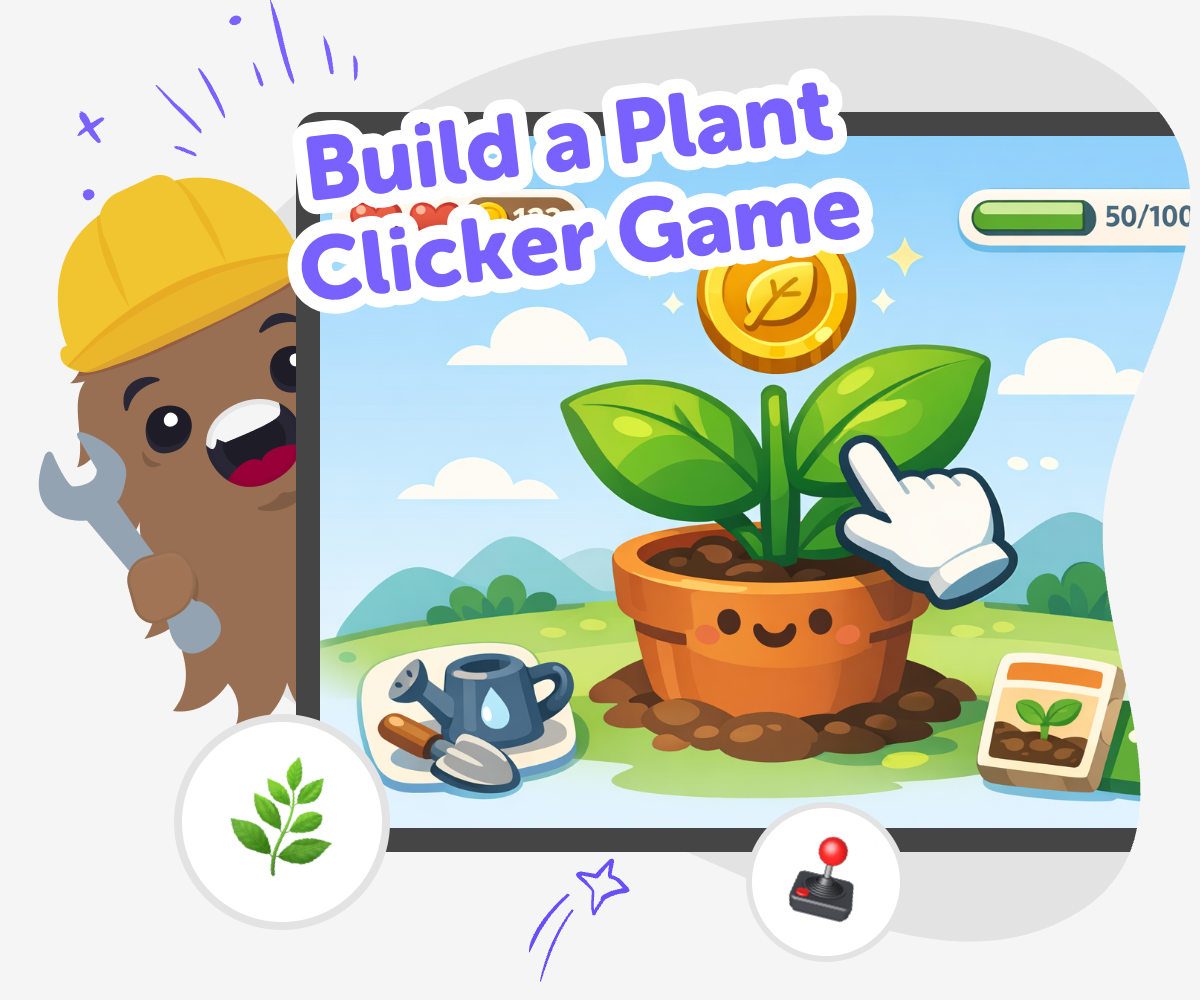
Build a Plant Clicker Game
Build a plant clicker game and turn a simple idea into a playful project where kids grow plants, earn points, and improve the game step by step. With guided support from Vibe Coding, kids can explore coding, creativity, and problem-solving while making something interactive they can test and change on their own.
About this tutorial
A build a plant clicker game project lets kids make a simple game where each click helps a plant grow, unlock rewards, and show progress in a fun way. It is a playful way to learn how small actions can change what happens on screen, which builds confidence, creativity, and problem-solving skills.
Kids can start with one seed, one click, and one goal, then keep adding new growth stages as they learn. The idea is easy to understand, but there is plenty of room to imagine different plants, colors, and rewards.
Vibe Coding helps kids explore a plant clicker game by guiding them as they describe what they want to make, test how it works, and improve it step by step. That keeps the project hands-on and safe while kids stay in control of the choices they make.
As they build, kids can try new ideas, adjust the rules, and see how small changes affect the game. This makes the topic feel creative and practical, not just something to read about.
Step by step
- 1
Choose your plant
Pick the plant you want in your game, such as a seed, flower, cactus, or magic sprout. Decide what should happen when a player clicks it for the first time.
- 2
Add a click reward
Make each click give points, growth, or coins so players can see progress right away. Show a simple change on screen each time the plant grows.
- 3
Add upgrades and goals
Create one or two upgrades that help the plant grow faster or look different. Give players a clear target so they know what to work toward.
- 4
Make the most of testing
Try it again Play your game from start to finish and notice where the clicks feel too slow or too fast. Small timing changes can make the plant feel more exciting and easy to follow.
Watch the player path Tap through every button and make sure the next step is clear. If something feels confusing, rename it or move it so younger players can understand it quickly.
Change one thing Switch a plant, a reward, or a background and see how the game changes. One small remix can help you learn what makes the project feel fun.
Keep improving Save your favorite version, then return later to test a new idea or a new growth stage. Guided support in Vibe Coding can help you keep building with confidence.
What makes a plant clicker game fun?
A plant clicker game is fun because every click helps something grow. Kids get to see a clear change right away, which makes the game feel alive and easy to understand. The best versions give players a simple goal, like turning a seed into a flower or growing a tiny plant into a full garden. That instant feedback is exciting for young makers because it shows cause and effect in a way they can control. It also teaches an important game design idea: if players can see progress, they want to keep going. Kids can make the game more interesting by adding small surprises, like new leaves, different colors, or a special reward after enough clicks. The game stays simple, but there is room to be creative with how the plant grows and what the player unlocks along the way.
Why is this a good first coding project?
This kind of project is a strong first step for kids who are learning to make games because it starts with one simple action and builds from there. A clicker game does not need complicated controls, so kids can focus on the basics of making something interactive. They learn how to connect a click with a result, which is one of the most useful ideas in coding. They also practice planning, because they have to decide what the game should do, what should change on screen, and how a player knows they are making progress. If something does not work the way they want, they can test it, fix it, and try again. That practice builds confidence. Even better, the project feels personal, because each child can choose their own plant, style, and rewards, making the game feel like a real creation instead of a template.
How can kids make it their own?
Kids can make a plant clicker game feel personal in many small ways. They can choose the type of plant, such as a cactus, tree, flower, or fantasy vine. They can decide whether the game is calm and nature-based or colorful and silly. They can also add their own words for the buttons, rewards, and upgrades. Some kids might want a peaceful garden game, while others may want a fast-paced growing challenge. The point is not to copy a big game idea exactly, but to explore it in a way that matches their own imagination. Vibe Coding supports that process by helping kids shape and test their ideas as they go. That means they can keep changing the project until it feels right, which is a great way to learn creative technology skills and stay proud of what they made.
What should parents and educators know?
A plant clicker game is a useful creative project because it combines play with learning in a way that is easy to follow. Kids practice logic, planning, and testing, but they do it through a game they understand. That makes the experience feel safe and approachable for younger learners. Adults can look for signs of growth such as clearer thinking, patience during testing, and better ideas after a first attempt does not work. It is also a good project for talking about design choices: Why did the player need that reward? Why was one version easier to use than another? Those questions help children explain their thinking. When kids use Vibe Coding, they can explore ideas with guided support while still making their own decisions, which keeps the learning hands-on and creative.
Need help?
What is a plant clicker game?
A plant clicker game is a simple game where clicking helps a plant grow or unlock new stages. Kids can make the rules, the rewards, and the look of the game, so it becomes a creative project about growth and progress.
Is a plant clicker game good for beginners?
Yes. It is a good beginner project because it starts with one clear action and one clear result. That helps kids understand how games work without needing advanced coding skills right away.
What do kids learn by making one?
Kids learn coding confidence, problem-solving, and how to improve a project by testing it. They also practice creative thinking by deciding how the plant grows, what the player earns, and how the game should feel.
Can kids make their own plant style?
Yes. They can choose a seed, flower, tree, cactus, or fantasy plant and design the game around it. Making those choices helps the project feel personal and playful.
How do clicks change the game?
Clicks can add points, grow the plant, unlock upgrades, or reveal new stages. This helps kids see how a small action can drive the whole game forward.
Is it safe for younger kids to try?
Yes, when the project is guided and age-appropriate. Kids can build in a calm, hands-on way, and adults can support them as they test and improve the game.
Can the game be simple at first?
Absolutely. A simple version with one plant and one click reward is a great place to start. Kids can always add more features later after they understand the basics.
How does Vibe Coding help with this project?
Vibe Coding gives kids guided support while they build, test, and change their game. It helps them turn a plant idea into an interactive project without making the process feel too hard or too fast.