Build a Breakout Game
Learn how to build a breakout game and turn a simple idea into a playable project with blocks, a ball, a paddle, and things to break. This kids-first page explains the game, why it is fun to make, and how Vibe Coding helps young creators build, test, and improve it step by step.
About this tutorial
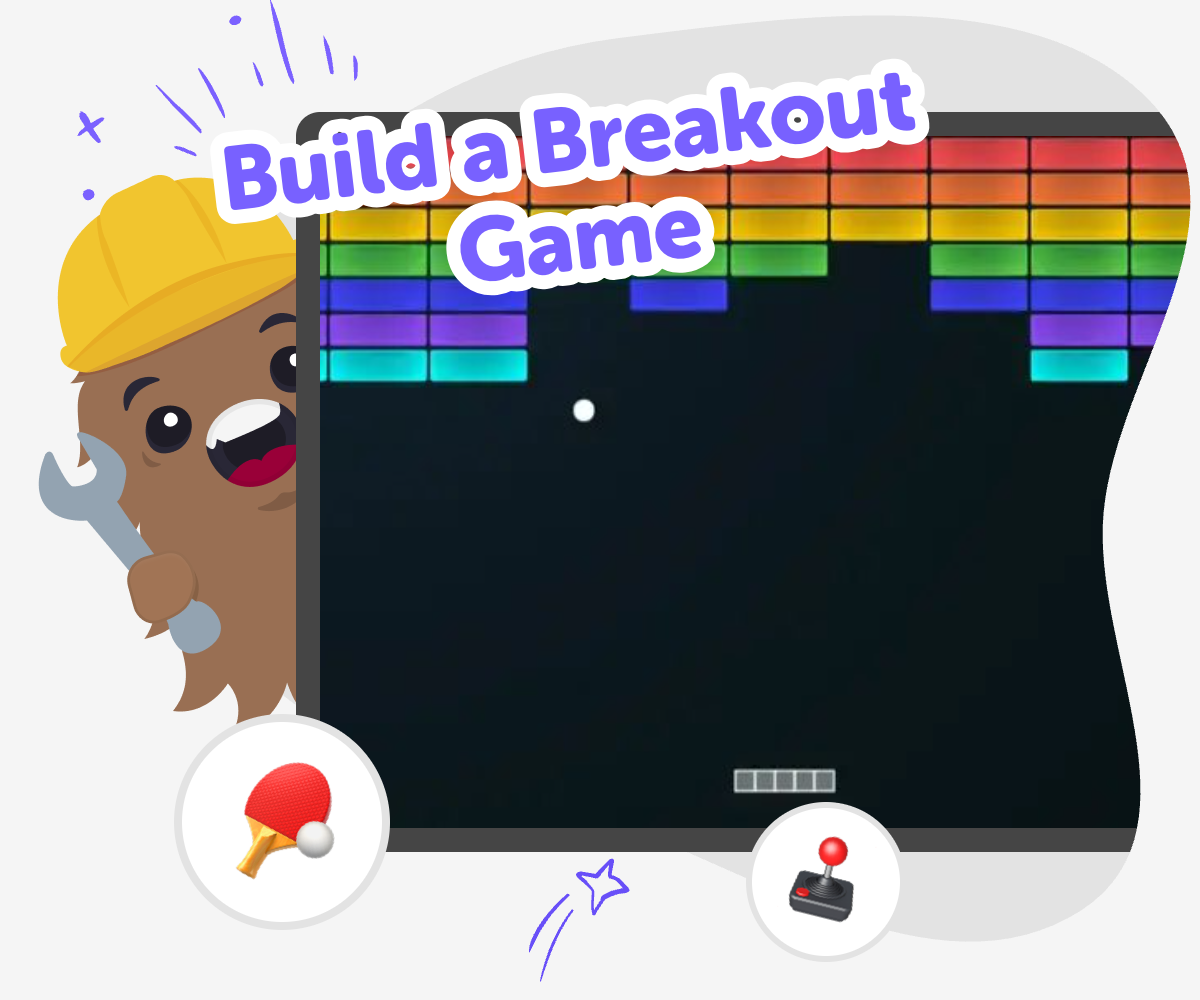
To build a breakout game, kids make a ball bounce around the screen, use a paddle to keep it in play, and design blocks that disappear when the ball hits them. It is a classic game idea because it teaches timing, attention, and simple game rules in a way that feels fun and easy to understand. Kids can start with a small version and then add colour, score points, extra levels, or new challenges as they learn.
A good breakout game also helps kids practice thinking ahead. They have to notice where the ball is going, decide when to move the paddle, and see how each choice changes the play.
Vibe Coding gives kids a guided creative coding studio where they can shape a breakout game step by step. They can describe what they want, build the game, test what happens, and make changes until the project feels right. That hands-on process helps kids grow coding confidence, practice problem-solving, and explore creative technology without needing to know everything at the start.
The tool stays focused on making, experimenting, and improving, so kids can keep the breakout game playful and age-appropriate. It supports safe learning by helping them try one change at a time and see how the game responds.
Step by step
- 1
Plan the game
Choose the main parts of your breakout game: a ball, a paddle, walls, and bricks to break. Decide what the player should try to do and what makes the game end or continue.
- 2
Build the play area
Set up the screen so the ball has space to move and the paddle can sit near the bottom. Add the first row of bricks and make sure each piece is easy to see.
- 3
Test the bounce
Run the game and watch how the ball moves when it hits the paddle, walls, and bricks. Change the speed or directions if the game feels too easy, too hard, or confusing.
- 4
Make the most of testing
Try a remix Change one part of your game, like the ball speed, brick colour, or paddle size, to see how it changes the feel of play.
Check the challenge Play a few rounds and notice when the game feels fair, when it feels too tricky, and when it feels ready for a friend to try.
Improve the flow Adjust the rules, spacing, or score so the game is easier to follow and more fun to keep playing.
Share your version Save your favourite build and compare it with a new one so you can see how small changes make a big difference.
What makes a breakout game work?
A breakout game works because it has a few clear parts that all do different jobs. The ball moves around the screen, the paddle gives the player control, and the bricks create a target that can be broken. Those simple rules make the game easy to learn, but the challenge comes from timing and quick reactions. Kids can understand the whole idea without needing lots of complicated controls, which is one reason the game is a great first project for learning game design. When kids build one, they also learn that a game is not just pictures on a screen. It is a set of actions, responses, and choices that need to fit together well. That is a useful idea for making many kinds of interactive projects later.
Why is it a good game to build?
A breakout game is a strong project because it teaches more than one skill at once. Kids practice planning when they decide where the paddle, ball, and blocks should go. They practice problem-solving when they test the game and notice what needs to change. They also learn about iteration, which means improving something by trying it, looking at the result, and making it better. That process can help kids feel confident because small changes can lead to big improvements. The game is also flexible. A creator can keep it simple with one level, or make it more advanced with extra lives, moving bricks, power-ups, or different backgrounds. That makes it a project kids can return to again and again as they grow.
How can kids make it their own?
Kids can make a breakout game feel personal by choosing the theme, colours, sounds, and score style. Instead of plain bricks, they might use stars, fruit, gems, or friendly shapes. The ball could look like a marble, a moon, or a glowing dot, and the paddle could match a space, ocean, or jungle scene. Kids can also change the rules to fit the kind of game they want to play. Maybe they want faster rounds, more points for special bricks, or a bonus challenge after every level. These choices matter because they turn a basic template into something creative. Making the game their own helps kids see that coding is not only about following steps. It is also about making choices and expressing ideas through technology.
How does guided coding help?
Guided coding helps kids make a breakout game without getting stuck at the first problem. A tool like Vibe Coding lets them begin with a simple idea, then build and improve it one part at a time. That matters because games often need testing, and testing sometimes shows that the ball moves too fast, the paddle is too small, or the bricks are too close together. With guidance, kids can notice what is happening and try a change instead of giving up. This builds confidence and shows that mistakes are part of making. It also keeps the work creative and safe, since kids stay focused on building, experimenting, and learning. The result is not instant perfection. It is a real project that gets stronger each time a kid tries something new.
Need help?
What is a breakout game?
A breakout game is a simple game where a ball bounces around the screen, a paddle helps the player keep it in play, and blocks or bricks are broken when the ball hits them. The goal is usually to clear the blocks without letting the ball fall past the paddle.
Is it hard to build a breakout game?
It can be simple to start and more challenging to improve. Kids can begin with the basic parts first, then add details like score, levels, colours, or new rules once the game is working.
What do kids learn by making one?
Kids learn timing, problem-solving, game design, and coding confidence. They also learn how to test an idea, notice what is not working, and make it better step by step.
Can younger kids try this kind of project?
Yes, younger kids can try a basic breakout game with support from a parent, teacher, or guided tool. Starting with simple choices helps make the project easier to understand and more fun to finish.
How can a breakout game be made safer for kids to play?
A kid-friendly breakout game can stay safe by using age-appropriate images, simple rules, and calm play goals. It is also helpful to keep the game free from chat or open sharing unless adults are helping to moderate it.
What can kids change to make the game more exciting?
Kids can change the speed of the ball, the size of the paddle, the number of bricks, the colours, or the way points are earned. Small changes can make the game feel very different.
Can kids make their own version with Vibe Coding?
Yes. Kids can describe the kind of breakout game they want, then build, test, and improve it with guided support. That makes it easier to turn an idea into a real interactive project.
What should a first version include?
A first version should include a ball, a paddle, and a few bricks to break. If that works well, kids can add scoring, sound, levels, or a fun theme later.