Your Third Speech
Prepare and deliver your third short speech on a chosen topic, practice timing, voice, and gestures, then record and reflect on improvements.


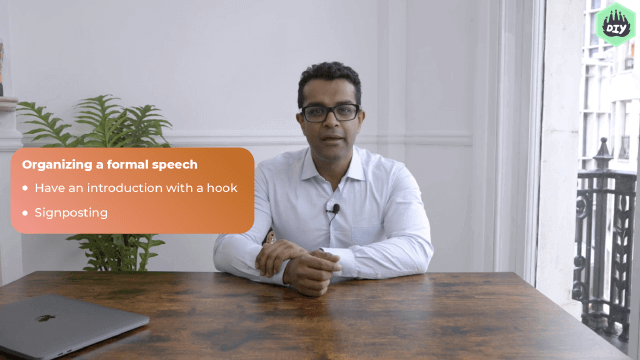
Step-by-step guide to prepare and deliver your third short speech
Step 1
Choose a topic you care about and write the title at the top of your paper.
Step 2
Write three main points you want to say, one point on each line.
Step 3
Write a short opening sentence that grabs attention.
Step 4
Write a short closing sentence that wraps up your message.
Step 5
Decide how long your speech will be and set your timer for 60 to 90 seconds.
Step 6
Stand in front of the mirror and read your opening out loud to practice a clear voice.
Step 7
Practice using one simple gesture for the opening one for the middle and one for the closing while speaking.
Step 8
Do a full timed run-through of your speech using your practiced voice and gestures.
Step 9
Record your timed full speech and save the recording.
Step 10
Watch your recording and write down three specific things you want to improve.
Step 11
Make one change based on your notes practice the speech once more and then share your finished speech on DIY.org
Help!?
What can we use if we don't have a timer, mirror, or a separate recording device for this speech activity?
Use your smartphone's clock app for the 60–90 second timer, the selfie camera as your recording device for the timed full run-through and recording step, and practice your opening out loud in a window reflection or with a family member standing in as the mirror.
What should I do if I keep forgetting my lines or my voice is too quiet during the timed run-through or when recording?
Place small index cards with your three main points where you can see them during the stand-in-front-of-the-mirror practice, slow your practiced voice and exaggerate the opening/middle/closing gestures while doing the full timed run-through, and pause to breathe before restarting any recording.
How can I adapt this activity for different age groups?
For younger kids shorten the timer to 20–30 seconds and let them draw the three main points with a parent helping during mirror practice, for elementary keep the 60–90 second target with 1–2 prompt cards allowed, and for teens extend to 2–3 minutes, add quick research to strengthen points, and encourage multiple recordings before sharing on DIY.org.
How can we extend or personalize the speech after the first recording to make it better or more fun?
Add a prop or costume linked to each of your three main points, film an extra angle during the timed full run-through, use the recording to write down three specific improvements, make one change and then re-record the finished speech before uploading to DIY.org.
Watch videos on how to prepare and deliver your third short speech
How to Teach a Toddler to Talk - 3 Tips- Speech Therapy for Toddlers
4 Videos
How to Teach a Toddler to Talk - 3 Tips- Speech Therapy for Toddlers
11 Foundational Skills before Talking

Public Speaking Tips for Kids | Boost Confidence, Speak Clearly & Shine on Stage!
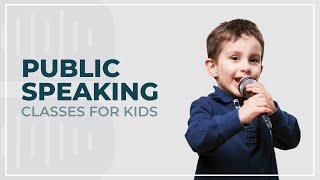
Public Speaking Classes For Kids
Facts about public speaking for kids
😨 Up to 75% of people report some fear of public speaking (glossophobia), making it one of the most common social anxieties.
🎙️ TED popularized the 18-minute talk limit because short, focused presentations are easier to follow and remember.
🧍♂️ A widely cited idea suggests body language and facial expressions can carry over half of a message's perceived impact.
📹 Many speakers and actors record practice sessions — watching yourself helps spot pacing, voice habits, and gestures to improve faster.
🏅 Toastmasters International began in 1924 and now supports hundreds of thousands of members practicing public speaking around the world.
How do I help my child prepare and deliver their third short speech?
What materials and equipment do I need to practice and record a short speech at home?
What ages is this third-speech activity suitable for?
What are the benefits of practicing, recording, and reflecting on a third speech?
