Your Favorite Color
Make a personalized color chart and art card using paints or colored pencils, mix shades, and explain why you chose your favorite color.



Step-by-step guide to make a personalized color chart and art card
Step 1
Clear a flat workspace and lay down scrap paper to keep things neat.
Step 2
Pick your favorite color and decide if you will use paints or colored pencils.
Step 3
Draw a chart of six equal boxes on one sheet of paper using your pencil.
Step 4
Paint or color the first box with the pure base version of your favorite color.
Step 5
Make a slightly lighter shade of that color and fill the second box.
Step 6
Make a much lighter shade and fill the third box.
Step 7
Make a slightly darker shade of your color and fill the fourth box.
Step 8
Make a much darker shade and fill the fifth box.
Step 9
Mix an interesting or creative version of your color and fill the sixth box.
Step 10
Label each box with a short note about how you made that shade using your pencil.
Step 11
Fold a second sheet into a card shape or draw a card outline to make your art card.
Step 12
Use at least two different shades from your chart to decorate the front of your card.
Step 13
Write one short sentence inside the card explaining why this is your favorite color.
Step 14
Share your finished creation on DIY.org
Help!?
What can I use if I don't have scrap paper, paints, or colored pencils?
Use newspaper or a paper bag under your workspace instead of scrap paper, substitute markers or crayons for paints or colored pencils (or dilute marker ink with water for a watercolor effect), and fold printer paper or cardstock to make the card.
My shades look muddy or my boxes aren't equal—what should I do?
If your six boxes from step 3 are uneven or your shades from steps 4–7 look muddy, redraw the boxes with a ruler, test each lighter/darker mix on scrap paper first, apply paint in thin layers or use lighter pencil pressure for tints, and wait for paint to dry before labeling in step 9 to avoid smudges.
How can I change this activity for younger kids or older kids?
For younger children simplify the chart to three big boxes and let them use crayons or stickers to fill and decorate the second sheet card, while older kids can mix precise lighter and darker tones for all six boxes and write a more detailed sentence inside the card in step 11 explaining their color choice.
How can we make the card more special or creative after finishing the chart?
To personalize and extend the project, glue fabric, pressed flowers, or glitter onto the front of your folded card using at least two shades from your chart, add a small swatch plus the mixing note from step 9 on the back, and photograph the finished card to share on DIY.org.
Watch videos on how to make a personalized color chart and art card
Learn Colors with a Fun Song | Color Song for Kids | Red, Blue, Green & More
4 Videos
Learn Colors with a Fun Song | Color Song for Kids | Red, Blue, Green & More

Colors for Kids - Colors Songs for Kids - Educational Video to Learn Colors
The World is full of Colors | What is your favorite color? | Baby Einstein | Toddlers Learning Show
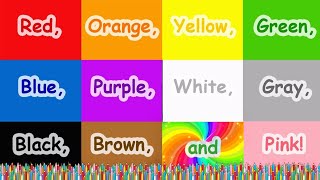
The Colors Song ~ Learn the Colors / Fun & Educational Colors Song for Preschool Kids
Facts about color theory and mixing for kids
🎨 Isaac Newton created the first color wheel in the 1660s to show how colors relate to each other.
🌈 Mix a color with white to make a tint and with black to make a shade—tiny changes make big differences!
🧠 Color psychology says colors can affect mood—blue often feels calm while red can feel exciting, but favorites are personal.
👁️ The human eye can distinguish roughly about one million different color shades (so there’s a lot to explore!).
🖌️ Artists use color charts or swatches to match and recreate colors consistently—great for your personalized chart!
How do I make a personalized color chart and art card with my child's favorite color?
What materials do I need to make a favorite color chart and art card?
What ages is the "Your Favorite Color" activity suitable for?
What are the benefits of making a personalized color chart and art card?
