Write the script of your comic
Plan and write a short comic script by creating characters, scenes, panel descriptions, and speech bubbles; practice storytelling, sequencing, and creative writing skills.


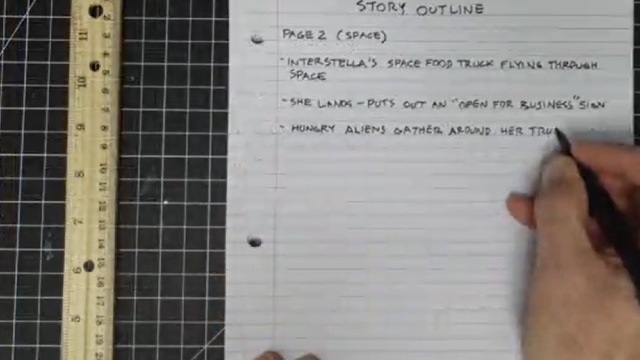

Step-by-step guide to write the script of your comic
Step 1
Think of one exciting idea or theme for your comic and say it out loud.
Step 2
Write down 2 or 3 character names and a one-sentence description for each.
Step 3
Choose where and when your story happens and write that setting in one short sentence.
Step 4
Write one sentence that explains how the story begins.
Step 5
Write one sentence that explains the problem or middle of the story.
Step 6
Write one sentence that explains how the story ends.
Step 7
Decide how many panels you want for your comic and write that number at the top of your page.
Step 8
Use your pencil and ruler to lightly draw small thumbnail boxes for each panel.
Step 9
Under each thumbnail write one short line describing what happens in that panel.
Step 10
For each panel write the dialogue or speech lines and label which character says each line.
Step 11
Add any sound effects or short captions next to the correct panels.
Step 12
Read your script from start to finish and change any words that are unclear or boring.
Step 13
Make a neat final copy of your script on a fresh sheet or type it up if you can.
Step 14
Share your finished comic script on DIY.org.
Help!?
I don't have a ruler or a computer to type my final copy — what can I use instead?
Use any straight-edged object (like a book or cereal box) to lightly draw your thumbnail boxes with a pencil, and instead of typing, make a neat final copy on a fresh sheet and photograph or scan it to upload to DIY.org.
My thumbnails and dialogue keep getting messy—how do I fix the layout?
Follow the instruction to 'use your pencil and ruler to lightly draw small thumbnail boxes,' erase and redraw lighter if needed, write one short line under each thumbnail to plan the action, and then write and label shorter dialogue lines next to the correct panels to prevent overlap.
How can I adapt the steps for younger kids or for older kids who want more challenge?
For younger kids, say the idea out loud together, have an adult write 2–3 character names, the setting and the simple beginning/middle/end sentences while the child draws big panels and simple speech bubbles, whereas older kids can increase the number of panels at the top, write fuller labeled dialogue for each panel, add sound effects and then type a polished final copy.
What are some easy ways to improve or personalize the comic before sharing it?
After you 'read your script' and revise boring lines, add personalized sound effects and short captions next to panels, include little character descriptions under the names, color the final page or type and format it neatly, and then share the finished script on DIY.org.
Watch videos on how to write the script of your comic
How I Make Mini Comics? (step by step) PART I
4 Videos
How I Make Mini Comics? (step by step) PART I
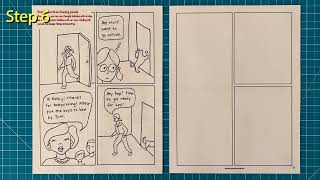
How to Make a Comic Book
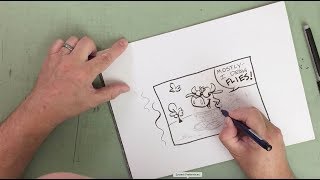
Kids Make Comics #6: Inking Your Comics
5 Tips For Making Comics
Facts about comic writing and storytelling
🗞️ The Yellow Kid, appearing in 1895, helped start the modern newspaper comic strip craze.
🧠 Comic scripts use "beats" (key moments) and panel descriptions to control pacing and emotion.
🖼️ Storyboards were popularized at Walt Disney Studios in the 1930s to plan animated scenes before production.
💬 Speech balloons let characters "speak" on the page — they replaced long captions and sped up storytelling.
📚 The term "graphic novel" gained popularity in the late 20th century to describe longer comic stories.
How do you write a comic script?
What materials do I need to write a comic script?
What ages is this activity suitable for?
What are the benefits of writing a comic script?
