Watercolor Watermelon
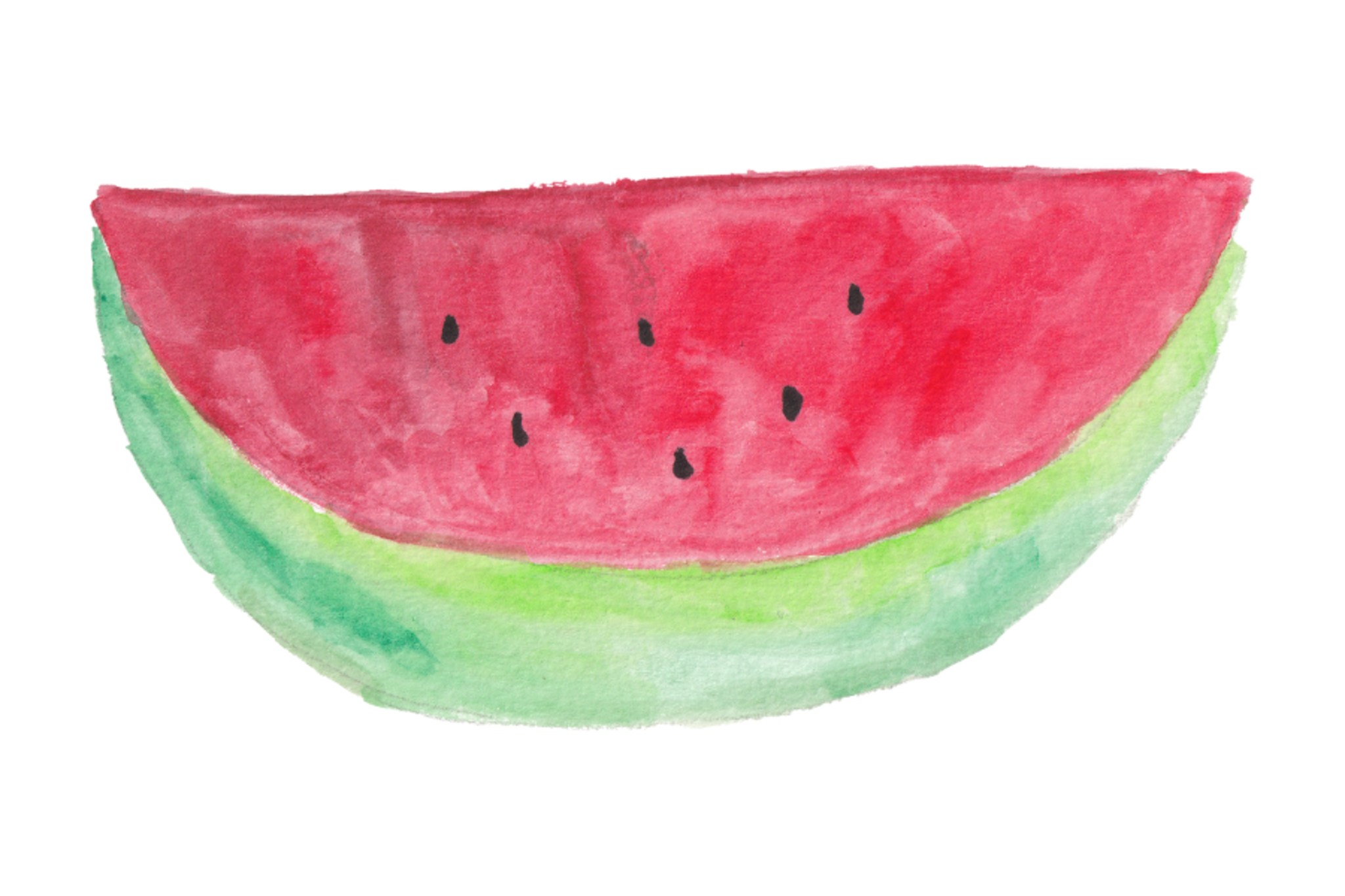
Paint a colorful watercolor watermelon using simple paints and brushes, practice blending and texture techniques, then add seeds to finish the fruit painting.
About this activity
Paint a colorful watercolor watermelon using simple paints and brushes, practice blending and texture techniques, then add seeds to finish the fruit painting.
What you need
Step by step
- 1
Step 1
Set up your workspace by placing your watercolor paper flat and arranging your paints brushes cup of water and paper towel within reach.
- 2
Step 2
Draw a large semicircle for the watermelon slice and a curved inner line to mark the rind with your pencil.
- 3
Step 3
Wet a brush pick a light green paint and paint the rind area between the outer edge and the inner curved line.
- 4
Step 4
Rinse and blot your brush mix a light pink wash and paint the inner flesh area inside the rind.
- 5
Step 5
While the pink is still wet drop a little darker pink or red near the top edge and let it blend gently into the lighter pink.
- 6
Step 6
Sprinkle a pinch of table salt over the still-wet pink area to create a speckled texture.
- 7
Step 7
Leave the painting to dry completely without touching it.
- 8
Step 8
Gently brush off the salt once the paint is dry so the speckled texture appears.
- 9
Step 9
Use a small brush with darker green paint to add thin wavy stripes on the rind for extra detail.
- 10
Step 10
Erase any visible pencil lines carefully so the paper stays smooth.
- 11
Step 11
Draw small teardrop-shaped seeds across the pink flesh using the fine-tip black marker.
- 12
Step 12
Share your finished watercolor watermelon on DIY.org.
Fun facts
How do I paint a watercolor watermelon with my child?
Start by lightly sketching a large semicircle on watercolor paper. Wet the melon area with clean water, then drop in pinks and reds for a wet-on-wet wash, letting colors blend. While slightly damp, add darker tones near the rind for gradient. Paint a thin green rind with layered green washes. Let dry, then use a small brush or marker to add black seeds. Encourage gentle layers and drying between steps.
What materials do I need for a watercolor watermelon activity?
Gather watercolor paints (pan or tube), quality watercolor paper, a large round brush for washes and a small detail brush for seeds, a water cup, a palette, pencil and eraser, and paper towels. Optional extras: masking fluid, salt for texture, sponge or toothbrush for splatter effects, and a black fineliner or dark watercolor for seeds. Prepare a washable surface and smock for easy cleanup.
What ages is this watercolor watermelon activity suitable for?
This activity suits a wide range: toddlers (3–5) can explore color with adult help and big brushes; preschoolers (4–6) can practice simple washes and basic blending; elementary kids (6–10) can try gradients, texture techniques, and controlled details; older kids (10+) can experiment with layering, masking, and mixed media. Supervise younger children and adapt tools and instructions to their fine motor skill level.
What are the benefits of painting a watercolor watermelon with kids?
Painting a watercolor watermelon boosts color-mixing skills, fine motor control, and hand-eye coordination. It teaches observation, patience through layering and drying, and creative expression with texture techniques. The activity is calming and sensory-rich, encouraging experimentation and problem-solving. It also offers bonding time with adults and a satisfying finished piece that builds confidence and pride in young artists.
Watch & Learn
Need help?
I don't have watercolor paper or a fine-tip black marker—what can I use instead?
Use heavy mixed-media paper or thick cardstock instead of watercolor paper and substitute the fine-tip black marker for a sharpened black colored pencil or thin waterproof pen to draw the seeds after the paint is dry.
My darker pink didn't blend into the lighter pink and the salt didn't make speckles—how can I fix that?
Be sure to drop the darker pink or red while the pink wash is still wet as the instructions say and sprinkle the table salt immediately on the wet paint so the crystals pull pigment, then let the painting dry completely before brushing off the salt.
How can I adapt this activity for different ages?
For toddlers pre-draw the semicircle and let them dab color with a sponge or big brush, for preschoolers let them paint the rind and flesh washes with help, and for older kids challenge them to add the thin wavy green stripes, carefully erase pencil lines, and draw detailed teardrop seeds with the fine-tip marker.
How can we enhance or personalize the watercolor watermelon?
Try adding a light blue background wash before painting the slice, experiment with coarse versus table salt for different speckled textures, use masking fluid to preserve white highlights on the rind, or mount several finished slices into a card to share on DIY.org as in the final step.