Share your idea to clear the Suez Canal blockage
Build a small model canal and test methods to free a stuck toy ship using toy tugboats, water flow adjustments, and sand removal.


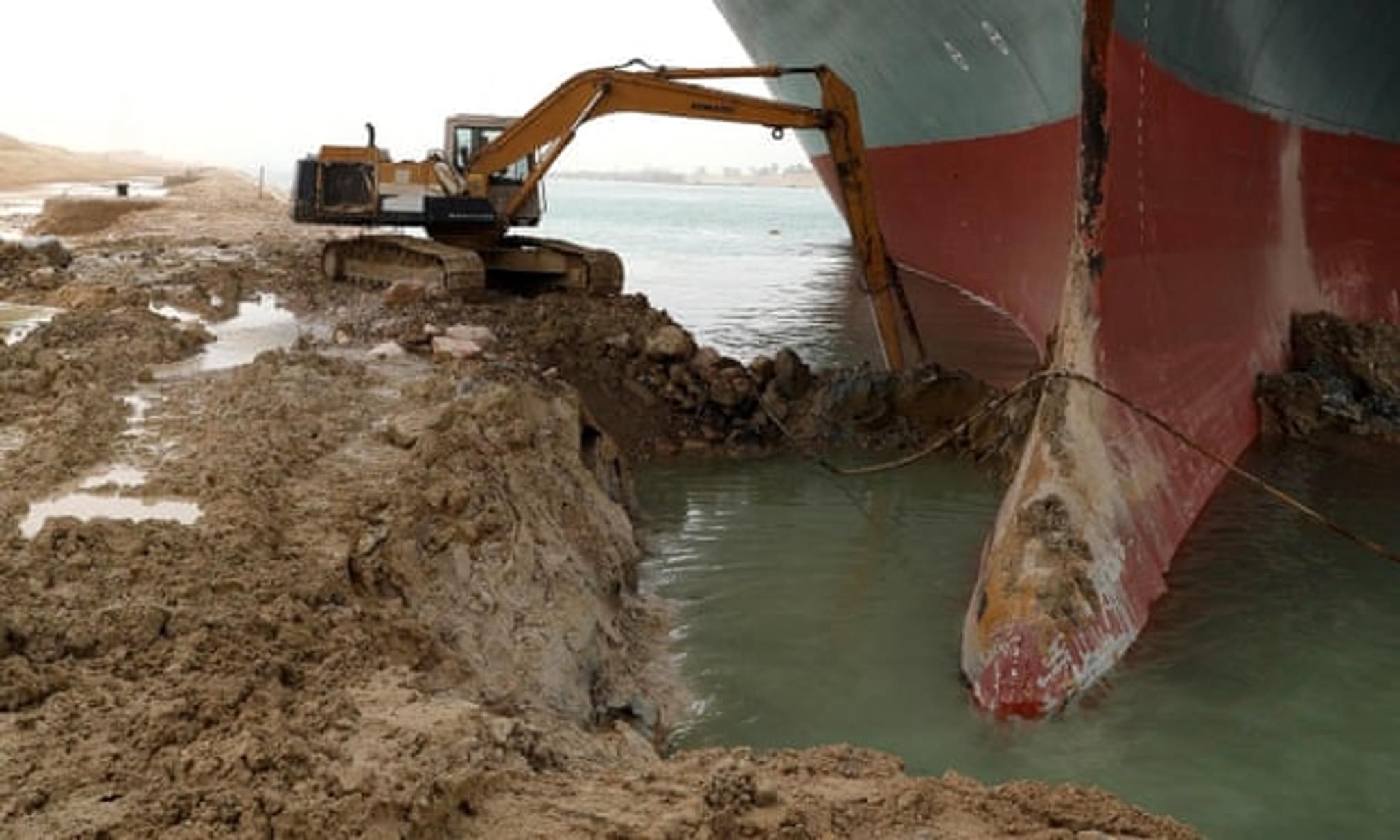

Step-by-step guide to build a model canal and free a stuck toy ship
Suez Canal blockage: A lasting impact on global trade? | DW News
Step 1
Collect all the materials you need and bring them to your table.
Step 2
Spread the towel on a flat table to protect the surface.
Step 3
Place the shallow tray in the middle of the towel.
Step 4
Roll the playdough into two long snakes.
Step 5
Press the playdough snakes along the long edges of the tray to form canal banks.
Step 6
Pour a thin layer of sand into the middle of the tray to create a shallow shoal.
Step 7
Place the toy ship on the sandy shoal so it becomes stuck.
Step 8
Position the toy tugboat behind the ship ready to pull.
Step 9
Slowly pour water from a cup into the canal until the ship is floating but still touching sand.
Step 10
Gently pull the ship with the tugboat for 10 seconds.
Step 11
Observe whether the ship moved free or stayed stuck.
Step 12
Pour a steady stream of water from one end of the tray for 15 seconds to create a current.
Step 13
Scoop sand away from around the ship’s hull with a spoon to deepen the channel.
Step 14
Ask an adult to help you try tugging the ship while someone pours water to combine methods.
Step 15
Share your finished model and what method worked to free the ship on DIY.org.
Help!?
What can I use if I don't have playdough, sand, or a shallow tray?
If you don't have playdough, make the canal banks from rolled-up socks or modeling clay, use dry rice or crushed cereal instead of sand for the shoal, and substitute a rimmed baking sheet or a shallow cardboard box with sides for the tray.
My ship never freed when I tugged—what might be wrong and how do I fix it?
If the ship stays stuck, ensure you pressed the playdough snakes firmly along the tray edges to form solid banks, pour water slowly from the cup until the ship is floating but still touching sand (step 8), then scoop sand away with the spoon to deepen the channel (step 12) or have one person pour while another tugs (step 13).
How can I change this activity for younger or older kids?
For younger children, an adult can pre-roll the playdough snakes and do the pouring and scooping while the child places the ship and tugboat, and for older kids have them time the 15-second current, measure water added, test different tug durations, and record which method freed the ship to post on DIY.org.
How can we make the model more realistic or more fun after it's working?
Enhance the model by labeling the canal banks, adding small buildings or vehicles around the tray, using a fan to simulate wind-driven currents, measuring the water volume used during the 15-second pour, and sharing photos of your method that freed the ship on DIY.org.
Watch videos on how to build a model canal and free a stuck toy ship
How will the Suez Canal blockage disrupt global trade? | Inside Story
4 Videos
How will the Suez Canal blockage disrupt global trade? | Inside Story
Suez Canal Blockade: How the giant ship is blocking the Suez? | Latest English News | WION News
Suez Canal blockage felt across the world as trade comes to a pause
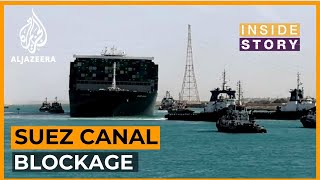
Can another Suez Canal blockage be avoided? | Inside Story
Facts about waterway engineering for kids
🚢 The Suez Canal is about 193 kilometers (120 miles) long and links the Mediterranean Sea to the Red Sea.
⚓ In March 2021 the container ship Ever Given got stuck and blocked the Suez Canal for six days, delaying hundreds of vessels.
🛠️ Tugboats work together with huge pulling power — big tugs are measured by "bollard pull" and can apply dozens of tons of force.
🌊 Salvors commonly combine dredging (sand removal), multiple tugs, and timing with high tide to refloat grounded ships.
🧪 Kid-sized canal models are perfect science experiments: changes in water flow, tug angle, or removing sand often reveal the best rescue method.
How do I build and test a model Suez Canal to free a stuck toy ship?
What materials do I need to make a small model canal and test freeing a stuck toy ship?
What ages is this canal-building and ship-rescue activity suitable for?
What are the benefits of building a model canal and testing ways to free a stuck ship?
