Play that reggae pattern
Learn and practice a basic reggae rhythm on drums, guitar, or claps, then create and play a simple reggae beat with steady offbeat accents.


Step-by-step guide to play that reggae pattern
Step 1
Gather your instrument and sit or stand where you have room to move.
Step 2
Turn on the metronome and set it to about 80 beats per minute.
Step 3
Count out loud with the metronome saying "one and two and three and four and" on each beat.
Step 4
Clap or play only on each "and" so you hit the offbeat.
Step 5
Keep clapping or playing the offbeats for four full measures without stopping.
Step 6
Add a steady pulse on beats 1 and 3 by tapping your foot or giving a soft thump on the drum.
Step 7
Play the offbeat claps and the downbeat taps together for eight measures to make the reggae groove.
Step 8
Make the downbeat taps a little stronger and the offbeat claps a little lighter to feel the reggae rhythm.
Step 9
Decide one small change for a 4-bar loop like an extra drum hit or a short muted guitar strum.
Step 10
Repeat that 4-bar loop four times so the change becomes part of your beat.
Step 11
Play your finished reggae beat for one to two minutes with steady offbeat accents and have fun.
Step 12
Share your finished reggae beat on DIY.org
Help!?
What can we use if we don't have an instrument or a metronome?
If you don't have an instrument, use household items like a table, pot, or pencils for percussion and if you lack a metronome use a free metronome app or have someone tap steady 80 BPM as in the step 'Turn on the metronome and set it to about 80 beats per minute.'
I'm missing the offbeats or can't keep clapping only on the 'and' — what should we do?
Slow the metronome to about 60 BPM, practice saying 'one and two and three and four and' out loud while tapping your foot on beats 1 and 3, and focus on clapping only on the 'and' until you can do four full measures without stopping as described in steps 3–5.
How can we change the activity for younger or older kids?
For younger children, lower the tempo to around 60 BPM and have them clap offbeats for two-bar loops only, while older kids keep 80 BPM, add the steady downbeat taps and make a 4-bar loop change like the extra drum hit or muted guitar strum from steps 9–11.
How can we personalize or extend the reggae beat when we're finished?
Record the offbeat claps and downbeat taps, layer in your chosen small change (for example the extra drum hit or short muted guitar strum from step 10), repeat the 4-bar loop four times to lock it in, and then share the 1–2 minute performance on DIY.org as the final step suggests.
Watch videos on how to play that reggae pattern
The REGGAE Piano Rhythm Pattern which you HAVE TO LEARN NOW!
4 Videos

The REGGAE Piano Rhythm Pattern which you HAVE TO LEARN NOW!

Reggae Instrument Breakdown
How to play reggae for beginners - The three must learn strumming patterns
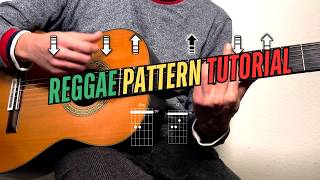
How to play an easy reggae guitar pattern
Facts about reggae rhythm and timing
🎶 Reggae started in Jamaica in the late 1960s and grew out of earlier styles like ska and rocksteady.
🥁 The famous 'one drop' drum pattern in reggae often accents the 3rd beat and leaves the 1st beat light or empty.
🎸 Reggae guitar uses a 'skank' — quick, choppy chords played on the offbeats (usually beats 2 and 4).
🕺 Reggae songs are usually laid-back—many sit around 60–90 beats per minute to keep a relaxed groove.
👏 You can create a reggae feel with just claps or body percussion, making it a great beginner-friendly rhythm lesson.
How do you teach a child to play a basic reggae rhythm on drums, guitar, or claps?
What materials do I need to practice a simple reggae beat with my child?
What ages is learning a reggae rhythm suitable for?
What are the benefits of practicing reggae rhythms with kids?
