Pet Portrait Challenge
Draw and create a pet portrait using observation, sketching, color, and optional collage or watercolor to learn proportions, details, and artistic expression.



Drawing Apps
Step-by-step guide to Pet Portrait Challenge
Step 1
Gather all your materials and put them on a clear flat workspace.
Step 2
Choose whether you will draw from a live pet or a photo and keep the reference where you can see it easily.
Step 3
Place your paper flat on the table in front of you.
Step 4
Decide if your portrait will be tall or wide.
Step 5
Lightly draw a border on the paper to show where your portrait will stay.
Step 6
Lightly sketch the big basic shapes to block in the head and body using your pencil.
Step 7
Measure and mark where the eyes nose and mouth should go using your pencil or ruler.
Step 8
Refine the sketch into a clear outline of your pet and erase extra construction lines.
Step 9
Add key details like eyes pupils nose whiskers ears and fur patterns.
Step 10
Choose the colors you want to use and test them on scrap paper.
Step 11
Apply color in light layers building up texture and shading as you go.
Step 12
Optional add collage pieces or watercolor washes by cutting gluing or painting on parts of the portrait.
Step 13
Add a simple background and small finishing touches to make your pet portrait pop.
Step 14
Sign and date your finished portrait.
Step 15
Share your finished creation on DIY.org
Help!?
What can I use if I don't have a ruler, watercolor paints, or glue?
Use a straight edge like a book or the edge of a smartphone to measure and mark where the eyes, nose, and mouth, swap watercolor paints for diluted food coloring or washable markers tested on scrap paper, and replace glue with double-sided tape or a glue stick when adding collage pieces.
My drawing doesn't look like my pet—which steps should I redo or change?
Go back to the 'big basic shapes' and 'measure and mark where the eyes nose and mouth' steps, redraw light construction lines with your pencil, erase extra lines and refine the outline before applying color, and compare constantly to your live pet or photo reference.
How can I change the activity for different ages or skill levels?
For younger kids simplify by using large basic shapes, crayons, and stickers instead of measuring, while older kids can add texture with light layered color, watercolor washes, collage pieces, and more detailed shading and fur patterns.
What are simple ways to enhance or personalize the finished pet portrait?
Add collage pieces or watercolor washes for texture, include a simple background and small finishing touches like highlights in the pupils, then sign and date the portrait and photograph it to share on DIY.org.
Watch videos on how to do the Pet Portrait Challenge
Let's Draw ALL Kinds of Dogs for Kids! | Easy Step by Step Tutorial
4 Videos
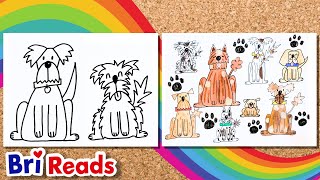
Let's Draw ALL Kinds of Dogs for Kids! | Easy Step by Step Tutorial
How to draw Dogs - A Tutorial for Children!
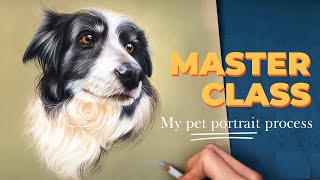
Full Tutorial - Realistic Pet Portrait
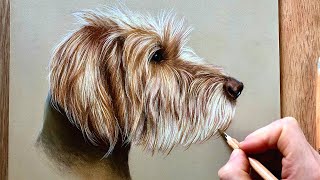
How to draw a pet portrait - Beginner step by step
Facts about portrait drawing and painting for kids
🐶 Ancient Egyptian artists often included dog portraits in tomb paintings to honor beloved pets and hunting companions.
🎨 Watercolor paints usually dry lighter than they appear when wet, so artists often layer washes to reach the desired tone.
✏️ Studies show that drawing something by hand helps your brain remember its details better than just reading or typing about it.
🐱 A cat's whiskers are roughly as wide as its body — a handy tip for artists checking head and face proportions.
✂️ Collage was popularized in fine art when Pablo Picasso and Georges Braque started gluing paper into Cubist works around 1912.
How do I do the Pet Portrait Challenge?
What materials do I need for a pet portrait challenge?
What ages is the Pet Portrait Challenge suitable for?
What are the benefits of doing a pet portrait challenge?
