Make sediment jars
Make sediment jars by layering sand, soil, clay, gravel, and water in clear containers to observe settling, layers, and basic erosion processes over time.
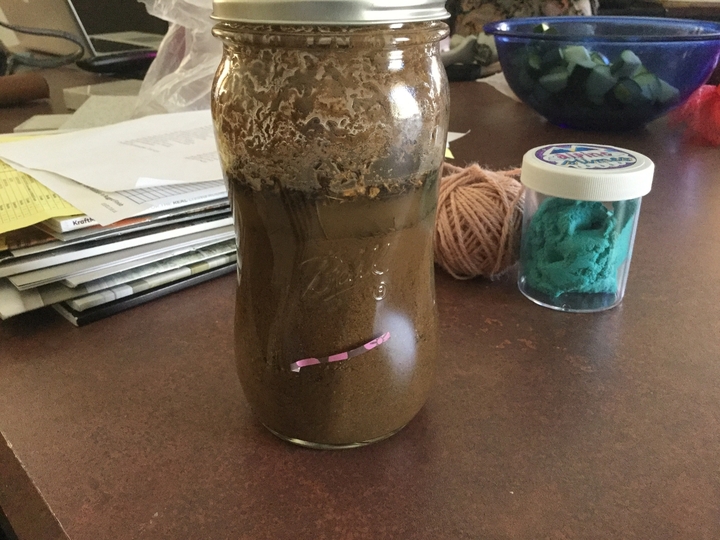
About this activity
Make sediment jars by layering sand, soil, clay, gravel, and water in clear containers to observe settling, layers, and basic erosion processes over time.
What you need
Step by step
- 1
Step 1
Gather all your materials and bring them to your workspace.
- 2
Step 2
Put the tray on a flat table to keep spills safe.
- 3
Step 3
Make sure your clear container is clean and dry.
- 4
Step 4
Label the jar with your name and the date using masking tape and the marker.
- 5
Step 5
Spoon a 1 to 2 centimeter layer of gravel into the bottom of the jar.
- 6
Step 6
Add a thin layer of crumbled clay on top of the gravel using the spoon.
- 7
Step 7
Add a layer of garden soil on top of the clay using the spoon.
- 8
Step 8
Add a layer of coarse sand on top of the soil using the spoon.
- 9
Step 9
Gently tap the side of the jar so the layers settle and sit snugly.
- 10
Step 10
Slowly pour water into the jar using the funnel or folded paper until the water is near the top but not overflowing.
- 11
Step 11
Put the lid on the jar to stop spills.
- 12
Step 12
Place the jar on the tray so you can watch it safely.
- 13
Step 13
Watch the jar for 5 to 10 minutes to see how the layers settle and the water clears.
- 14
Step 14
Carefully tilt the jar away from you and then back a few times to simulate erosion and watch how the layers move.
- 15
Step 15
Share a photo or description of your finished sediment jar and what you learned on DIY.org.
Fun facts
How do you make a sediment jar to observe layering and erosion?
Start by collecting clear jars, sand, soil, clay, gravel and water. Layer small amounts of dry materials (gravel, sand, soil, clay) into the jar using a funnel or spoon to create distinct bands. Fill to about three-quarters full, then slowly add water until materials are submerged. Seal the lid and gently tap to remove air bubbles. To show erosion, shake the jar to mix, then set aside and observe as heavier particles settle first and layers re-form over days.
What materials do I need to make sediment jars?
You'll need clear containers (jars or plastic bottles), gravel, coarse sand, garden soil, fine clay or potter's clay (crumbled), water, a funnel or spoon, measuring cups, labels and a tray to catch spills. Optional: food coloring, magnifying glass, stopwatch and notebook for observations. Choose non-toxic materials and rinse reusable containers. Keep small containers away from toddlers and replace lids tightly to prevent leaks.
What ages is a sediment jar activity suitable for?
Suitable for ages 4 and up with adult supervision; preschoolers (4–6) enjoy pouring and simple layering, while elementary kids (6–10) can measure, predict settling order and record observations. Older children and teens can design experiments altering particle sizes, water salinity or tilt jars to study erosion. Supervise closely for choking hazards, small parts or glass containers, and ensure children don't drink the contents.
What are the benefits, safety tips, and variations for sediment jars?
This activity builds observation skills, teaches sedimentation, layers, and basic erosion, and introduces the scientific method—predict, test, record. It strengthens fine motor skills and vocabulary like 'silt' and 'sediment.' For variations, try colored sand layers, saltwater vs. freshwater, or timed shaking experiments. Safety tip: use plastic containers with tight lids for young kids, keep materials non-toxic, and supervise to avoid spills or ingestion.
Watch & Learn
Need help?
What can we use instead of gravel, crumbled clay, or a funnel if we can't find them?
Use aquarium gravel or clean pebbles for the gravel, broken-up air-dry or modeling clay for the crumbled clay, sandbox/play sand for coarse sand, and roll a piece of paper into a funnel or use a plastic cup with a corner cut for pouring into a recycled clear jar with a tight lid and masking tape or a sticky note and marker for labeling.
Why do my layers keep mixing or the water stay cloudy, and how can I fix it?
If layers mix or the water stays cloudy, spoon each layer slowly down the side of the clean, dry clear container, gently tap the jar after each layer to let them settle (step 7), pour the water very slowly with the funnel or folded paper, and wait longer than 10 minutes before tilting.
How can I adapt this sediment jar activity for younger or older kids?
For preschoolers have an adult spoon in pre-measured layers and supervise the tapping and pouring steps, while older kids can measure 1–2 cm layers precisely, time the 5–10 minute settling, record observations, and compare results across multiple jars.
How can we extend or personalize the sediment jar after finishing the basic steps?
Decorate the jar with masking tape labels, make several jars to test extra materials like silt or crushed charcoal, add a drop of food coloring to the water to track movement, or gently add a little oil and observe separation over days to study pollution effects.