Make An Origami Jumping Frog
Fold a paper origami jumping frog using step by step folds, decorate it, then test and measure jump distances to explore simple physics.


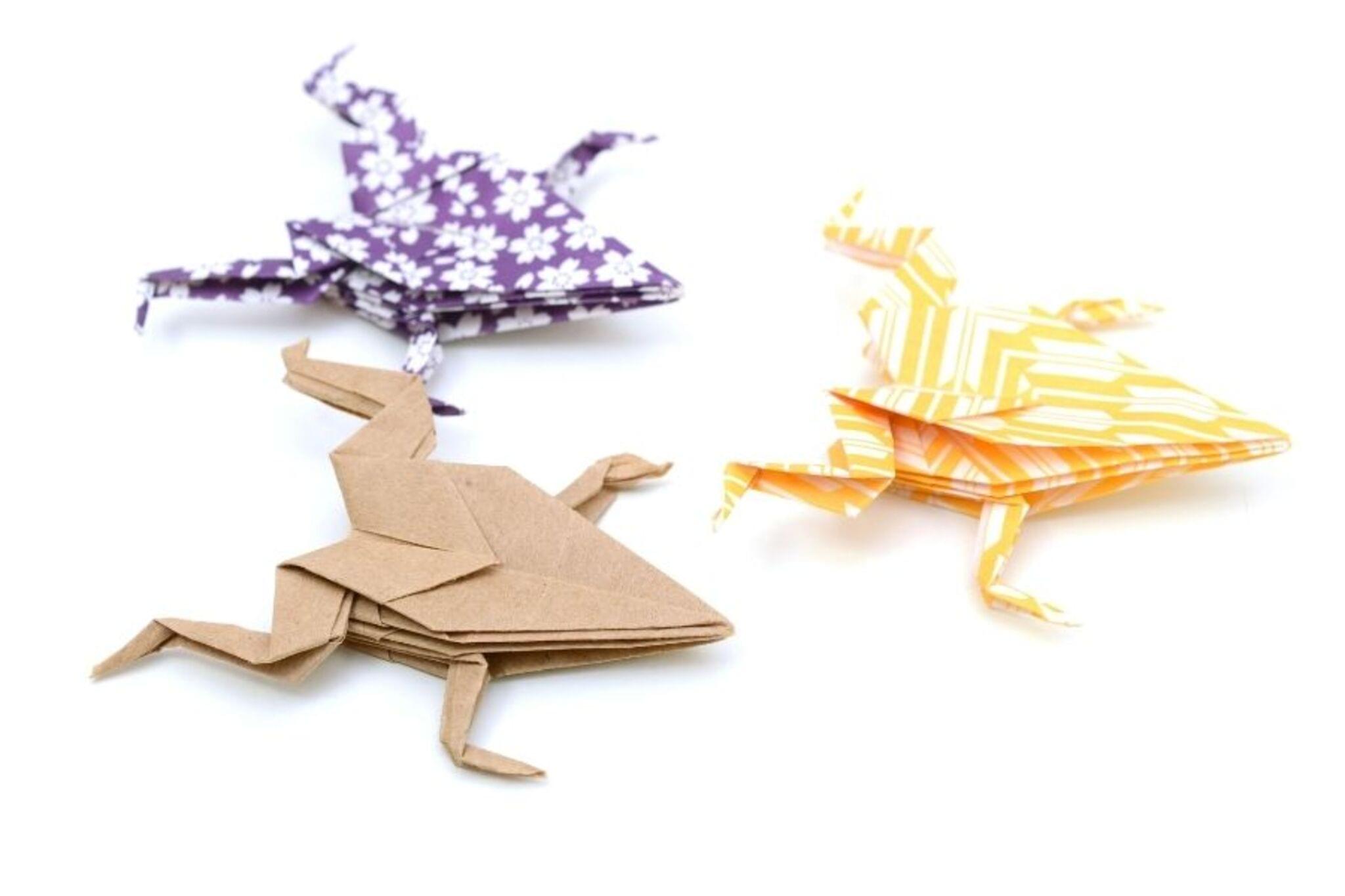

Step-by-step guide to make an origami jumping frog
How To Fold An Origami Jumping Frog
Step 1
Place the square paper color side down on a flat table or floor.
Step 2
Fold the paper in half from top to bottom and press a firm crease.
Step 3
Unfold the paper so you can see the center crease line.
Step 4
Fold the top two corners down so their points meet the center crease and press the creases.
Step 5
Fold the bottom edge up to meet the top edge and press a strong crease.
Step 6
Fold the rectangle in half toward you and press a firm crease.
Step 7
Fold the right front corner outward to make a small triangle foot and crease it.
Step 8
Fold the left front corner outward to make the other triangle foot and crease it.
Step 9
Fold the whole frog in half away from you so the legs stick out in front.
Step 10
Push the back end up sharply and press a strong crease to make the frog’s spring.
Step 11
Decorate your frog with colouring materials and stickers to give it a fun face and patterns.
Step 12
Place the frog behind a start line on the floor and mark the line with your pencil.
Step 13
Press down on the frog’s back and quickly release it to make the frog jump.
Step 14
Measure the distance from the start line to where the frog landed with the ruler and write the number on your paper.
Step 15
Share your finished jumping frog and your jump distances on DIY.org.
Help!?
What can I use if I don't have square origami paper or a ruler?
If you don't have square origami paper, make a square from printer paper by folding one corner to the opposite edge and cutting off the excess so you can place the square paper color side down, and if you don't have a ruler use a folded paper strip or tape to measure the distance.
My frog won't jump—which step is most likely the problem and how do I fix it?
If the frog won't jump, make sure you press a strong crease on the bottom edge and especially push the back end up sharply to form the spring in the step that tells you to 'push the back end up sharply', and confirm the triangle feet are folded outward in steps 7–8 so the legs can snap forward.
How can I adapt this activity for younger or older kids?
For younger kids, use a larger square of cardstock and pre-crease key folds like 'fold the paper in half' and 'fold the top two corners down' so they can focus on decorating and pressing the jump, while older kids can use thin origami paper for crisper springs, add small weights or tweak the 'fold the whole frog in half away from you' technique, and record precise jumps with the ruler.
What are some ways to extend or personalize the jumping frog activity?
Extend the activity by decorating each frog with colouring materials and stickers, adding a small paperclip to the back to change jump distance, creating obstacle courses or start/finish lines to measure the distance, and sharing photos and scores on DIY.org.
Watch videos on how to make an origami jumping frog
Kids easy origami - How to make a jumping frog ver.1
4 Videos
Kids easy origami - How to make a jumping frog ver.1
Origami Jumping Frog Pro Level Tutorial | DIY Origami Jumping Frog Step By Step Easy Origami World
Easy Origami Jumping Frog Tutorial -Step-by-Step Tutorial Fold It,Press It… JUMP! Origami Frog Magic
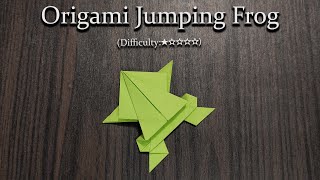
Origami Jumping Frog Tutorial: Easy Step-by-Step Guide for Beginners
Facts about origami and basic physics
🐸 Some real frogs can leap over 20 times their body length — a great reason to see how far your paper frog can go!
📐 The word 'origami' comes from Japanese: ori (folding) + kami (paper) — it literally means 'folding paper'.
🎯 A jumping origami frog works like a tiny spring: folding and pressing stores elastic energy that turns into motion when released.
📏 Measuring each jump with a ruler helps you turn play into science — small fold changes can make big differences in distance.
🧠 Folding origami boosts fine motor skills and spatial reasoning, so you're exercising your brain while making a toy.
How do I fold an origami jumping frog step by step?
What materials do I need to make an origami jumping frog and measure its jumps?
What ages is making an origami jumping frog suitable for?
What are the benefits, safety tips, and fun variations for the origami jumping frog activity?
