Make an accordion book
Fold and glue paper to make an accordion book, then decorate pages and add drawings or stories to practice sequencing, creativity, and fine motor skills.
About this activity
Fold and glue paper to make an accordion book, then decorate pages and add drawings or stories to practice sequencing, creativity, and fine motor skills.
What you need
Step by step
- 1
Step 1
Gather all your materials and clear a flat workspace so you can work easily.
- 2
Step 2
Choose 3 to 6 paper sheets to be the pages of your book and stack them neatly.
- 3
Step 3
Overlap about 1 inch of the short edge of the next sheet onto the previous sheet and glue the overlapping edges to make one long paper strip.
- 4
Step 4
Press each glued seam flat with your fingers and set the strip aside to dry for a minute.
- 5
Step 5
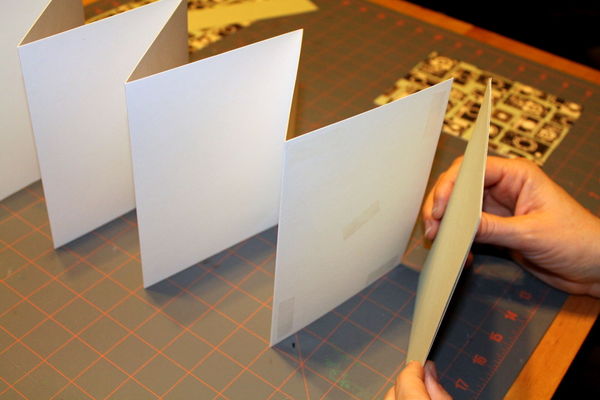
Fold the long strip back and forth in equal panels to make an accordion fold so it looks like a zigzag.
- 6
Step 6
Run a ruler or your fingernail along every fold to make the creases sharp and neat.
- 7
Step 7
Cut two pieces of construction paper slightly larger than one panel to use as front and back covers.
- 8
Step 8
Glue one cover to the front panel and one cover to the back panel so the accordion is attached and can open and close.
- 9
Step 9
Decide the order of your story or pictures and plan what will go on each panel so the pages follow a sequence.
- 10
Step 10
Draw or write one part of your story or one picture on each panel to practice sequencing and creativity.
- 11
Step 11
Add color stickers and decorations to make your book bright and personal.
- 12
Step 12
Let all the glue and decorations dry completely so your book stays together.
- 13
Step 13
Take a photo of your finished accordion book and share your creation on DIY.org
Fun facts
How do you make an accordion book that a child can use to practice sequencing and creativity?
Start with one long sheet or several sheets trimmed to the same size. Fold the paper back and forth into equal panels (concertina style). Glue panels edge-to-edge or attach folded strips together to create more pages. Trim uneven edges and let glue dry. Give the child markers, crayons, or stickers to decorate each panel, then add drawings or short sentences in order to practice sequencing and storytelling.
What materials do I need to make an accordion book at home?
You’ll need plain or colored paper (one long sheet or several same-size sheets), a ruler and pencil for panel lines, scissors, and a glue stick or white craft glue. Also have markers, crayons, stickers, washi tape, or scrap paper for collage. Optional: stapler for extra hold, decorative paper for covers, and a hole punch with ribbon if you want to tie the book closed.
What ages is making an accordion book suitable for?
Accordion books are great for ages about 3–10. Toddlers (3–4) enjoy folding with close adult help and simple decoration. Preschoolers (4–6) can fold, glue, and create short sequences with minimal help. School-age children (7–10) can plan stories, add more detailed drawings, and experiment with longer books. Supervise young children with scissors and liquid glue; adapt complexity to each child’s fine motor skills.
What are the benefits of making accordion books for children?
Making accordion books improves fine motor skills through folding, cutting, and gluing, and strengthens sequencing and storytelling as children order events across panels. It encourages creativity, hand-eye coordination, planning, and early literacy when adding words. The project is adaptable for themes (math, nature, family) and builds confidence when children complete a tangible book they can share and revisit.
Watch & Learn
Need help?
What can I use if I don't have construction paper or white glue?
If you don't have construction paper or white glue, use extra printer paper or lightweight card stock for pages, secure the 1-inch overlaps with clear tape or a glue stick, and recycle a cereal-box panel for the front and back covers.
My glued seams come apart when folding—how can I fix that?
If glued seams separate when folding the long strip, press each seam flat again, add a thin strip of clear tape over the 1-inch overlap before making the accordion folds, and run your ruler along the creases to keep panels neat.
How can I adapt this accordion book for a 3-year-old and a 10-year-old?
For a 3‑year‑old, use only 3 large sheets, pre-glue the overlaps and pre-fold the panels so they can color simple shapes, while for a 10‑year‑old use 6 thinner sheets, plan a longer sequential story on each panel, and add stickers and decorations as in the instructions.
How can we make the book more special or longer after decorating?
To extend or personalize the finished book, glue a small pocket made from an extra sheet to one panel, add a pop-up element on another, laminate or reinforce the construction-paper covers, and then photograph the completed accordion book to share on DIY.org.