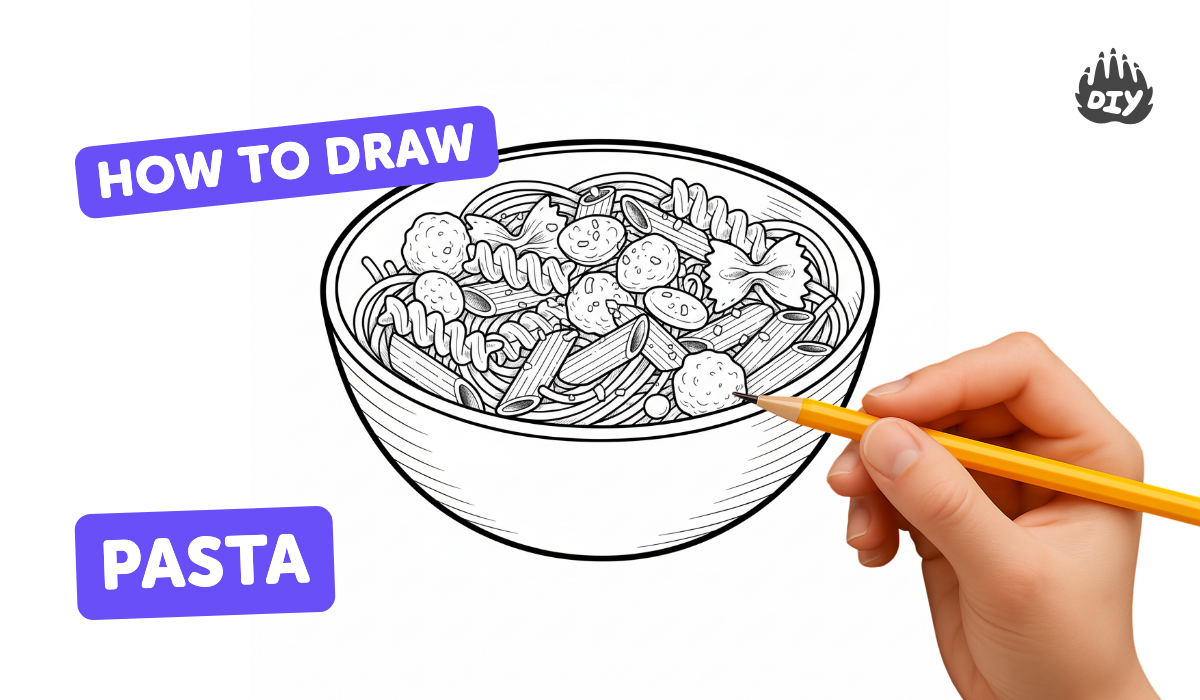
How to draw pasta - a free pasta drawing guide
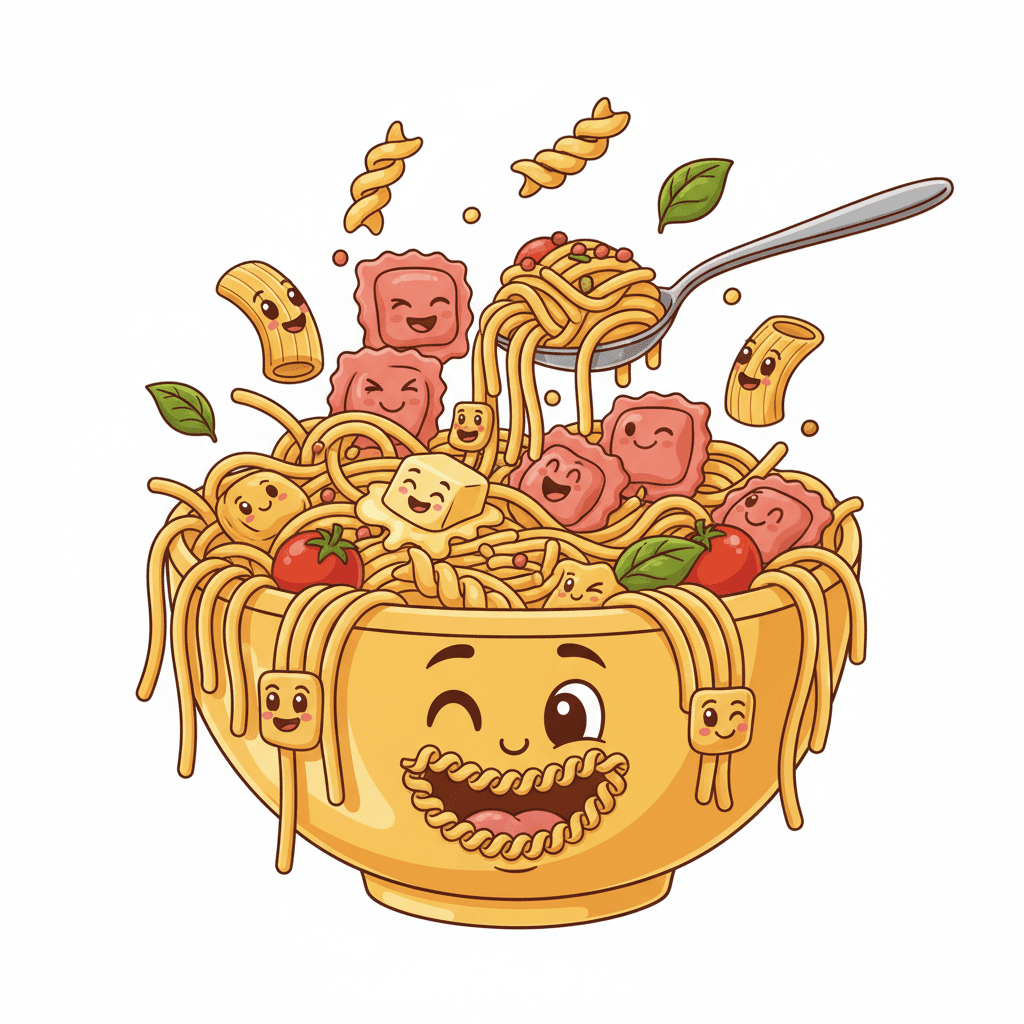
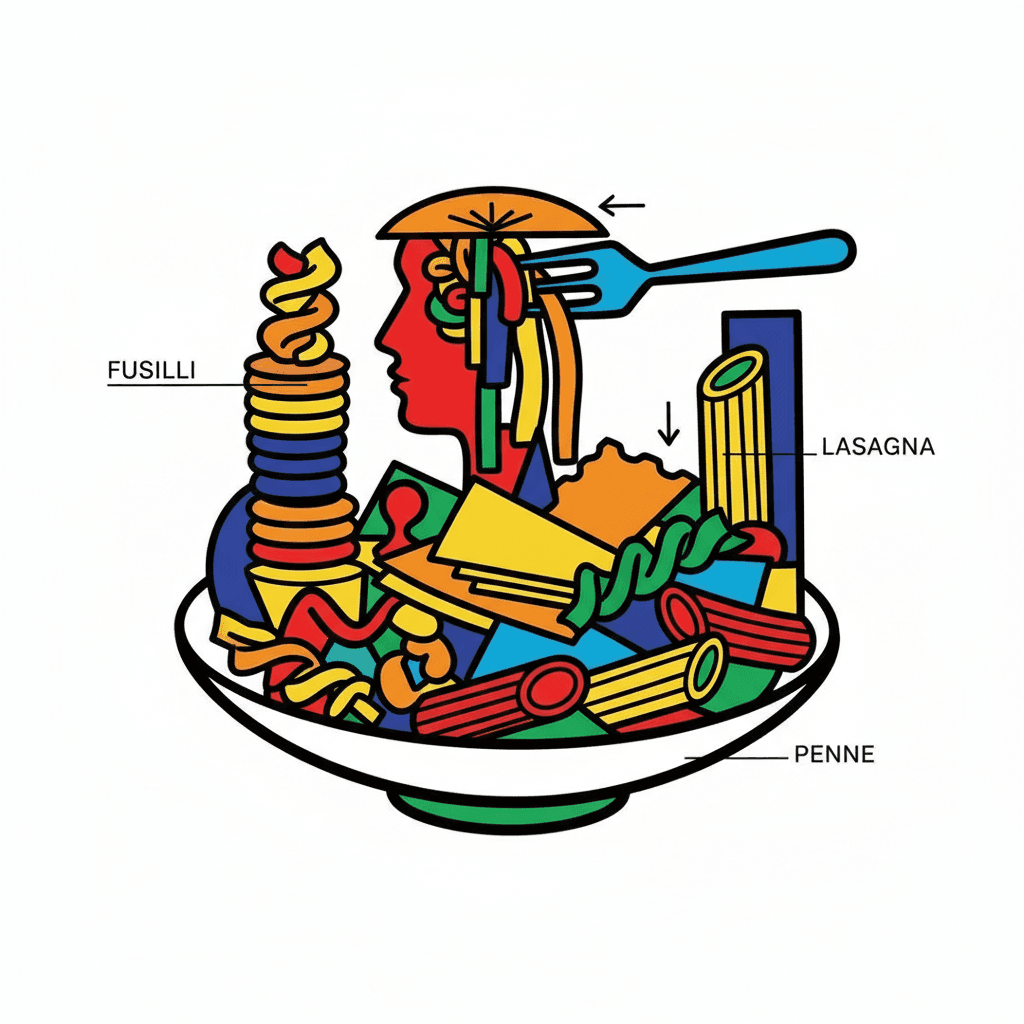
Draw realistic pasta shapes like spaghetti, fusilli, and penne using simple shapes, shading, and texture techniques. Practice observation and line control.


Drawing Apps
Get inspired with these

Instructions
How to draw Pasta step by step
Step 1
Gather your materials and place them on a flat surface.
Step 2
Choose four different pasta shapes from your pantry or four pasta photos to use as references.
Step 3
Arrange the four pasta pieces or photos so you can clearly see each shape while you draw.
Step 4
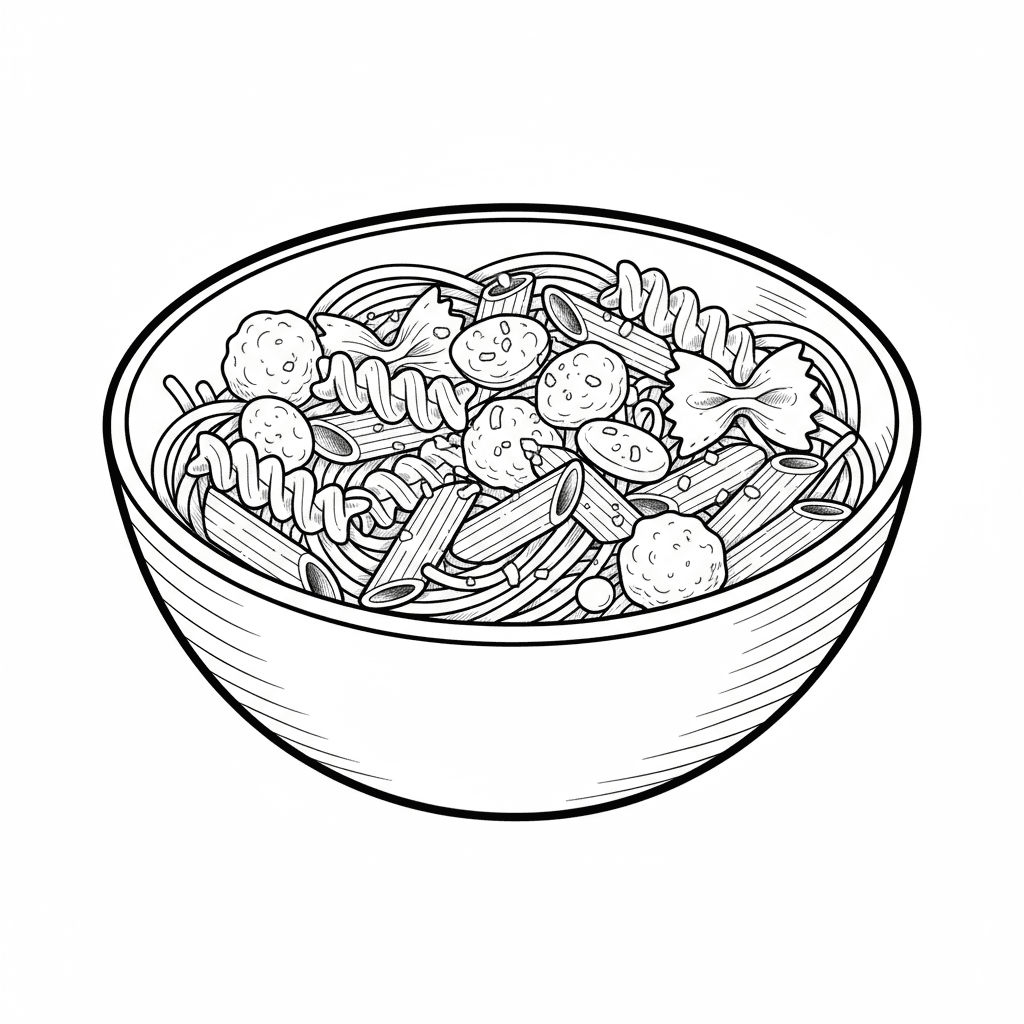
Lightly sketch long curvy parallel lines to make a bundle of spaghetti strands.
Step 5
Lightly draw a short tilted tube with diagonal end lines to make a penne piece.
Step 6
Lightly draw a spiral or stacked S-shaped curve to make a fusilli shape.
Step 7
Lightly draw a small rectangle with scalloped sides and a pinched middle to make a farfalle (bow-tie) shape.
Step 8
Add a second inner contour line to each pasta shape to show the thickness of the pieces.
Step 9
Pick a light direction and lightly shade the side of each pasta that is away from the light.
Step 10
Gently blend the shaded areas with a tissue or cotton swab to make smooth shadows.
Step 11
Add tiny lines and little speckles on the pasta surfaces to show rough texture.
Step 12
Color each pasta shape using warm yellows light browns and a touch of orange for depth.
Step 13
Use your eraser to lift small highlights where the light hits the pasta.
Step 14
Share your finished pasta drawing on DIY.org.
Help!?
What can I use if I don't have cotton swabs or colored pencils listed in the instructions?
For blending the shaded areas described in step 9 you can use a crumpled tissue, a clean finger, or a makeup sponge, and for the coloring step substitute crayons, markers, or watercolor paints to apply the warm yellows, light browns, and orange.
My spaghetti strands look uneven — how can I fix that while drawing the long curvy parallel lines?
Keep the spaghetti bundle neater by lightly sketching faint guide curves first or resting your wrist on the table for steady strokes, then redraw darker lines only once the spacing looks right.
How should I change the activity for different ages?
For younger children make it simpler by tracing the four pasta photos and coloring with crayons, while older kids can add the inner contour lines, delicate shading with a tissue, tiny texture speckles, and layered color to increase realism.
How can we extend or personalize the pasta drawing after finishing the basic steps?
Extend the activity by arranging the pasta in a bowl to draw a full still life with cast shadows and a sauce-colored background, or glue real pasta pieces onto your colored drawing and then share it on DIY.org.
Related videos
HOW TO DRAW A SPAGHETTI CUTE, Easy step by step drawing lessons for kids
4 Videos
HOW TO DRAW A SPAGHETTI CUTE, Easy step by step drawing lessons for kids
How to Draw SPAGHETTI AND MEATBALLS
pasta🍝Drawing - How to Draw a Simple pasta Step By Step Very Easy - Cute pasta bowl Drawing
How to Draw Spaghetti and Meatballs step by step Easy - Fun Food with faces
Fun Facts
🍝 Italy is home to hundreds of pasta shapes — many sources list over 300 and some count more than 350 varieties!
🌀 Fusilli's spiral shape is perfect for trapping sauce in its grooves, which is why it's so popular in pasta salads and saucy dishes.
✏️ Artists often use hatching, cross-hatching and soft blending to create the smooth curves and realistic shadows of pasta drawings.
🎨 Fresh egg pasta tends to be a richer yellow while dried semolina pasta is paler — a great clue when choosing drawing colors.
🔍 When drawing pasta, look for small bright highlights and gentle wrap-around shadows because most shapes are rounded or tubular.
How do I teach a child to draw different pasta shapes step by step?
What materials do I need to draw pasta with my child?
What ages is drawing realistic pasta suitable for?
What are the benefits of drawing different pasta shapes with children?
