How to Draw a Tractor
Draw a tractor step by step using simple shapes, wheels, windows, and details. Practice proportion, perspective, and shading to finish your drawing.
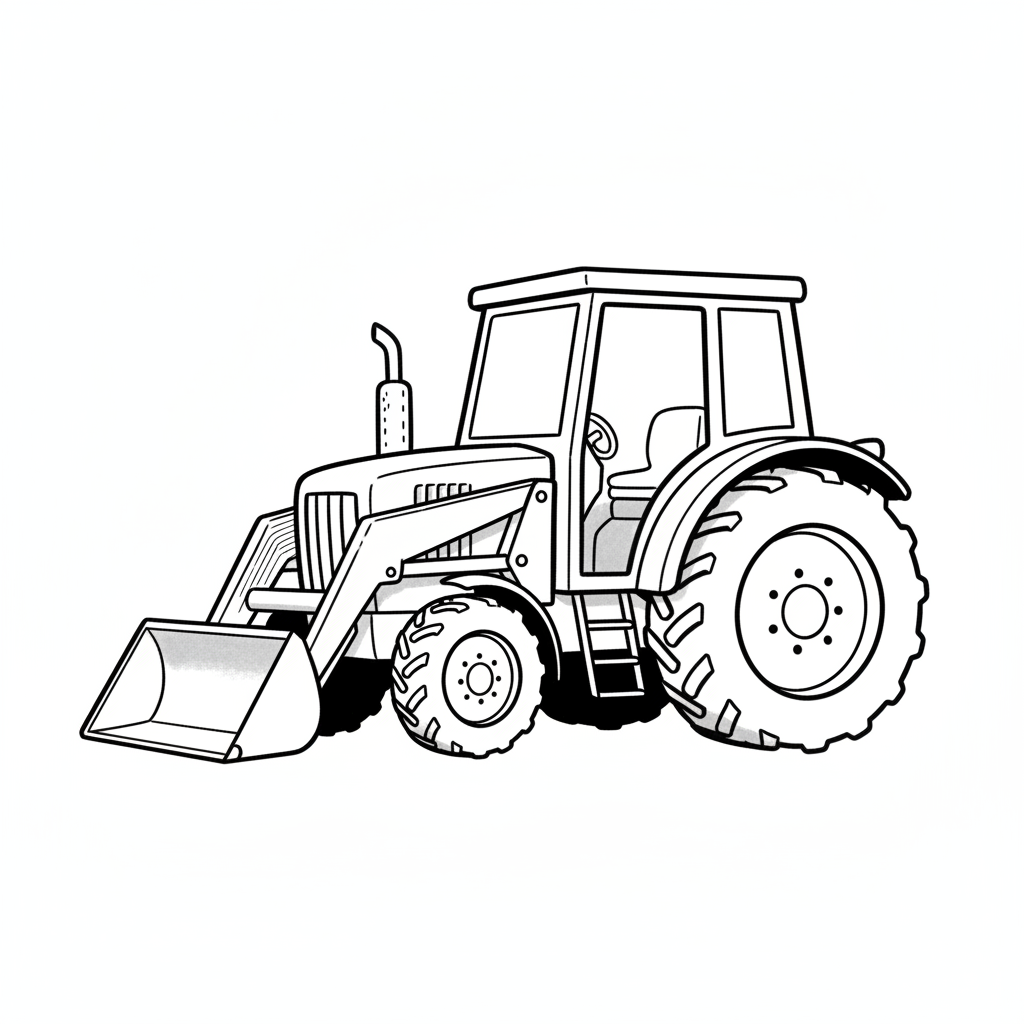
About this tutorial
Draw a tractor step by step using simple shapes, wheels, windows, and details. Practice proportion, perspective, and shading to finish your drawing.
What you need
Instructions
- 1
Step 1
Place your paper in landscape (wide) position on the table.
- 2
Step 2
Lightly draw a straight horizon line near the bottom of the paper.
- 3
Step 3
Put a small dot on the horizon to the right as your vanishing point for perspective.
- 4
Step 4
Sketch the tractor body as a big horizontal rectangle above the horizon using light lines.
- 5
Step 5
Add a smaller rectangle on the back-top of the body for the cabin.
- 6
Step 6
Draw two big circles that touch the horizon for the rear and front wheels, making the rear wheel larger.
- 7
Step 7
Draw smaller concentric circles inside each wheel to make the rims.
- 8
Step 8
Add tire treads by drawing short curved lines or little rectangles around each wheel.
- 9
Step 9
Draw the cabin windows as rectangles and tilt their top edges slightly toward the vanishing point.
- 10
Step 10
Add front details by sketching a grill with vertical lines two round headlights and a simple exhaust pipe on top.
- 11
Step 11
Erase extra construction lines gently so your tractor looks clean.
- 12
Step 12
Shade the tractor by darkening the side away from your imagined light and draw a soft shadow on the ground under the tractor.
- 13
Step 13
Trace your final outline with a black pen and let the ink dry.
- 14
Step 14
Color your tractor with colouring materials using brighter colors for the body and darker tones for shaded areas.
- 15
Step 15
Share your finished tractor drawing on DIY.org.
Get inspired
Fun facts
How do you draw a tractor step by step?
Start with simple shapes: draw two large circles for wheels and a rectangle above for the body. Add a smaller rectangle or square for the cab and a rounded front for the engine. Connect shapes with wheel arches and a hitch at the back. Add windows, grill, exhaust pipe, lights and tread lines on wheels. Erase guide lines, refine proportions, then add perspective cues (tilted rectangles for three-quarter view) and finish with shading to show light and shadow.
What materials do I need to draw a tractor?
You’ll need plain drawing paper, an HB pencil for sketching, darker pencils like 2B or 4B for details and shading, and a good eraser. Optional helpful tools: a ruler for straight edges, circular templates or a compass for wheels, a sharpener, and a blending stump or cotton bud for shading. Colored pencils, markers or watercolors can finish the drawing. For young kids choose washable, non-toxic markers and crayons.
What ages is drawing a tractor suitable for?
This activity suits a wide range: preschoolers (4–6) can trace and color simple shapes with guidance. Elementary kids (7–9) can follow step-by-step shapes to add details and basic shading. Older children (10+) can practice proportion, perspective and advanced shading techniques. Adjust complexity, tools and supervision for each age. Short, guided sessions work best for younger kids to keep interest and build skills.
What are the benefits of drawing a tractor?
Drawing a tractor builds fine motor skills, hand–eye coordination, spatial reasoning and observational ability as kids compare shapes and proportions. Practicing perspective and shading teaches visual problem-solving and light understanding. It boosts patience, creativity and confidence when children complete a detailed drawing. Doing the activity together encourages communication and teamwork, and turning drawings into stories or dioramas extends learning into imaginative play.
Watch & Learn
Need help?
What can we use instead of a black pen, ruler, or special coloring supplies mentioned in the instructions?
If you don't have a black pen or special colouring materials, trace the final outline with a dark pencil or marker and use crayons, colored pencils, or watercolors to color, and use a cup lid or bottle cap to draw the two big wheel circles and a straight edge or the long side of a book to make the horizon line.
My tractor looks lopsided or the perspective is wrong—what should I check and fix from the steps?
If the tractor looks lopsided, lightly recheck that your horizon line is straight near the bottom and that both wheel circles touch that horizon and that the cabin window tops are tilted toward the small vanishing point dot before inking and erasing construction lines.
How can I adapt the activity for younger kids or make it more challenging for older kids?
For younger children, simplify by using pre-drawn big rectangles and stickers or stamped circles for wheels and skip the vanishing point, while older kids can keep the perspective step, add concentric rims, detailed tire treads, more nuanced shading, and finer pen work.
What are some ways to extend or personalize the tractor drawing after finishing the basic steps?
You can personalize and extend the drawing by adding a farm background along the horizon, using patterned or metallic colors on the body, attaching brads to make wheels turn, and following the shading and inking steps before sharing the finished tractor on DIY.org.