How to draw a octopus - a free octopus drawing guide
Draw a friendly octopus step-by-step using basic shapes, practice lines, symmetry, and tentacle placement, then color and label body parts.


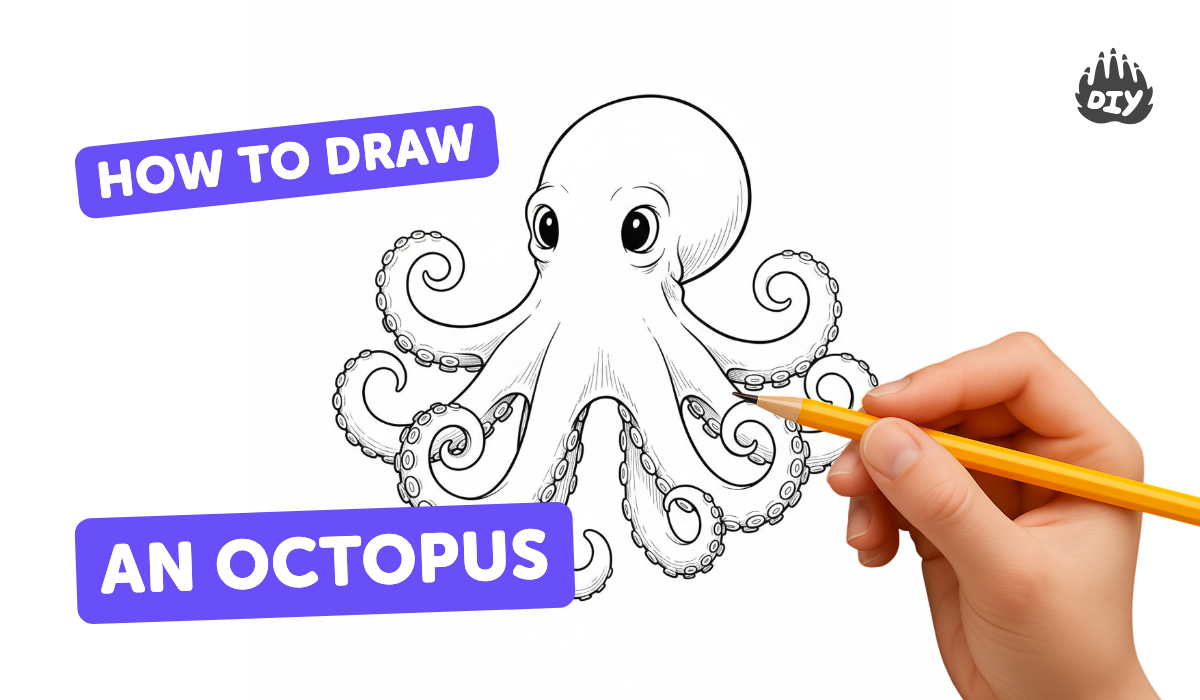
Drawing Apps
Photos of friendly octopus drawings
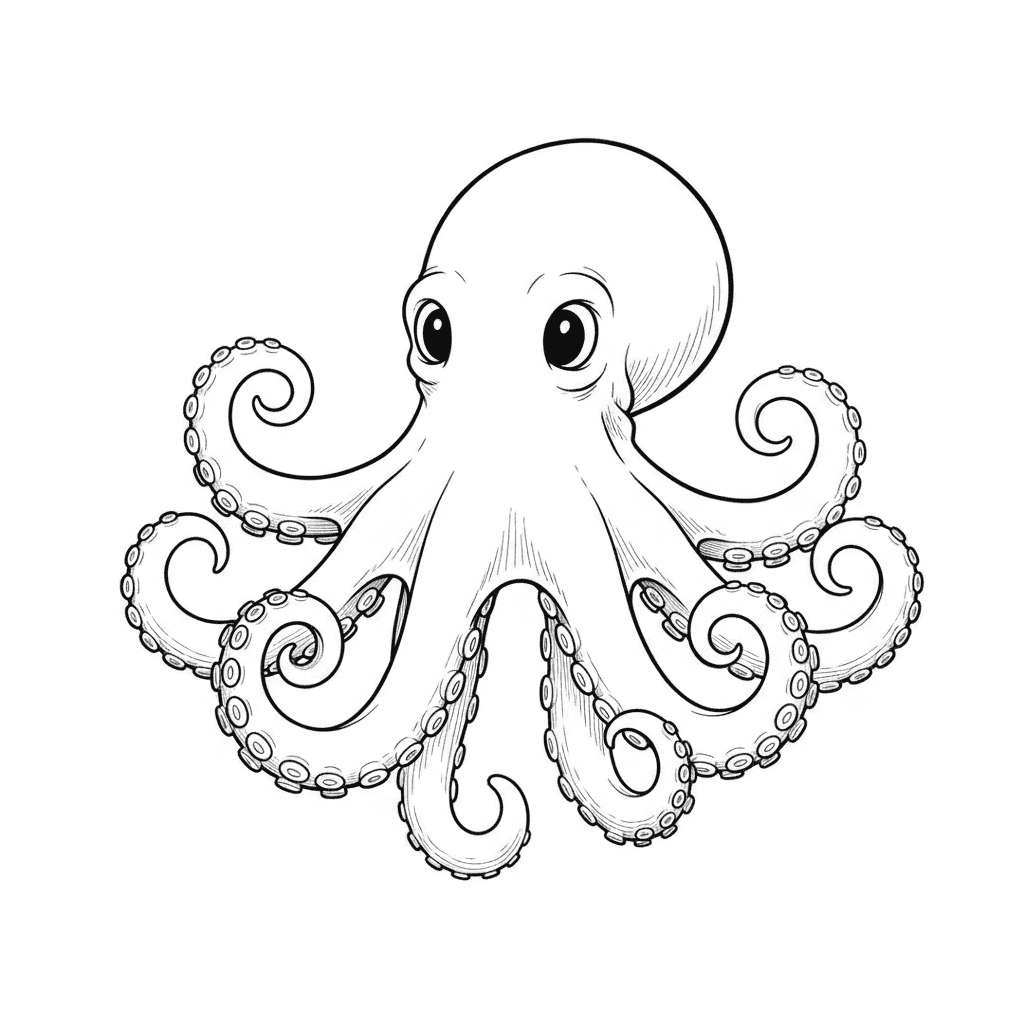
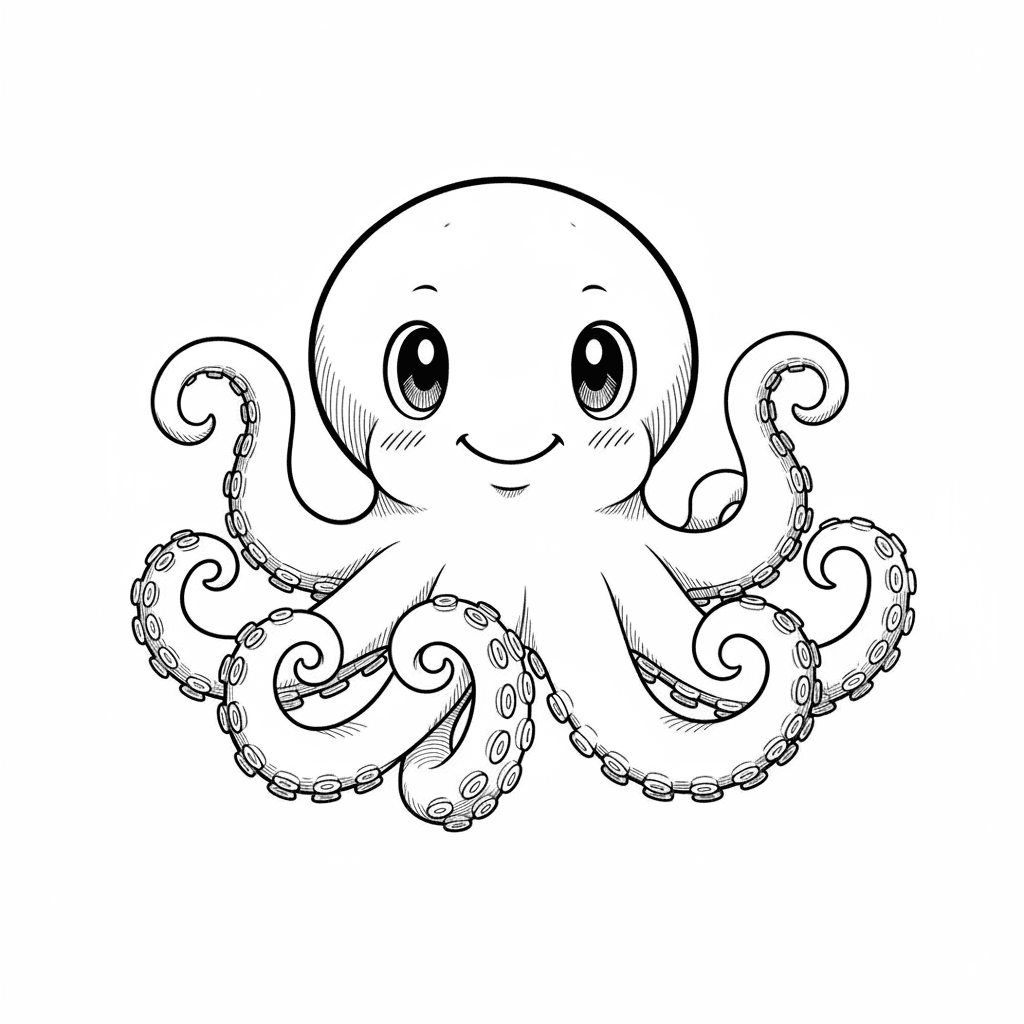
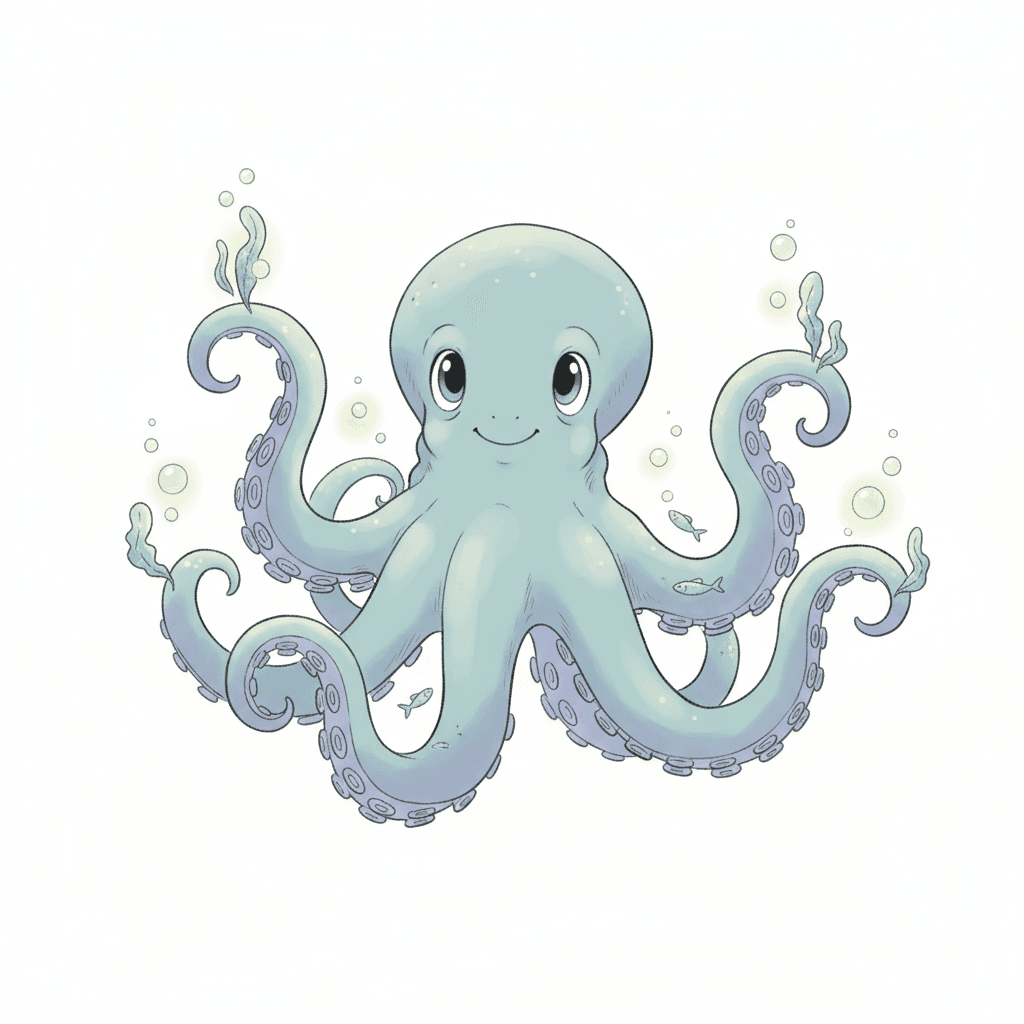
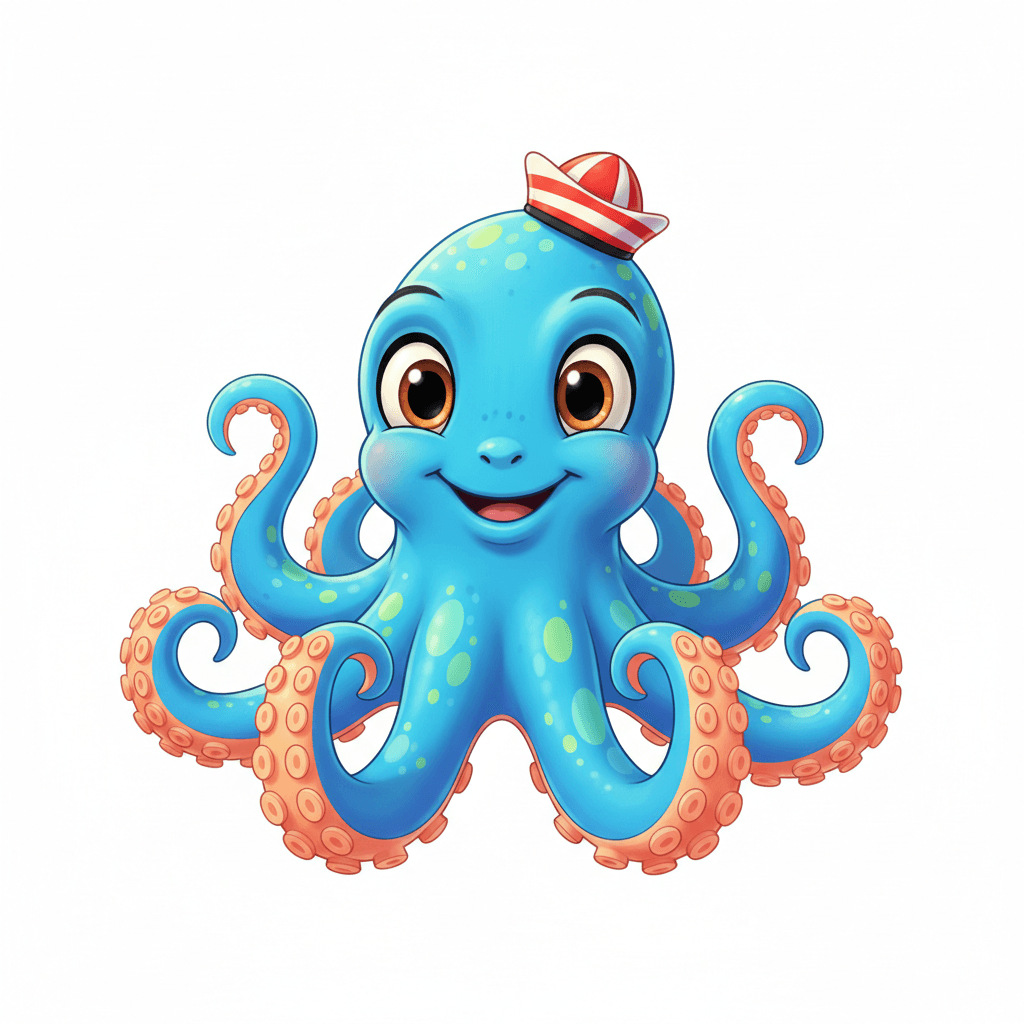
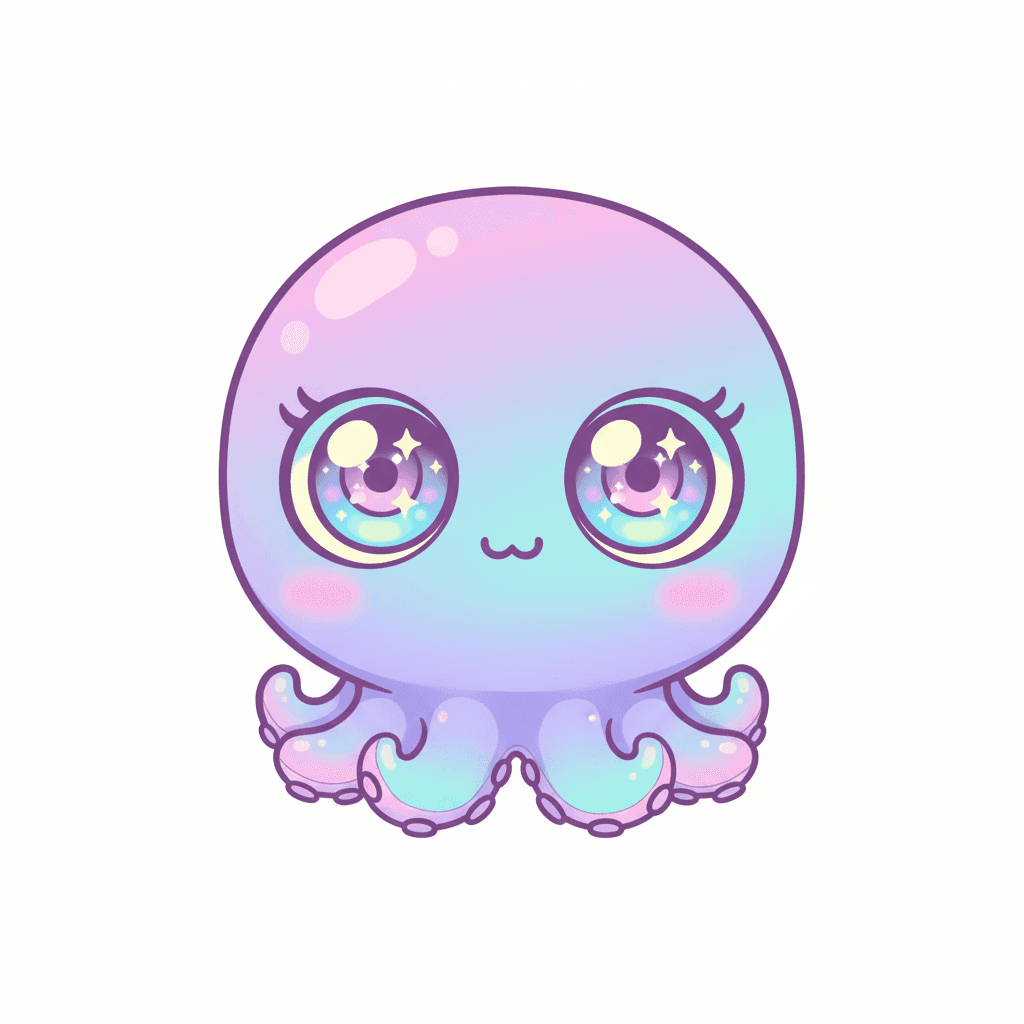
Step-by-step guide to draw a friendly octopus
How to Draw an OCTOPUS! Kids Learning Videos
Step 1
Put your paper flat on the table.
Step 2
Draw a light vertical guide line down the middle of the page with your pencil.
Step 3
Draw a large rounded oval near the top half of the page centered on the guide for the octopus's head and body.
Step 4
Make two small dots on the guide near the top of the oval to mark where the eyes will go.
Step 5
Draw two big round eyes around those dots keeping them the same size on each side of the guide.
Step 6
Draw small filled circles inside each eye for pupils leaving a tiny white dot if you want a sparkle.
Step 7
Draw a curved smile under the eyes in the center of the oval.
Step 8
Draw eight long wavy tentacle outlines starting from the bottom edge of the oval with four on each side.
Step 9
Add small circles along the inner edge of each tentacle to make suction cups.
Step 10
Trace over all the pencil lines with a black marker or pen.
Step 11
Wait for the marker ink to dry completely.
Step 12
Erase the pencil guide line and any stray pencil marks.
Step 13
Color the octopus and its tentacles using your coloring materials.
Step 14
Write labels for head eyes tentacles and suction cups next to each part.
Step 15
Share your finished octopus on DIY.org.
Help!?
What can we use if we don't have a black marker or certain coloring materials?
If you don't have a black marker, trace your penciled octopus with a dark ballpoint pen or fine-tip crayon, and use crayons, colored pencils, or watercolors to color the octopus after the ink dries.
What should we do if the eyes or tentacles look uneven or the marker keeps smudging?
Use the light vertical guide and a small round template (like a coin) to match eye sizes and measure tentacle placement, and prevent smudging by waiting for the traced marker lines to dry completely before erasing pencil marks.
How can we adapt the activity for different ages?
For younger children, pre-draw the oval and a few simple tentacles for them to trace and color, while older kids can add extra suction cup rows, shading details, and more precise labels for head, eyes, tentacles, and suction cups.
How can we extend or personalize the octopus drawing once it's finished?
Add a painted ocean background with seaweed and bubbles, decorate suction cups with glitter or stickers, invent unique patterns or expressions for your octopus, and write a short caption before sharing the final photo on DIY.org.
Watch videos on how to draw a friendly octopus
How to Draw an Octopus 🐙 | Easy Step by Step Drawing for Kids | Color's Artbox
4 Videos
How to Draw an Octopus 🐙 | Easy Step by Step Drawing for Kids | Color's Artbox
How to draw a cute octopus easy | Step by step Drawing for kids🐙
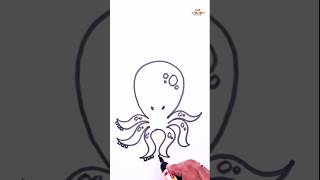
Octopus Drawing - Step by Step Easy Tutorial for Kids | Fun Sea Animal Art
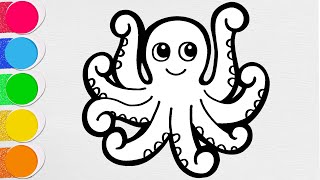
How to Draw an Octopus | Easy Step by Step for Beginners
Facts about drawing for kids
🐙 Octopuses have eight arms and three hearts — that's a lot of important stuff in one squishy friend!
🎨 They can change color and even texture to hide or send messages using special skin cells called chromatophores.
🧠 Octopuses are super smart: they can solve puzzles, open jars, and remember tricks.
👅 Each arm has hundreds of suction cups that can taste what they touch, so octopuses can "taste" with their arms.
🔁 Octopuses have bilateral symmetry (left and right mirror each other), which makes practicing symmetry great for drawing them.
How do you draw a friendly octopus step-by-step?
What materials do I need to draw an octopus with my child?
What ages is this octopus drawing activity suitable for?
What are the benefits of drawing an octopus for kids?
