How to Draw a Hot Dog
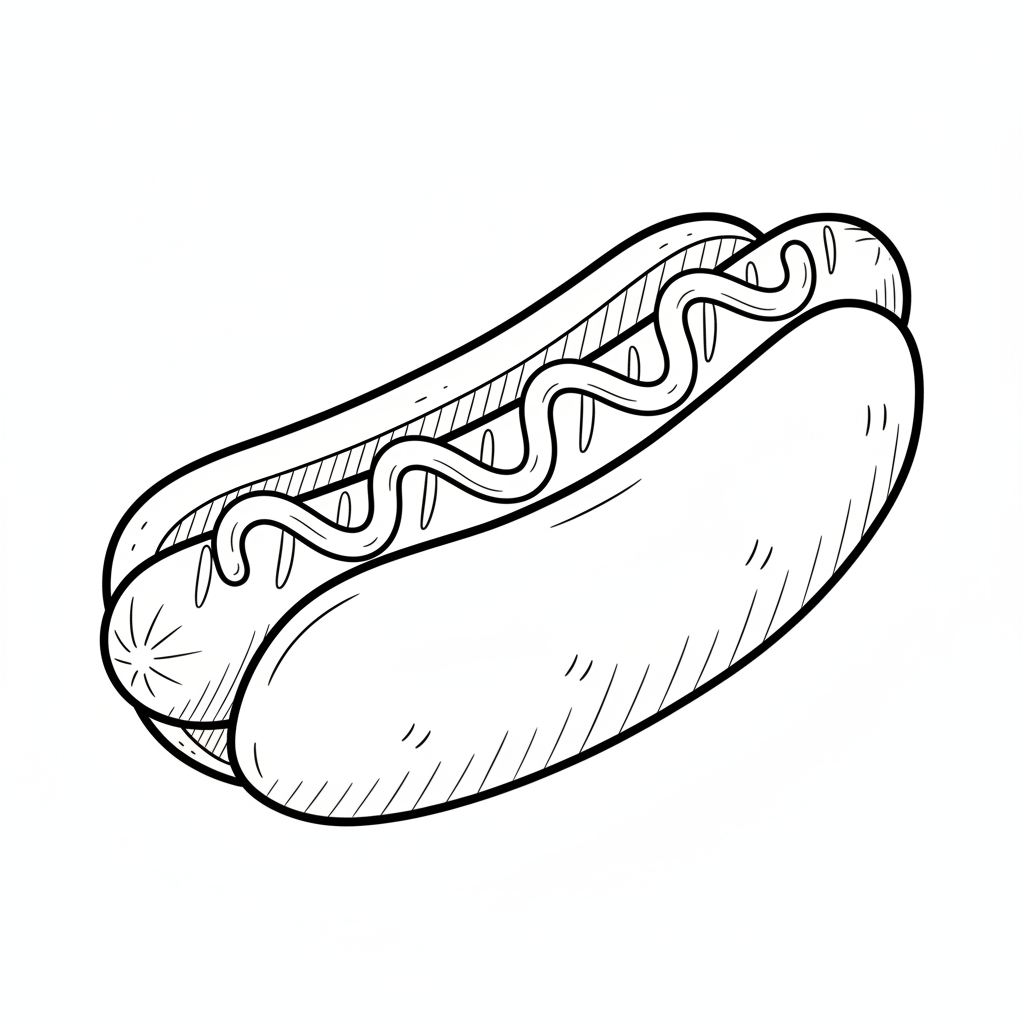
Draw a detailed hot dog by sketching the bun, sausage, and condiments, then add shading and color for realism. Practice proportion and shading.
About this tutorial
Draw a detailed hot dog by sketching the bun, sausage, and condiments, then add shading and color for realism. Practice proportion and shading.
What you need
Instructions
- 1
Step 1
Place your paper on a flat surface and get your pencil ready.
- 2
Step 2
Lightly draw a horizontal center guide line across the paper to help place the hot dog.
- 3
Step 3
Sketch a long soft curved shape above the guide line for the top of the bun.
- 4
Step 4
Sketch a matching soft curved shape below the guide line for the bottom of the bun.
- 5
Step 5
Draw a long oval or slightly rounded cylinder between the bun halves for the sausage.
- 6
Step 6
Add a thin curved line along the bun edge to show the bun seam.
- 7
Step 7
Draw small curved marks on the sausage to add texture and interest.
- 8
Step 8
Sketch wavy lines on top of the sausage to show mustard ketchup or relish.
- 9
Step 9
Erase the center guide line and any extra sketch marks so only your final shapes remain.
- 10
Step 10
Shade the areas where the bun curves and under the sausage with short pencil strokes to create depth.
- 11
Step 11
Gently blend the shaded pencil areas with a tissue or cotton swab to smooth shadows.
- 12
Step 12
Color the bun sausage and condiments with your coloring materials using darker tones where you shaded.
- 13
Step 13
Share your finished hot dog drawing on DIY.org.
Get inspired
Fun facts
How do you draw a detailed hot dog step by step?
Start with a light pencil outline: draw a long, slightly curved oval for the bun, then a narrower oval inside for the sausage. Add a center guideline to keep proportions. Sketch simple condiment lines (mustard, ketchup) and bun texture. Refine outlines, erase guides, then add shading: darker under the sausage and bun edges, lighter on top. Finish with colored pencils or markers, blending colors for a realistic look.
What materials do I need to draw a realistic hot dog?
You’ll need paper or a sketchbook, a set of pencils (HB for sketching, 2B–4B for shading), a good eraser, and a pencil sharpener. For color, use colored pencils, markers, or watercolors plus a small brush if painting. A blending stump or cotton swab helps smooth shading. Optional: ruler for proportion guides and a reference photo of a hot dog for accuracy.
What ages is this hot dog drawing activity suitable for?
This activity works for ages 5 and up with adjustments: ages 5–7 can focus on simple shapes and bright colors, 8–11 can add basic shading and proportions, and 12+ can practice detailed texture, realistic shading, and color blending. Younger kids may need adult guidance with scissors or paints. Adapt complexity and session length to the child’s attention span and skill level.
What are the benefits of drawing a detailed hot dog for kids?
Drawing a detailed hot dog builds fine motor skills, hand–eye coordination, and observational ability as children study shapes, proportion, and light. Practicing shading and color blending teaches visual depth and patience. It also boosts creativity and confidence when they complete a realistic piece. This simple subject can connect to lessons in measurement, texture, and color theory for cross-curricular learning.
Watch & Learn
Need help?
What can we use if we don't have a tissue or cotton swab for blending?
If you don't have a tissue or cotton swab for the blending step, gently smooth the shaded pencil areas under the sausage and on the bun (step 11) with a clean fingertip, soft cloth, Q‑tip, or a blending stump.
My bun looks uneven and the center guide line won't erase—how do I fix it?
To keep the bun halves balanced, redraw the long soft curved shapes above and below the center guide line (steps 3–4) using light pencil strokes and then lift the dark guide line and extra marks in the erasing step (step 8) with a kneaded or soft eraser before shading.
How can I adapt this hot dog drawing for different ages and skill levels?
For younger kids, simplify by tracing a printed hot dog outline and using crayons to skip shading and blending (omit steps 9–11), while older kids can follow steps 9–12 to add detailed shading, texture marks on the sausage, and layered coloring with colored pencils.
What are some ways to personalize or extend the hot dog drawing activity?
After finishing the basic drawing and coloring (steps 1–12), personalize it by adding sesame seeds to the bun (small ovals after step 6), drawing a plate or picnic background, creating different condiment patterns in step 7, or making a series of hot dog characters to share on DIY.org.