How to Draw a Dog Bone
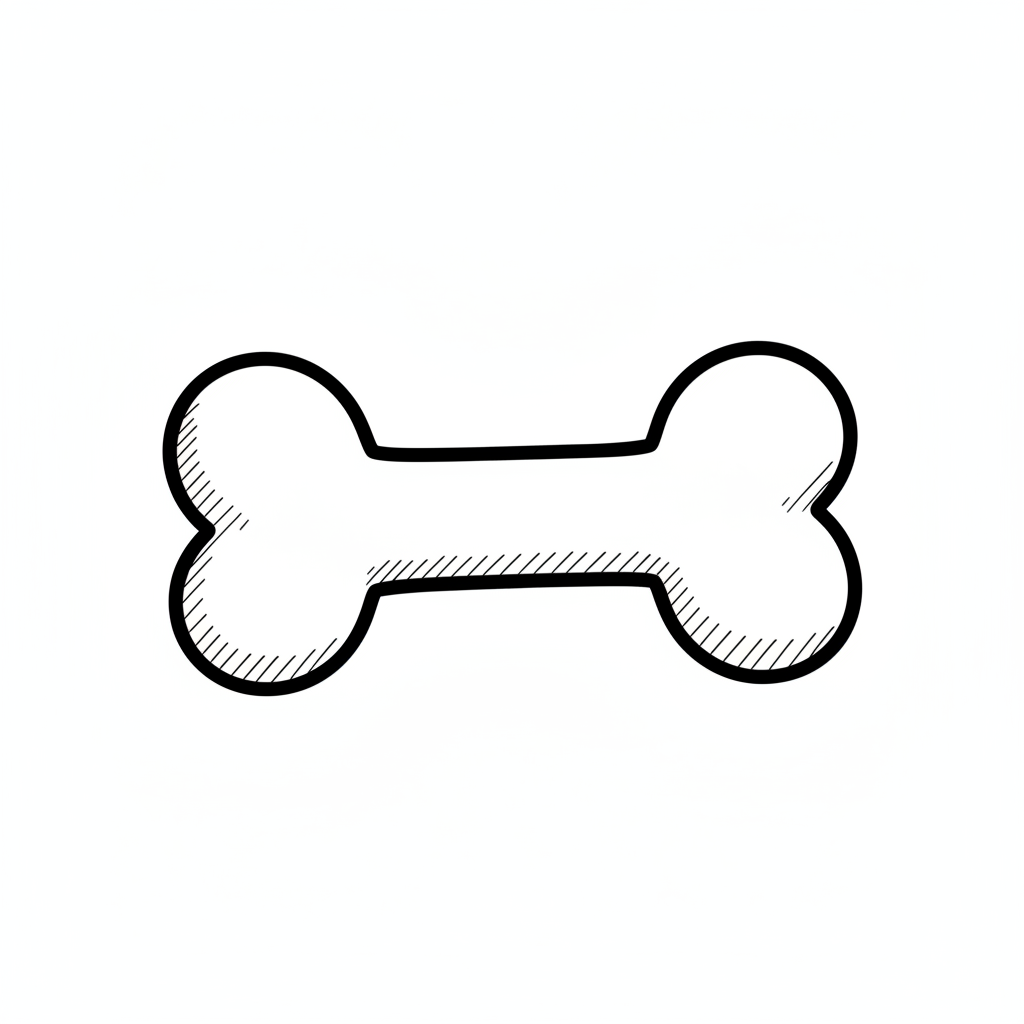
Draw a clear dog bone step by step using basic shapes, outlines, and shading to create a neat cartoon bone. Practice careful shading.
About this tutorial
Draw a clear dog bone step by step using basic shapes, outlines, and shading to create a neat cartoon bone. Practice careful shading.
What you need
Instructions
- 1
Step 1
Place a sheet of paper on your table in landscape orientation.
- 2
Step 2
Sharpen your pencil until the tip is nice and pointy.
- 3
Step 3
Lightly draw a long horizontal oval in the middle of the paper for the bone’s center.
- 4
Step 4
Draw two medium circles touching the left end of the oval (one above and one below) to make the left knob.
- 5
Step 5
Draw two medium circles touching the right end of the oval (one above and one below) to make the right knob.
- 6
Step 6
Trace one smooth outer curve around all the shapes to join them into one neat bone outline.
- 7
Step 7
Erase the extra guide lines inside so the bone edge looks clean and continuous.
- 8
Step 8
Draw a thin inner border that follows the outer shape to show the bone’s thickness.
- 9
Step 9
Lightly shade the lower-right side of the bone with short pencil strokes that follow the curves.
- 10
Step 10
Gently blend the shaded area with a tissue or cotton swab to make the shadow smooth.
- 11
Step 11
Use the eraser to lift a small crescent highlight on the opposite (upper-left) side of the bone.
- 12
Step 12
Darken the deepest shadow edges with firmer pencil strokes to make the bone pop.
- 13
Step 13
Sign your name on the drawing and share your finished creation on DIY.org
Get inspired
Fun facts
How do you draw a clear cartoon dog bone step by step using basic shapes, outlines, and shading?
Start by sketching two small circles or rounded ovals for the bone knobs at each end and a long rounded rectangle between them for the shaft. Lightly connect shapes with smooth curves, then erase extra guide lines. Draw a slightly smaller inner outline to suggest thickness. Add light, directional shading along the edges and under one side to create depth, using short strokes and gentle blending for a neat cartoon look.
What materials do I need to draw a cartoon dog bone with good outlines and shading?
You’ll need plain drawing paper, a pencil set (HB for sketching and 2B or 4B for darker shading), a soft eraser, and a pencil sharpener. For blending, use a blending stump, tissue, or cotton swab. Optional supplies: a fine black pen or marker to ink outlines and colored pencils for finishing. A scrap piece of paper to test shading tones is helpful.
What ages is this dog bone drawing activity suitable for?
This activity suits children about 5–12 years old. Younger kids (around 5–7) can draw the basic shapes and color them, while older children (8–12) can practice careful shading and refining outlines. Supervision helps younger children with scissors or fine tools if used. Adapt complexity: simplify shapes for preschoolers or add shading and texture steps for older kids to build skill progressively.
What are the benefits of practicing drawing and shading a cartoon dog bone?
Drawing a cartoon bone builds fine motor control, shape recognition, and hand–eye coordination. Practicing outlines and gradual shading teaches kids about light, form, and depth, improving observational skills. The exercise also encourages patience, attention to detail, and confidence as drawings improve. It’s a quick project that can be repeated to track progress or adapted into story art or character design for creative play.
Watch & Learn
Need help?
What can I use if I don't have a sharp pencil, tissue, or cotton swab listed in the instructions?
Use a mechanical pencil for the fine tip called for in Step 2, and replace the tissue or cotton swab in Step 10 with a clean fingertip or a small piece of scrap paper to blend the shading.
My bone outline looks messy or the circles don't line up—how do I fix that?
If the outer curve in Step 7 or the medium circles in Steps 4–5 are uneven, lighten your guide lines in Step 2–3, reposition the circles so they touch the oval ends, then trace the outer curve slowly and erase extra guides in Step 8 with a gentle kneaded eraser.
How can I adapt this drawing for different ages or skill levels?
For younger kids, simplify Steps 3–7 by tracing a printed bone template and use a crayon instead of a sharp pencil, while older kids can follow Steps 11–12 to add advanced shading, highlights, and texture with firmer pencil strokes.
What are some ways to enhance or personalize the finished bone drawing?
After completing the inner border in Step 9 and shading in Steps 10–12, personalize the piece by adding color, patterns on the bone, a puppy or background scene, then sign your name and share the finished creation as directed in Step 13.